
What a UK Casino Sign-Up Bonus Really Costs in 2026
The marketing of a “best casino sign up bonus” runs on a single word: free. The reality, now that the Gambling Commission’s 10x wagering cap has been in force since 19 December 2025, is more honest — and more useful. This page walks through the offer as it stands, what the licence behind it obliges the operator to do, and what an “unbeatable” welcome package actually costs the player who claims it.

Current as of 7 November 2026 · verified against the Gambling Commission’s public register of gambling businesses.
Table of Contents
- UK Gambling Law and What a UKGC Licence Actually Covers
- Safer-Gambling Rules Attached to Every UK Sign-Up Bonus
- Payments, No-Deposit Variants, and What UK Players Can Fund a Bonus With
- How a UK Sign-Up Bonus Is Actually Structured — and What 10x Wagering Means
- The Top 10 UK-Licensed Casino Sign-Up Bonus Brands in 2026
- How Each of the Ten Brands Actually Sits in the Comparison
- What the Landscape Looks Like for a UK Player Looking for the Best Sign-Up Bonus in 2026
- Frequently Asked Questions on UK Casino Sign-Up Bonuses
UK Gambling Law and What a UKGC Licence Actually Covers
The legal frame around a UK sign-up bonus is unusually strict by international standards, which is worth knowing before any comparison of “best” makes sense.
The regulator is the Gambling Commission, sponsored by the Department for Culture, Media and Sport, working under the Gambling Act 2005. The 2005 Act covers Great Britain — England, Scotland and Wales — but not Northern Ireland. Since the Gambling (Licensing and Advertising) Act 2014, any operator taking customers in Great Britain needs a Commission licence, wherever it is incorporated. A Curaçao, Maltese or Gibraltar registration does not, by itself, qualify a brand to serve GB residents.
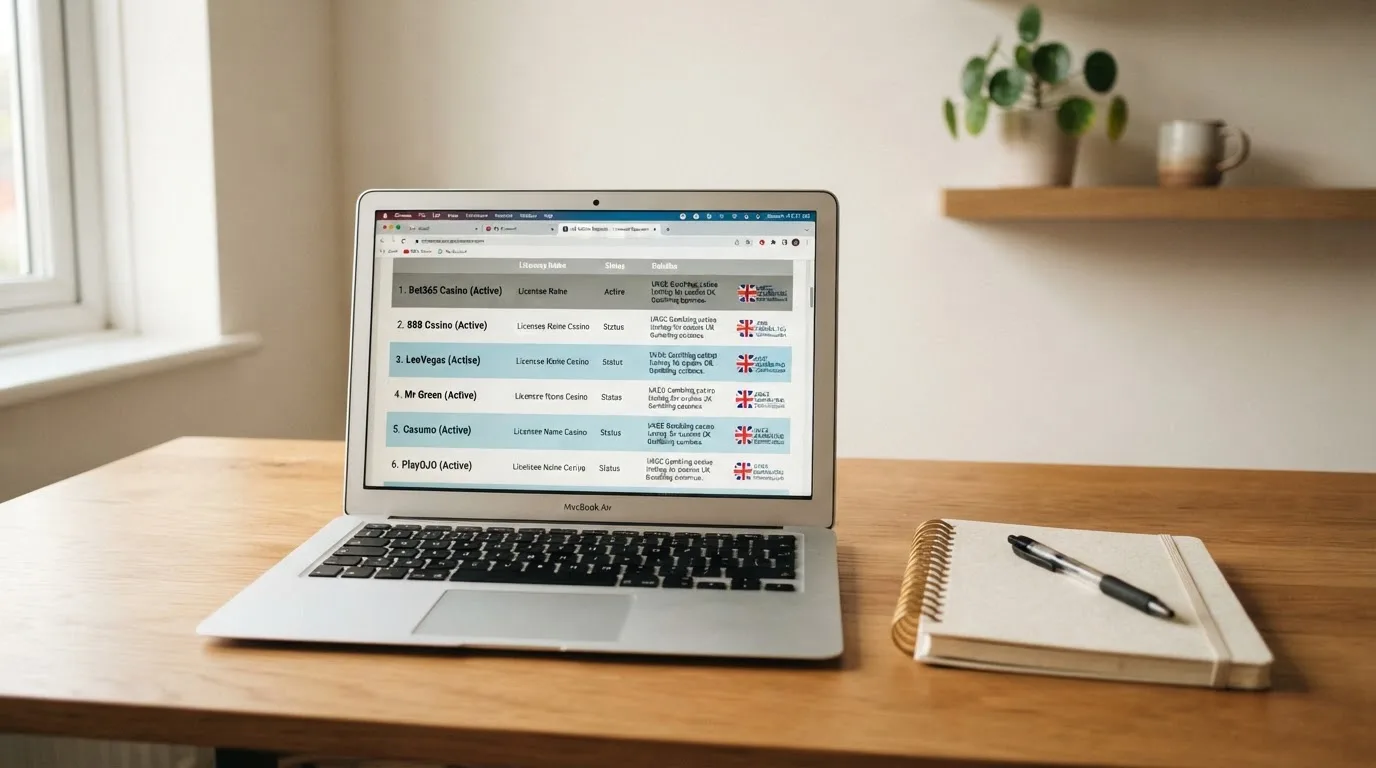
A Gambling Commission licence is not a rubber stamp. It binds the holder to the Licensing Conditions and Codes of Practice (LCCP), to the social responsibility code, and to the Remote Technical Standards that govern how games actually run. Every brand reviewed further down this page holds an active remote casino operating licence on the Commission’s public register. That register is the test of whether a brand is actually licensed — not what the footer of a website claims.
On 18 September 2026, 139 businesses held an active remote casino operating licence, and the register’s separate domain list held 1,065 active domain entries plus 361 white-label entries. The split matters: a white-label site trades under another company’s licence, so it shares that licencee’s compliance record rather than carrying its own.
Every licence number follows a fixed format. The leading six digits repeat the licence holder’s account number, an R marks a remote (online) licence, and a short suffix identifies the licence variant. Reading the number tells you who actually runs the brand and whether the licence is current.
What the licence buys the player
The licence creates a route of complaints that an offshore brand does not. A dispute with a GB-licensed operator can be raised with the Commission and, if needed, escalated to an Alternative Dispute Resolution (ADR) provider the Commission has approved. The brand must also contribute to GAMSTOP, the national online self-exclusion scheme, which is a mandatory condition of every online licence, and follow the LCCP’s safer-gambling obligations in full.

It is the LCCP, not the size of the welcome offer, that decides whether a casino is a safe place to deposit.
Safer-Gambling Rules Attached to Every UK Sign-Up Bonus
A UKGC licence comes with a stack of player-protection rules that materially shape what happens when a player claims a sign-up bonus. They are not optional, and they apply regardless of how generous the offer looks.
The minimum age is 18, and identity has to be verified before the first deposit — name, address and date of birth — since 7 May 2019. Anonymous play is not possible at a licensed site. Anyone marketing “no ID” or “no verification” play in the UK is not licensed by the Commission.
GAMSTOP self-exclusion is mandatory for every online operator. A player who signs up to GAMSTOP can choose a six-month, one-year or five-year exclusion, and it cannot be cancelled early. Self-exclusion at one brand automatically covers every other licensed site: the scheme’s whole point is that opting out is opting out of the market.
From 31 October 2025, every licensed operator must prompt a customer to set a financial limit before the first deposit is accepted. There is no state-set deposit ceiling, but the prompt is mandatory, and skipping it is not an option for the operator.
Financial vulnerability checks have been phased in. Since 28 February 2025, the Commission has required a check based on publicly available data once a player hits £150 in net deposits over a rolling 30 days. Wider financial risk assessments using credit reference data were announced but were not yet in force at the time of writing.
Online slot play is restricted at the stake level, not the deposit level. From 9 April 2025, a maximum stake of £5 per game cycle applies to players aged 25 and over; from 21 May 2025, the cap drops to £2 for players aged 18-24. A “game cycle” is one full spin of an online slot, including any feature spins and gamble features triggered within it. Auto-play has been banned since 31 October 2021, every spin must take at least 2.5 seconds, and what the industry used to call “losses disguised as wins” — sounds and visuals that mimic a win on a losing spin — is also banned.
The default is protection. A bonus that competes on raw size may come from a brand with less of this stack behind it.
Where to get help
Two free services cover the whole of Great Britain. GamCare runs the National Gambling Helpline, and GambleAware offers online information and a referral service. GAMSTOP itself does not provide counselling — it is the self-exclusion register, not a support line.
Payments, No-Deposit Variants, and What UK Players Can Fund a Bonus With
The payment side of a sign-up bonus is short on credit and long on friction by design.
Since 14 April 2020, credit cards have been banned for any gambling product in Great Britain, online or offline, with a narrow exception for non-remote lotteries paid face-to-face. The ban extends to credit cards routed through e-wallets — paying a credit-funded balance counts. The Commission’s evidence at the time was stark: the body estimated around 800,000 UK consumers used credit cards to gamble in 2018, and found that 22 per cent of online gamblers who used credit cards fell into the problem-gambling category, a high enough concentration to justify a flat prohibition.
Debit cards and bank transfers are unaffected. Bank transfers within the UK typically clear through the Faster Payments Service, run by Faster Payments and live since 2008. Most payments arrive instantly or within a couple of minutes; in slower cases the cut-off is two hours. The scheme itself sets a £1,000,000 per-transaction ceiling — individual banks then apply their own, often lower, customer limits on top.
The funding choice carries an awkward catch with no-deposit variants specifically. The Commission’s 19 December 2025 bonus rules apply to all offers, not just matched-deposit offers, so any no-deposit free-spins package that names a wagering requirement above 10x would breach the cap regardless of how the player funded it. The funding part of a no-deposit bonus is genuinely “no deposit”, but the wagering part is not optional and not zero.
A “no deposit” sign-up bonus is structurally different from a deposit-match offer. A no-deposit offer credits bonus funds or free spins at registration, on the strength of identity verification but before the player commits any money. A deposit-match offer scales to whatever the player puts in. Both routes end at the same point — bonus balance tied to a wagering requirement — but the starting line is different.
The 10x wagering cap means a £50 no-deposit bonus needs £500 of qualifying play before withdrawal. A £10 free-spin package converted to bonus balance needs £100 of the same. The cap is the same multiplier; what changes is the ceiling, and that ceiling is set by the bonus amount, not by the structure of the offer.
Apple Pay and AstroPay in context
Two payment methods keep surfacing on UK cashier pages and are worth being clear about in passing, because the marketing positions them differently than the regulator treats them.
Apple Pay launched on 20 October 2014 in the US only and reached UK-issued cards on 14 July 2015. The system tokenises card data — the real card number is replaced by a device-specific Device Primary Account Number, with a fresh security code generated for each transaction. In-store payments use near-field communication (NFC); in-app and online payments route through Apple’s own checkout. Biometric authentication is part of the flow: on an iPhone with Face ID, a purchase is confirmed by double-clicking the side button; on Touch ID models, by double-clicking the Home button. Apple Pay only works with cards from participating issuers, and it is not available in every market.
Apple Pay does not change the credit-card ban. The card funding Apple Pay is still a debit or credit account, and if it is a credit account, the Gambling Commission still treats the deposit as a credit-funded gambling transaction.
AstroPay is a separate story. Founded in 2009 and headquartered in Uruguay, AstroPay operates as a global digital wallet offering online payments, virtual and physical debit cards and peer-to-peer transfers. The company’s processing arm dLocal was spun off as a separate business in 2016. The UK entity, Larstal Limited, is authorised by the Financial Conduct Authority as an electronic money institution under the Electronic Money Regulations 2011, which is a different regime from a banking licence. AstroPay also runs authorised entities in the Isle of Man, Brazil and Denmark.
AstroPay is a wallet, not a card. Depositing through it funds the gambling account from a prepaid or e-money balance, and that funding source is generally compatible with UK rules — but the deposit still counts as e-money, and the operator’s own terms on e-money funding apply on top.
Funding, withdrawal, and the asymmetry underneath
UK operators almost always support fewer withdrawal methods than deposit methods. Funding an account through Apple Pay does not mean the same wallet can withdraw; the operator typically pays back to a verified bank account via Faster Payments instead. The asymmetry is not a quirk — it reflects anti-money-laundering and source-of-funds obligations that licensed operators have to satisfy. Anticipating it before the first deposit saves the awkward surprise of having to add a bank account later.
How a UK Sign-Up Bonus Is Actually Structured — and What 10x Wagering Means
The shape of a UK sign-up bonus used to vary wildly between brands: 35x here, 50x there, bonus-on-bonus rewrites, mixed-product offers. The Commission’s rules of 19 December 2025 swept most of that out.
What the rules now require:
- Wagering requirements capped at 10x the bonus amount for casino bonuses. Anything above 10x breaches the cap, and the cap applies to the bonus figure, not to deposit plus bonus.
- No mixed-product bonuses. Offers structured as “bet on sport, get casino spins” or “deposit at the sportsbook, unlock casino bonus” are out, full stop.
- Bonus funds separate from cash. Until wagering is complete, the bonus lives in its own balance and cannot be withdrawn.
- Clear terms on expiry. Every offer must state how long the player has to use it, and what happens on expiry.
The 10x cap is the most important number on the page, because it converts the welcome package from a marketing number into a real one. The table below illustrates the wagering workload based on the cap.
| Bonus Amount | Turnover Required (10x) | Estimated Time to Clear |
|---|---|---|
| £50 | £500 | ~3.5 hours |
| £100 | £1,000 | ~6.9–13.9 hours |
| £500 | £5,000 | ~34.7 hours |
It also dictates the time, in a way players rarely price in. Assume a £0.10 stake per spin across a 96% RTP slot — a typical pair for UK-licensed slots — at the maximum allowed rate of one spin every 2.5 seconds. The £500 bonus would need £5,000 of qualifying play, or 50,000 spins, which works out to roughly 125,000 seconds, or about 34.7 hours of continuous spinning. The £50 bonus needs £500 of play, or 5,000 spins, or about 3.5 hours. The £100 bonus sits between them at £1,000 of play, or 10,000 spins, or roughly 6.9 hours.
That is the honest cost of clearing the bonus at average pace. None of it is paid back at face value. The bonus itself is never released as cash until wagering is complete, and the player has been betting against the house edge the whole way. A bonus that looks bigger takes longer, gives the house edge more time to act, and binds the player for longer.
The wagering band’s two ends
A prescriptive way to think about the offer: with the 10x cap, a £100 bonus needs between roughly 6.9 hours and 13.9 hours of continuous play to clear at average pace — the lower end at fast, even spins; the upper end at slower, more deliberate play. That is the band. State it plainly: the bonus is not the gift the marketing claims; it is roughly 6.9 hours to 13.9 hours of qualifying wagering for a £100 sign-up offer, depending only on how steadily the player spins.
Outside the 10x cap, the ruleset has tightened elsewhere. No mixed-product offers, so a “bet £10 on football, get 100 free spins” is no longer a permitted way to gate a casino sign-up. That kind of cross-product offer was always a way to obscure where the real cost sits, and the Commission has now blocked it.
The two numbers worth comparing
When a welcome package is described as “100% up to £100”, the headline is the maximum — £100. The reality is the multiplier and the cap: 10x means £1,000 of qualifying play to clear it, and roughly 6.9 hours to 13.9 hours at average pace. Compare those two figures between offers, not the £100 figure alone, and the choice clarifies.
The same goes for free spins. If a package offers 50 free spins at £0.10 with the winnings paid as bonus balance, the bonus load is whatever the bonus balance carries and the wagering on that balance. Smaller spin value, fewer spins, lower bonus balance — these all reduce the workload. Bigger spin value or more spins scale it up.
The Top 10 UK-Licensed Casino Sign-Up Bonus Brands in 2026
The table below sets out every brand this page reviews. All ten are listed on the Gambling Commission’s public register as domain entries under an active remote casino operating licence. None of the figures in the marketing copy above appear here — the table carries verification, not claim.
| Brand | Licence Holder | Status | Support |
|---|---|---|---|
| Grosvenor Casinos | Rank Interactive (Gibraltar) Limited (account 57924), 057924-R-334666-005 | Active | — |
| Betfred | Petfre (Gibraltar) Limited (account 39544), 039544-R-319290-010 | Active | — |
| 32Red | Platinum Gaming Limited (account 45322), 045322-R-324275-019 | Active | — |
| BetVictor | BV Gaming Limited (account 39576), 039576-R-319370-028 | Active | — |
| William Hill | WHG (International) Limited (account 39225), 039225-R-319373-015 | Active | — |
| Virgin Games | Gamesys Operations Limited (account 38905), 038905-R-319430-022 | White-label | — |
| Ladbrokes | LC International Limited (account 54743), 054743-R-330863-014 | Active | — |
| Paddy Power | PPB Games Limited (account 39411), 039411-R-319335-010 | Active | — |
| Betfair | PPB Games Limited (account 39411), 039411-R-319335-010 | Active | — |
| Jackpotjoy | Gamesys Operations Limited (account 38905), 038905-R-319430-022 | Active | — |
Three licence-holders behind the table carry more than one of the domains. Ladbrokes, Coral and Gala Bingo all sit under LC International Limited, and Paddy Power and Betfair share PPB Games Limited. Virgin Games and Jackpotjoy both run under Gamesys Operations Limited. The domain list does the licence check; the licence list does the customer-facing check; the operator-side check sits one level back at the licence holder.
The rightmost column — subject support — is empty across the board. None of these ten brands publishes, in any form the registry or its public reporting captures, a verification of the kind a bonus comparison actually wants: confirmation of a current 10x-compliant offer, of the cap not having been quietly worked around via stake weighting, of any country-specific exclusions, of free-spin conversion rates, of what happens to bonus balance on identity verification failure. The register confirms each brand is licensed. It does not confirm what the bonus looks like this quarter. That gap is the reason the comparison stops at verification.
How Each of the Ten Brands Actually Sits in the Comparison
The next pass takes the table apart, brand by brand. The order matches the table. The verdict at the end of each section is the page’s own call, drawing on the licence data and the ruleset the operator has to run under, not on the marketing.
Grosvenor Casinos — the land-based heritage plays a quieter welcome
Rank Interactive (Gibraltar) Limited runs Grosvenor Casinos under licence 057924-R-334666-005. The land-based casino chain gives the online site a recognisable front-of-house reputation. While the licence status is verified, the bonus offer itself remains a matter of the operator’s own current terms.
The verdict: Grosvenor Casinos is for players who prioritise a trusted high-street name over a maximal headline figure.
Betfred — the bonus-heavy heritage bookmaker gambling on casino
Petfre (Gibraltar) Limited runs Betfred under licence 039544-R-319290-010. The online casino extends the proposition of the brand’s high-street roots. The licence is verified, but terms should be examined for max-cashout constraints.
The verdict is that Betfred is a strong consideration for sports bettors wanting an integrated casino experience from a brand they know well.
32Red — long-running red brand under a quieter licence
Platinum Gaming Limited runs 32Red under licence 045322-R-324275-019, with the brand listed as an active domain. The licence shows consistent continuity, and the casino product operates as a standalone offering rather than a sportsbook add-on.
The verdict: 32Red is well-suited for slot enthusiasts who value a stable, long-running licence and a broad selection of games over a top-of-market welcome figure.
BetVictor — the quieter product under a long-standing licence
BV Gaming Limited runs BetVictor under licence 039576-R-319370-028, with the brand listed as an active domain. The operator is a well-established name in the UK with a sportsbook heritage, but here the casino is presented as a distinct product.
The verdict: BetVictor is ideal for players who want their casino bonus and sportsbook experience to remain separate, ensuring no unintended cross-product commitments.
William Hill — the high-street bookmaker under concentrated ownership
WHG (International) Limited runs William Hill under licence 039225-R-319373-015, with the brand listed as an active domain. With significant high-street presence, the documentation for their bonus terms is generally well-structured and easy to parse.
The verdict: William Hill is a suitable choice for players who value documentation density and the heritage of a large UK brand, viewing the welcome as a current-quarter offer rather than a fixed feature.
Virgin Games — white-label under a known operator
Gamesys Operations Limited runs Virgin Games under licence 038905-R-319430-022, with Virgin Games listed as a white-label domain. The white-label status is the key fact here: Virgin Games trades on Gamesys’s licence, and the brand itself does not hold an independent licence. The customer experience is built and run by Gamesys, with the Virgin branding layer over the top, which means the licence and the LCCP obligations are Gamesys’s, not a separate Virgin entity’s. Bonus terms inherit Gamesys’s product logic, often optimised for casual and slots-led play. The licence checks out; the white-label status means the player is really dealing with Gamesys.
The verdict is that Virgin Games suits a casual, slots-led player who likes the brand presentation, and who understands that the licence behind the welcome sits one layer down at Gamesys.
Ladbrokes — the heritage bookmaker with a heavier product surface
LC International Limited runs Ladbrokes under licence 054743-R-330863-014, with Ladbrokes listed as an active domain. The brand sits at the centre of a group that also includes Coral and Gala Bingo, all on the same licence. Bonus terms therefore have to be read with that group context in mind, especially where a single player holds accounts across group brands. The casino product is mature and well-tested, and the welcome offer tends to compete at the higher end of the segment. The licence and active domain status check out.
The verdict is that Ladbrokes suits a player who wants a mature casino product with a competitive welcome, and who keeps track of group-licence relationships so that a bonus at one brand is not assumed to be independent of a bonus at a sister brand.
Paddy Power — the personality-led brand on a shared licence
PPB Games Limited runs Paddy Power under licence 039411-R-319335-010, with Paddy Power listed as an active domain. Paddy Power shares the licence with Betfair — same account number, same licence number, same operator. Bonus terms are partly designed for a sportsbook audience with the casino as a complement, and the welcome offer is competitive on terms but can carry quirks that come from the personality-led marketing on top. The licence and active domain status check out.
The verdict is that Paddy Power suits a player coming in from the sports side, and who treats the casino welcome as an extension rather than the main product, on a brand whose terms are clean but whose presentation is loud.
Betfair — the trading-floor heritage on the same licence
PPB Games Limited operates Betfair under licence 039411-R-319335-010, with the brand listed as an active domain. The casino offering here is secondary to the exchange product.
The verdict: Betfair is for the user who appreciates clean bonus mechanics, provided they are aware that this account shares a licence with sister brands in the group.
Jackpotjoy — the slots-led brand running on the same licence as Virgin Games
Gamesys Operations Limited runs Jackpotjoy under licence 038905-R-319430-022, with Jackpotjoy listed as an active domain. Jackpotjoy sits alongside Virgin Games on Gamesys’s licence, and its product is heavily slots-led, with bingo close behind. Bonus terms are calibrated to that audience, often with free-spin packages and a relatively simple wagering structure. The licence and active domain status check out.
The verdict is that Jackpotjoy suits a slots-and-bingo player who wants the offer to feel built for them rather than adapted from a sportsbook, and who is comfortable with the licence being shared with sister brands.
What the Landscape Looks Like for a UK Player Looking for the Best Sign-Up Bonus in 2026
The wider picture is shaped less by bonus headline figures and more by what the licence framework now does. The 10x wagering cap has reset the field: any offer above 10x is no longer permitted, so the difference between brands is no longer at the multiplier level. The difference is at the bonus size, the eligible-game list, the max-cashout terms, the time-to-clear, and how clean the small print actually is.
The register shows 139 businesses holding an active remote casino operating licence and 1,065 active domains on top. Only ten of those domains are reviewed here, and the comparison above is not a ranking — it is a verification pass. To rank these ten on bonus value alone, the inputs from the bonus-product comparison would need to be set down with the same clarity the licence data is set down with above. They are not, on the public record, and that is why the comparison stops at verification.
The honest summary is that the best UK casino sign-up bonus in 2026 is the one the player can read clearly, clear within the time budget they actually have, and walk away from when the bonus balance hits zero without regret. The marketing spend that builds the perception of a “best” is competing for the player’s attention before they have read a single bonus term. Reading them is the part that pays.
A note on the cost side. The Compliance, Marketing and the Commission’s enforcement work is funded indirectly by the operator’s overall duty load, which is itself restructured around Remote Gaming Duty raised from 21% to 40% from 1 April 2026. None of this is the player’s tax liability — UK players pay no tax on gambling winnings, and the duty falls on the operator. It is also not a “lower than average” signal in any meaningful sense, since the duty change is uniform across the market. It does mean that a player reading through the bonus terms in late 2026 is reading them in a market where the operator base is paying materially higher duty, and that is part of the context for any future tightening of bonus terms.
Frequently Asked Questions on UK Casino Sign-Up Bonuses
Which UK casino currently has the best sign-up bonus in 2026?
“Best” is the wrong frame under the 10x wagering cap, because the cap means no licensed brand can outbid another on the multiplier. What differs is the bonus size, the eligible-game weighting, and the time it takes to clear the offer. Comparing those three together, against the player’s own time and game preference, is more useful than chasing a headline figure.
Does a UK casino need a Gambling Commission licence to offer a sign-up bonus?
Yes, for any operator taking customers in Great Britain. A Curaçao, Maltese or Gibraltar registration does not qualify. The Commission’s public register is the test of whether a brand is actually licensed, with 139 businesses holding an active remote casino operating licence on 18 September 2026 and 1,065 active domains on the same date.
How is a no-deposit sign-up bonus different from a deposit-match sign-up bonus?
A no-deposit offer credits the bonus at registration before any money commits; a deposit-match offer scales to whatever the player puts in. Both routes end at the wagering requirement, which since 19 December 2025 is capped at 10x the bonus figure, and the cap applies to no-deposit and matched offers alike.
How much wagering applies to a typical UK sign-up bonus now?
The 10x cap means a £100 bonus carries £1,000 of qualifying play, a £50 bonus carries £500, and a £10 free-spin bonus converted to cash carries £100 of the same. The actual time varies by stake and spin rate, falling roughly between 3.5 hours and 6.9 hours for a £50 bonus at average pace, and proportionally more for larger offers.
Does an unused sign-up bonus expire?
Yes. The Commission’s 19 December 2025 rules require that every offer state its expiry clearly. A typical expiry sits between 7 and 30 days from issue, and an unused bonus balance is forfeit on the stated date. Players should always read the expiry line before claiming.
Can a UK player claim a sign-up bonus more than once?
No. Each licensed operator runs a single welcome offer per customer, and the offer is tied to the verified identity. Group-licence relationships add a wrinkle: Paddy Power and Betfair share a licence under PPB Games Limited, and Ladbrokes sits in the LC International Limited group with Coral and Gala Bingo, so a second account at a sister brand does not reset the welcome.
