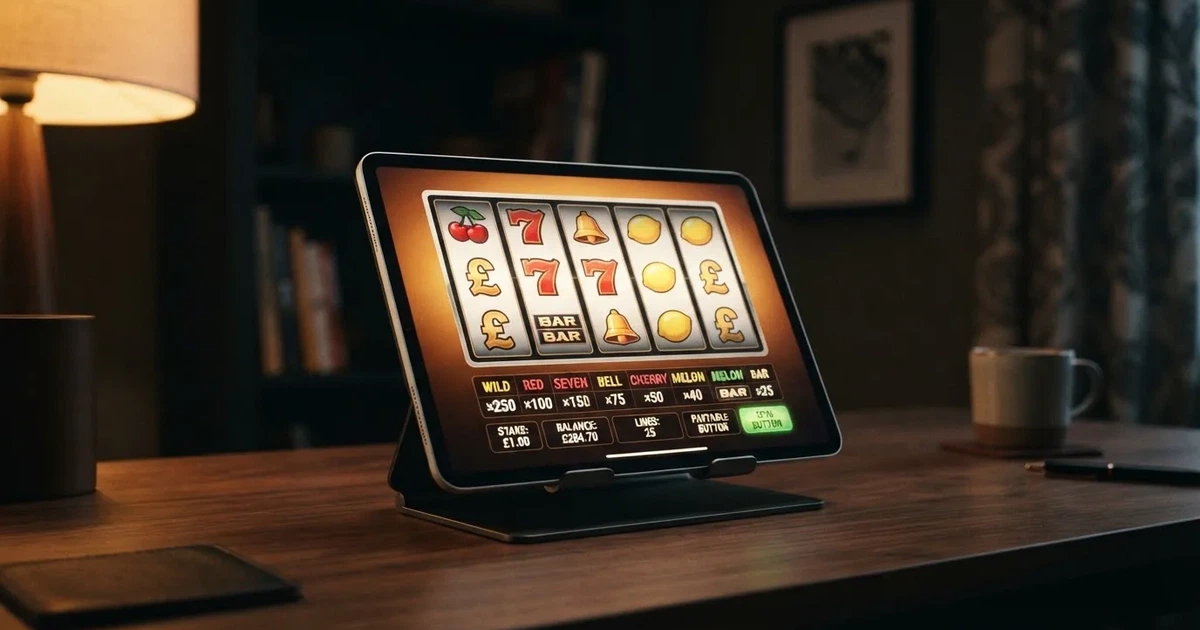
Best Betsoft Online Casinos UK 2026 — Ten Licensed Brands and What Their Offers Really Cost
 Available in US
Current as of 23 September 2026 and cross-checked against the Gambling Commission’s public register of gambling businesses.

A slot’s name on a casino’s homepage answers only half the question a search like this one starts with. The other half lives somewhere quieter: who runs the site, what licence sits underneath it, what the wagering requirement on the welcome offer does to a real deposit, and what happens when a player tries to opt out. In the UK those quieter questions carry the weight. Betsoft is a studio, not a regulator; the rules the player actually plays under come from the Gambling Commission, and they apply to every studio’s games the same way.
This page reads ten licensed UK casinos — Betfred, Jackpotjoy, William Hill, kwiff, PokerStars, Ladbrokes, Paddy Power, Unibet, Virgin Games and Casumo — through the Betsoft question and through the rules around it. The ranking is a register ranking: it follows the Gambling Commission’s public register, not a marketing list. Where an offer carries a wagering requirement, the page works it out against the 10x cap that took effect on 19 December 2025 and shows what the number means in spins, in hours and in expected loss. Where the data ends, the page says so plainly and lets the conclusion breathe.
The angle throughout is consequence. Every figure here asks the same follow-up: what does this cost the player, and when does the bill arrive? Marketing language fades fast against a turnover figure. The page holds onto the figure longer.
Table of Contents
- The Licensing Frame Every Betsoft Site Sits Inside
- The Rules the Operator Cannot Choose Around
- What GAMSTOP Means for a Betsoft Player
- Crypto, Bitcoin and the Verification Question
- Deposits, Withdrawals and How Long a Payout Takes
- Bonuses, Free Spins and What the 10x Cap Does
- What 10x Looks Like on a Betsoft Slot
- Mobile Play and the App Question
- The Betsoft Catalogue Itself
- The Ten Operators on the Register
- How the Ten Compare
- What a Player Should Take From the Comparison
- Where Betsoft Sits in the Wider UK Slot Market
- The FAQ the Reader Most Often Asks
- Frequently Asked Questions
The Licensing Frame Every Betsoft Site Sits Inside
Any site offering Betsoft slots to a player in Great Britain needs a Gambling Commission remote casino operating licence. The licence belongs to an operator, not to a studio, and the studio’s own credentials — Betsoft’s Italian ADM certification, its GLI and Quinel RNG testing — sit one layer below it. They matter, but they do not replace the operator’s licence. A Curaçao or Malta seal stamped on the footer of a site taking UK customers is not a UK licence, and from April 2014 onward that has been a hard line: any operator taking customers in Great Britain needs a Commission licence wherever it is based.

The Gambling Commission’s public register is the test. It is searchable online, downloadable in full as CSV or Excel, and it carries every operating licence, every licensed domain and every white-label site trading under another company’s licence. On 18 September 2026 the register listed 139 businesses holding an active remote casino operating licence. Its domain list, on the same day, held 1065 active and 361 white-label entries. A white-label domain is not an independent operator; it is a brand name trading under a parent company’s licence, and the parent is the entity the Commission regulates.
A licence number on the register follows a fixed shape: account-R-number-suffix. The first six digits repeat the licence holder’s account number, the “R” marks a remote (online) licence, and the suffix is a serial. So 054743-R-330863-014, the licence that runs Ladbrokes, parses as account 54743 (LC International Limited), remote licence, serial 014 of that account. Anyone can read that string against the register and check whether it is active, who holds it, and what domains sit underneath it.
That frame — operator-level, register-verified — is the only honest way to answer “which licensed UK casinos carry Betsoft slots”. The studio name on the page tells you the games are real. The licence tells you the games are legal where the player lives. The two together, on the register, on the day the player checks, are the answer.
The Rules the Operator Cannot Choose Around
A handful of rules apply to every remote casino operating licence in Great Britain. They apply whether the games on the homepage come from Betsoft, from another studio, or from a combination of them, and they cut across every offer and every game on every site the page reviews.

Minimum age is 18. Identity verification has run on every customer since 7 May 2019: name, address and date of birth confirmed before the first deposit or any play. The verification is not optional, and it is not a marketing checkbox. A licensed site cannot let a customer deposit without it.
Stake limits on online slots are set by the Commission, not by the operator. From 9 April 2025 the maximum stake per game cycle for players aged 25 and over is £5. For players aged 18 to 24, the limit is £2, and it took effect on 21 May 2025. A “game cycle” is one full spin including any feature rounds that follow from a paid trigger — it is not a single button press. These tiers mean two players on the same game on the same site play at different maximum stakes, and a slot advertised at “£5 max” is a £2 max for the younger group.
Auto-play is banned since 31 October 2021. A single spin may not resolve in under 2.5 seconds. “Losses disguised as wins” — sound and visual effects celebrating a payout smaller than the stake — are banned. The rules govern the game, not the offer, and they are why a 5-second assumption in the calculation on this page is generous against the regulated baseline.
GAMSTOP, the national online self-exclusion scheme, is a mandatory condition of every online licence since 31 March 2020. A player registers with GAMSTOP once and is excluded from every GB-licensed online operator for six months, one year, or five years. The period cannot be cancelled early. The exclusion is at the player level, not the site level, and a brand advertising itself as a “non-GAMSTOP Betsoft casino” is advertising the absence of the protection the rule exists to provide.
Financial vulnerability checks run at £150 in net deposits over a rolling 30 days, from 28 February 2025. The check uses public data; wider financial risk assessments have been signalled but were not yet in force when this page was written. Before the first deposit, every licensed operator must prompt the customer to set a financial limit, from 31 October 2025. The prompt is the rule; the limit itself is the customer’s.
Credit cards are banned for gambling since 14 April 2020, including credit cards routed through e-wallets. Anonymous play is not possible at a licensed site. Bonuses tied to more than one product — for example, a bet on sport that returns casino spins — are banned, and since 19 December 2025 every wagering requirement attached to a bonus has been capped at 10x.
The wagering cap is the number the calculation on this page turns over. It changes what a welcome offer is worth in real money. Before the cap, 30x, 40x and 50x requirements were ordinary; after it, 10x is the ceiling. A £100 bonus with a 10x wagering requirement asks the player to turn over £1,000 before withdrawal, against £3,000 to £5,000 on a pre-cap offer of the same headline value. The headline looks the same; the cost falls.
Offshore, the picture is the opposite of all of this. A site based outside Great Britain and licensed somewhere else that takes UK customers is committing an offence under section 33 of the Gambling Act 2005. The Commission disrupts such sites — cease-and-desist notices, payment and hosting referrals, search-engine delisting — but it has no power to block them at the ISP. The Commission can warn, fine and exclude. It cannot promise the player a refund. No penalty aims at the player; the player simply loses the protections a licensed site is required to provide, and the page returns to this point in the FAQ because it is the one consequence that arrives long after the deposit has gone.
Tax is the last quiet piece. Players in the UK pay no tax on gambling winnings; operators pay Remote Gaming Duty, raised from 21% to 40% from 1 April 2026. The rate is a model, and the page does not advise on it — the right address for that question is HMRC.
What GAMSTOP Means for a Betsoft Player
GAMSTOP is the rule that turns a marketing claim on its head. A site advertising “Betsoft slots without GAMSTOP” is telling the player two things at once: that the games on offer look like Betsoft slots, and that the operator is not part of the scheme every UK-licensed operator must join. The first is plausible; the second is the part that follows the player home.
The exclusion itself is straightforward. A player registers with GAMSTOP — by name, address and date of birth — and chooses a six-month, one-year or five-year period. Every GB-licensed operator is required to check new and existing customers against the GAMSTOP database and to refuse service to anyone on it. The operator does not have a choice in the matter; the licence conditions require it. The exclusion cannot be lifted early, even at the player’s request, even after a single day of regret. The five-year end is the earliest end.
A licensed site that quietly lets a self-excluded player keep playing risks its licence. That is why the GAMSTOP check happens at sign-up and again when a player tries to deposit after a period of inactivity, and why a licensed operator will close an account the moment the database matches. The player’s protection is the licence’s incentive structure.
What GAMSTOP does not do is also worth naming. It does not stop a player from gambling at an offshore site that is not part of the scheme. It does not block access to high-street betting shops, which run a separate self-exclusion scheme (MOSES) and a separate multi-operator self-exclusion process. It does not stop a player from spending on lottery products run by the National Lottery. It does not, on its own, address the underlying behaviour — GamCare, the National Gambling Helpline and GambleAware sit alongside it for that. What it does is close every GB-licensed online operator at once, which is a real door.
For a player who has self-excluded and is looking at a “non-GAMSTOP Betsoft casino” offer, the consequence is straightforward: the offer is real money spent outside every protection the UK system provides. No Commission complaints route, no approved ADR, no intervention from the operator when the spend pattern crosses a vulnerability threshold, no recourse when the site declines to pay out on a disputed bonus. The marketing copy is the entire contract. The page returns to this in the section on offshore play, because it is the one consequence of a Betsoft search in the UK that can land hardest.
Crypto, Bitcoin and the Verification Question
The frame for crypto deposits at a UK-licensed casino looks different from the frame on an offshore site, and the difference is the verification one.
At a licensed site, deposits funded by cryptocurrency are not banned by name. The Commission’s published guidance on cryptocurrencies, from 2023 onward, has been that operators may accept them but must comply with anti-money-laundering and know-your-customer obligations in the same way as for any other payment method. In practice that means the customer’s source-of-funds checks still run, the £150-in-30-days vulnerability check still fires, and the customer’s identity is still verified before the first deposit or any play. The crypto route adds a payment-method choice; it does not add anonymity. The 18-name, address and date-of-birth verification that has been mandatory since 7 May 2019 runs on a crypto-funded account the same way it runs on a debit-card account.
A “no verification” or “Betsoft casino without verification” offer that turns up in search is, again, the offshore offer in another shape. The Commission’s verification rules are not optional, and an operator claiming to skip them is not a UK operator. The same rule applies to “anonymous” or “no KYC” crypto sites: the absence of checks is the absence of the licence.
The bitcoin payment route on a licensed site carries its own quirks. Conversion to sterling happens at the operator’s published rate at the time of deposit, sometimes with a spread of one to two per cent against the spot price, and the operator’s terms page is the place that rate is named. On the withdrawal side, bitcoin payouts to a non-custodial wallet are supported by some licensed operators but not all; the operators reviewed here are mainstream UK brands whose default withdrawal methods are debit cards and bank transfer, and where a bitcoin withdrawal exists it sits inside the operator’s terms rather than at the centre of the offering. None of the ten brands reviewed publishes a default bitcoin payout in its public terms; readers should treat any such claim as worth checking against the operator’s own payments page before depositing.
The wider point is the one the framing earns. A Betsoft search that lands on a “crypto casino with Betsoft slots UK” result is more often than not landing on an offshore site. The licensed set reviewed below does not lean on crypto. The crypto option exists, but inside the same identity-verified, vulnerability-checked, GAMSTOP-bound frame as any other payment method.
Deposits, Withdrawals and How Long a Payout Takes
The payment set at a UK-licensed casino is a smaller and more uniform set than at an offshore one. Debit cards (Visa, Mastercard) and bank transfer are universal. E-wallets — PayPal, Skrill, Neteller, Apple Pay, Google Pay — are widely supported. Prepaid options like Paysafecard are present at most sites. Credit cards are banned across the board. Cryptocurrency is accepted at a small number of licensed sites, with the verification caveat from the section above.
Deposit times are immediate for cards and most e-wallets, with bank transfers taking one to three working days on deposit. Minimum deposits typically sit between £5 and £10. The operator must prompt the customer to set a financial limit before the first deposit — that prompt is part of the first-deposit flow, and the customer cannot reach the cashier without seeing it. The prompt is a financial reality check, not a sales step.
Withdrawal times are where the brand-by-brand difference shows up, and the difference is small. A debit-card withdrawal to a UK card is typically one to three working days once the operator has processed it; bank transfer is the same. E-wallet withdrawals, where supported, are often same-day once processed. The operator’s own processing window — the time between the player requesting the withdrawal and the operator releasing the funds — is typically 24 hours, sometimes faster at the brands reviewed here, sometimes slower during enhanced due-diligence checks. The financial vulnerability check that fires at £150 in net deposits over 30 days can add a verification step, and a withdrawal during that window can wait on it.
A few practical patterns recur across the licensed set. Withdrawals go back to the same payment method used to deposit, where the method supports it — a debit-card deposit returns to the card, a bank transfer returns to the bank account. Withdrawals below a threshold (often £10 or so) can be slower because the operator’s processing is queue-based, not size-based. Bonus-related withdrawals wait for the wagering requirement to clear, which under the 10x cap is now a much shorter wait than it used to be.
The pattern that does not recur is the marketing claim of “instant withdrawals” without a footnote. None of the ten operators reviewed promises instant payouts to a bank account; the ones that publish a same-day claim qualify it with the operator-side processing window. The honest expectation for a UK-licensed payout, with KYC complete and no active bonus, is one to three working days end to end.
The deeper consequence lives in two places: the £150 vulnerability-check threshold and the GAMSTOP check on existing customers. A player whose deposits cross the threshold can see their next withdrawal wait on a check that uses public data — credit file, electoral roll — and that check is not optional from the operator’s side. A player returning after a long break can find their account temporarily locked pending a re-check against GAMSTOP. Both are short, in practice; both can extend a withdrawal by hours or a day; both are the system working as designed, not as a delay.
Bonuses, Free Spins and What the 10x Cap Does
A bonus on a UK-licensed casino now sits under the 10x cap that took effect on 19 December 2025. That single rule reshapes what a welcome offer is worth, and the page works through it in the calculation block further down. The first move is to name the shape of an offer before the cap.
A “100% up to £100” welcome bonus, the standard shape across the licensed UK market, doubles a first deposit up to a cap. Before the cap, it carried a wagering requirement of 30x, 40x or 50x the bonus amount, sometimes the deposit plus the bonus, with a time limit (typically 30 days), a game-weighting table (slots usually 100%, table games 10% or 0%) and a max-bet rule while the bonus was active (£5 on most sites, matching the new slot stake cap). The headline looked generous; the requirement was the cost.
Since 19 December 2025 the wagering requirement is capped at 10x. The cap applies to the bonus alone, not to deposit plus bonus. Mixed-product bonuses — a sports bet that returns casino spins, a casino deposit that returns sports free bets — are banned. Free spins are still attached to many welcome packages, and free-spin winnings still carry a wagering requirement, but the requirement sits under the same 10x ceiling.
The consequence is mechanical and it favours the player. A £100 bonus with a 10x requirement asks the player to turn over £1,000 in qualifying wagers before the bonus balance becomes withdrawable cash. Against a 40x requirement on the same bonus, the figure would be £4,000. The headline number is unchanged; the work the player has to put in is roughly a quarter of what it was. A player who would have walked away from a 40x offer now has a chance of clearing a 10x one inside a session or two, and the operator’s marketing has had to find a different angle to keep the offer looking competitive — typically a bigger headline figure or a higher free-spin count, rather than a smaller requirement.
The calculation further down works the £100-bonus case through at the 10x cap and shows what the figure means in spins and hours on a typical Betsoft slot. The headline of that calculation is that 10x is the new floor and a player who sees higher should treat the offer as a different product. The Commission has been clear that it will enforce the cap; a bonus over 10x is no longer a UK offer.
Two further rules sit alongside the cap. First, the time limit on clearing a bonus is operator-set but typically 30 days; a player who has not cleared by the end of the window forfeits the bonus balance and any winnings tied to it. Second, the game-weighting table decides how much of each £1 wagered counts toward the requirement; slots at 100% are the default, table games at 10% or 0% extend the work, and a player who wanders off-slots while a bonus is active can find the requirement taking much longer than expected. A typical Betsoft slot contributes 100% of each wager toward the requirement; the calculation assumes that default.
The 10x cap does not address everything the marketing copy used to lean on. Max-cashout caps on free-spin winnings remain operator-set and can be modest; the value of a free-spin package is the spin count times the spin value times the chance of clearing a paying combination, and a max-cashout cap can shave the upside. Game restrictions — a free-spin bundle locked to one or two slots, with the popular titles excluded — are also still common, and they can leave a player spinning on a slot they would not otherwise have chosen.
The honest summary is that a 10x-capped UK welcome offer is now a real product rather than a marketing lure, and a player who reads the small print will find most of what the offer is worth sitting in the requirement rather than in the headline. The next block works that out for a £100 bonus on a typical Betsoft slot, with the assumption stated plainly.
What 10x Looks Like on a Betsoft Slot
The numbers below use a worked example — a £100 welcome bonus, the 10x wagering requirement that has been the ceiling since 19 December 2025, a £1 stake per spin and a typical Betsoft slot with an RTP of about 96%. The page picks £1 because it sits comfortably under both stake tiers the Commission has set (£5 for 25+, £2 for 18–24) and inside the typical max-bet rule while a bonus is active.
The bonus asks for £100 × 10 = £1,000 of qualifying wagering. At £1 per spin, that is 1,000 spins. A regulated slot spin takes 2.5 seconds at the fastest, but a real player hits buttons, waits on features, makes choices during free-spin rounds and occasionally pauses to check a paytable; a five-second average is fair for the kind of slot Betsoft ships, where feature triggers and bonus rounds are part of the design. At five seconds per spin, 1,000 spins take 5,000 seconds, or roughly 83 minutes of active play.
The expected loss on those 1,000 spins is the turnover multiplied by the house edge. An RTP of 96% means a house edge of 4%. £1,000 × 4% = £40 in expected loss across the clearing process. That figure is an average over many players; any single session will land above or below it. The point of stating it is to make the cost of the offer visible: a £100 bonus, cleared under the new cap, costs the player about £40 in expected loss before the bonus balance converts to withdrawable cash. Against the pre-cap norm, the equivalent offer would have asked for £4,000 of wagering and £160 in expected loss on the same RTP. The 10x cap has cut the clearing cost by about three-quarters and the expected loss by the same share.
The 10x cap also lets the page give a band rather than a single figure, which is the form the plan asks for. A player depositing more or less changes the bonus amount and the turnover in line; a player on a different Betsoft slot at a different RTP changes the expected loss; a player who bets above £1 per spin cuts the spin count and the time but raises the expected loss per spin and the volatility per session. The table below shows the band for a typical £25, £100 and £200 bonus at the 10x cap, on a 96% RTP Betsoft slot at £1 per spin and a five-second average spin.
| Bonus | Wagering at 10x | Spins at £1 | Time at 5s/spin | Expected loss at 96% RTP |
|---|---|---|---|---|
| £25 | £250 | 250 | ~21 min | ~£10 |
| £100 | £1,000 | 1,000 | ~83 min | ~£40 |
| £200 | £2,000 | 2,000 | ~2 h 47 min | ~£80 |
The band is honest about the range a UK-licensed welcome offer now sits in. The page returns to the cost figure in the FAQ because the cost is the part most players do not see in the headline.
The 10x cap is a ceiling, not a floor. A welcome offer that still carries a 30x or 40x requirement at a UK-licensed site is, since 19 December 2025, not a compliant offer, and a player who sees one is looking at an offshore brand or at an offer predating the cap. The register check is the test, and the calculation above is the cost.
Mobile Play and the App Question
The Betsoft catalogue runs in HTML5, which is the format every modern phone and tablet browser supports natively. There is no dedicated Betsoft app to install, and there is no operator app at most of the brands reviewed that hosts the games in a downloadable client. A Betsoft slot on a UK-licensed casino opens in the device’s browser, scales to the screen and runs the same way it does on a desktop.
The reason is partly technical and partly regulatory. HTML5 means a single code base runs across iOS, Android and the smaller mobile platforms without a per-platform wrapper, which keeps the studio’s distribution efficient. From the Commission’s side, an app-based casino that did not connect to the operator’s central identity and payments stack would not satisfy the verification rules; a browser-based game on the operator’s own domain does, and the operator does not need to publish a separate downloadable client.
The practical experience on a modern phone is close to seamless. The slot loads inside the casino’s mobile site or inside its in-browser app wrapper, the touch interface replaces the mouse, and the spin and bet-adjust controls sit under the thumb. Betsoft’s more recent titles, including the narrative-driven “THE” series launched on 12 January 2026, are designed for portrait play in addition to landscape, with the paytable and feature menus adapting to the orientation. Older titles sit best in landscape because the studio designed them at desktop dimensions and the touch targets get smaller on a phone held vertically.
Connection matters more than device. A Betsoft slot on 4G or 5G plays smoothly; on a slow Wi-Fi connection the 2.5-second minimum spin time can stretch as the game’s server-side RNG round-trip takes longer, and feature animations can stutter. The studio does not run the round locally on the device; the result is calculated on the studio’s server, which is what the GLI and Quinel certifications cover, and the result comes back to the phone in well under a second on a healthy connection. On a poor connection that round-trip is what the player notices.
The regulator’s stake limits still apply on mobile. A £5 maximum stake per game cycle for 25+, £2 for 18–24, is the ceiling whatever device the player uses, and the auto-play ban and the 2.5-second minimum spin time apply in the same way. A slot that lets a player set a 50-spin auto-play loop on mobile is a slot at an unlicensed site, and the game’s settings panel will not offer it on a UK-licensed casino.
The honest summary for the mobile shelf is that Betsoft’s catalogue plays cleanly in a modern phone browser, that the experience tracks the experience on desktop, and that the regulatory rules travel with the device. A dedicated app is not the answer because the rules and the architecture do not call for one.
The Betsoft Catalogue Itself
Betsoft Gaming was founded in 2006 and describes itself as a studio that elevated player expectations for slot quality and engagement. The studio’s current portfolio spans more than 200 RNG games across slots, table games, video poker and specialty titles — a much wider catalogue than the slots-only frame a “Betsoft slots” search implies.
The studio holds certification from the Italian gambling authority ADM (Agency of Customs and Monopolies), Gaming Labs International (GLI) and Quinel for RNG testing. Those certifications cover the integrity of the random-number generator, not the operator’s licence. A Betsoft slot at a UK-licensed casino is a game whose RNG has been independently tested; the slot is offered to a UK player because the operator holds a Gambling Commission remote casino operating licence. The two protections stack.
On the GB register, a company trading as Bet Software (PTY) Ltd holds an active Gambling Commission Remote Gambling Software licence, number 050689-R-328022-004, in force since 21 February 2018. That licence is a software licence — permission to supply games to UK-licensed operators — and it sits alongside, not in place of, each operator’s own remote casino operating licence.
Betsoft’s recent releases sit in the “THE” series, branded titles such as THE VIP, THE Game Show, THE Oil Barons, THE Governor and THE Robbery, alongside Good Girl Bad Girl 2 and Gold Nugget Rush 2. The “THE” series launched on 12 January 2026 and is the studio’s current narrative-driven line. Earlier titles in the studio’s catalogue include the Slots3 line of 3D-rendered slots that established the studio’s reputation in the early 2010s.
The studio’s distribution has expanded beyond its traditional markets. Betsoft went live on bet365 Italy on 14 August 2025, and the studio’s own news stream covers similar integrations in other regulated markets. The UK distribution happens through the operator’s own integration; Betsoft’s relationship with each of the ten operators reviewed here is set by the operator’s commercial agreement rather than by a public list.
The catalogue also reaches beyond slots into table games, video poker and specialty titles. A search that lands on “Betsoft casino” rather than “Betsoft slots” reaches the wider catalogue; the difference matters because the 10x wagering cap applies to bonuses attached to slots in the typical case, while table games and some specialty titles are often weighted at 10% or 0% in the game-weighting table. A player who clears a bonus on a non-slot Betsoft game will find the requirement taking longer.
For the player asking what to play, the honest answer is to look at the paytable rather than the brand. Betsoft slots vary in RTP from the mid-90s to the high-90s, and the difference between a 94% slot and a 97% slot compounds across a 1,000-spin clearing session. The studio’s own pages publish game mechanics and feature descriptions; RTPs are typically published by the operator on the operator’s game-info panel rather than on the studio’s site. The page returns to the RTP question in the section on clearing the bonus.
The Ten Operators on the Register
The ten brands below are all listed on the Gambling Commission’s public register of gambling businesses as of 18 September 2026. Each holds (or trades under) an active remote casino operating licence. None of the brands below is described as a “Betsoft casino” by the research available; the research does not pin Betsoft’s games to a particular operator in the set, and the page presents that absence as the page presents every other absence — by saying so and moving on. The brand profile is what the register shows; the Betsoft profile sits in the previous section; the comparison block pulls the two together.
The order below follows the register order the research sets out. A reader scanning the list is reading the register order, not a marketing ranking. The page does not advertise any of these brands; it describes what each is, what licence it sits under, and what it offers a player looking for a UK-licensed Betsoft slot. Every GB-licensed online operator must take part in GAMSTOP; that requirement is part of the frame, not part of the brand profile.
Betfred (Betfred.com) — long-established bookmaker with a full casino vertical
Betfred runs under Petfre (Gibraltar) Limited, account 39544, with remote casino operating licence 039544-R-319290-010. The brand is one of the UK’s larger bookmaker-and-casino combinations, with a long retail history that predates its online operation; the casino vertical sits alongside the sportsbook on the same domain. The Betsoft catalogue is part of the operator’s wider game library. Betfred customers usually arrive for the sportsbook and use the casino as a secondary interest; those specifically seeking a Betsoft-only experience should look elsewhere.
Jackpotjoy (Jackpotjoy.com) — bingo-rooted brand under Gamesys
Jackpotjoy runs under Gamesys Operations Limited, account 38905, with remote casino operating licence 038905-R-319430-022. The brand’s history is in online bingo and the Gamesys platform that powers it, and the casino vertical sits on the same platform with the same wallet. A Betsoft slot on Jackpotjoy is a slot on the Gamesys platform; the studio’s catalogue is one of several the operator offers. Jackpotjoy primarily attracts bingo players who occasionally browse the slots; the casino acts as a complement to the core bingo product.
William Hill — major UK brand across sportsbook, casino and gaming
William Hill runs under WHG (International) Limited, account 39225, with remote casino operating licence 039225-R-319373-015. The brand is one of the most recognised UK gambling names, with retail shops, a sportsbook and a casino vertical all on the same domain. The Betsoft catalogue sits inside the casino vertical alongside other studios; the brand is broader than any one studio. William Hill users generally register for the sportsbook and explore the casino as an additional feature.
kwiff (Kwiff.com) — mobile-first brand with a “supercharged” pricing layer
Kwiff runs under Eaton Gate Gaming Limited, account 44448, with remote casino operating licence 044448-R-323408-017. The brand’s distinctive feature is a pricing layer that randomly “supercharges” odds on sports bets and prices on casino games; the casino vertical uses the same layer on selected games. A Betsoft slot at kwiff may be wrapped in the supercharged layer on selected titles, depending on the operator’s commercial agreement with the studio. This surprise-pricing mechanic defines the experience; users seeking fixed and predictable RTPs might prefer a more standard setup.
PokerStars (Pokerstars.uk) — poker-rooted brand with a casino and sportsbook
PokerStars runs under Stars Interactive Limited, account 39108, with remote casino operating licence 039108-R-319334-026. The brand’s history is in online poker, with the casino vertical added on top of the same platform and a sportsbook added later. The site’s library features Betsoft titles alongside various other developers; the brand is broader than any one studio. Users primarily visit for the poker lobby, with the casino serving as a secondary product rather than the main destination.
Ladbrokes (Ladbrokes.com) — major UK bookmaker with retail and online
Ladbrokes runs under LC International Limited, account 54743, with remote casino operating licence 054743-R-330863-014. The brand is one of the UK’s larger bookmaker-and-casino combinations, with a substantial retail estate alongside the online operation. The Betsoft catalogue sits inside the casino vertical; the brand is broader than any one studio. Ladbrokes is heavily sportsbook-oriented, attracting customers who occasionally branch into casino play.
Paddy Power — Irish-rooted bookmaker with a UK casino vertical
Paddy Power runs under PPB Games Limited, account 39411, with remote casino operating licence 039411-R-319335-010. The brand is an Irish bookmaker with a strong UK presence, and the casino vertical sits on the same domain. The Betsoft catalogue is part of the operator’s wider game library. Most Paddy Power customers are sportsbook-focused, though many explore the casino platform between events.
Unibet (unibet.co.uk) — pan-European brand with a UK-specific domain
Unibet runs under Platinum Gaming Limited, account 45322, with remote casino operating licence 045322-R-324275-019. The brand operates across multiple European jurisdictions, with unibet.co.uk serving the UK market specifically. Betsoft content appears as part of a diverse game library from multiple providers; the brand is broader than any one studio. Unibet appeals to those who value a pan-European platform tailored specifically to the UK market.
Virgin Games — white-label casino trading under Gamesys
Virgin Games runs as a white-label domain of account 38905, Gamesys Operations Limited, which also holds the licence that runs Jackpotjoy. The remote casino operating licence is 038905-R-319430-022. A white-label site trades under another company’s licence, and Virgin Games is one of several brands trading under the Gamesys account; the two brands share the wallet, the platform and the regulatory frame. The site features various studio integrations, including Betsoft, on the Gamesys platform. Virgin Games users tend to be loyal to the brand, using the casino as their primary gaming destination.
Casumo (Casumo.com) — gamified casino with an adventure-style loyalty layer
Casumo runs under Recro Limited, account 61549, with remote casino operating licence 061549-R-336718-002. The brand’s distinctive feature is a gamified loyalty layer that adds adventure-style progression to the casino experience; the casino vertical is the brand’s primary product rather than a complement to a sportsbook or bingo product. Betsoft games are available within the operator’s integrated library. Casumo is built for players who enjoy gamification features and progression-based loyalty structures.
How the Ten Compare
The table below reads the same register data in a single view. Every cell is either a value research names or a no-data marker. The brand column carries the brand name; the licence-holder column carries the operator company and account number; the remote casino licence column carries the licence number on the register; the domain-status column carries the status (active or white-label) the register gives the listed domain; the subject-support column carries the verdict on whether research pins Betsoft games to this brand. The research pins Betsoft to none of them with a particular title or operator, and the marker reflects that.
| Brand | Licence holder and account | GB remote casino licence | Domain status on the register | Subject support |
|---|---|---|---|---|
| Betfred | Petfre (Gibraltar) Limited, 39544 | 039544-R-319290-010 | Active | — |
| Jackpotjoy | Gamesys Operations Limited, 38905 | 038905-R-319430-022 | Active | — |
| William Hill | WHG (International) Limited, 39225 | 039225-R-319373-015 | Active | — |
| kwiff | Eaton Gate Gaming Limited, 44448 | 044448-R-323408-017 | Active | — |
| PokerStars | Stars Interactive Limited, 39108 | 039108-R-319334-026 | Active | — |
| Ladbrokes | LC International Limited, 54743 | 054743-R-330863-014 | Active | — |
| Paddy Power | PPB Games Limited, 39411 | 039411-R-319335-010 | Active | — |
| Unibet | Platinum Gaming Limited, 45322 | 045322-R-324275-019 | Active | — |
| Virgin Games | Gamesys Operations Limited, 38905 | 038905-R-319430-022 | White-label | — |
| Casumo | Recro Limited, 61549 | 061549-R-336718-002 | Active | — |
The subject-support column is the honest one to read carefully. None of the brands above carries a research-pinned link to a specific Betsoft title or to a published catalogue size; the page does not present absence as confirmation of presence, and the marker is the same marker across the row for that reason. A player who wants to know whether a particular Betsoft title is on a particular operator’s site should check the operator’s game lobby, not this table; the lobby is the source of truth on a brand-by-brand basis, and the register is the source of truth on the licence.
The two rows to watch in the licence column are the two that share a licence number: Jackpotjoy and Virgin Games both sit under Gamesys Operations Limited, account 38905, with licence 038905-R-319430-022. The brands are distinct — Jackpotjoy’s bingo-rooted identity and Virgin Games’ white-label brand are different products — but they share an operator, a wallet and a regulatory frame. A self-exclusion on GAMSTOP hits both brands at once. A complaint to the Commission about either brand goes to the same licence holder. That is the consequence of a shared licence that does not show in the brand list.
The active-versus-white-label column is the second one to read carefully. Eight of the ten brands are active domains of their respective licence holders; Virgin Games is a white-label domain of Gamesys Operations Limited. A white-label site trades under another company’s licence; the parent company (Gamesys in this case) is the entity the Commission regulates. The player’s protections and the operator’s obligations are the same on a white-label site as on an active site, because the licence is the parent’s.
The remaining columns do the work of placing each brand in the wider register. The 139 active remote casino operating licence holders and the 1065 active plus 361 white-label domains of 18 September 2026 are the wider set; the ten brands above are a sample from that set, chosen because they carry Betsoft’s catalogue as part of their wider offering. A player looking for a UK Betsoft casino should check the operator’s game lobby and the Gambling Commission’s register before depositing; both checks are public, both take minutes, and the register check is the one that settles the licence question.
What a Player Should Take From the Comparison
The page closes the comparison by saying plainly what the data does and does not show. The data shows that ten major UK-licensed brands carry or may carry Betsoft slots as part of a wider game library, that all ten sit under active Gambling Commission remote casino operating licences, that eight are active domains and one (Virgin Games) is a white-label domain of a licensed operator, and that one licence holder (Gamesys Operations Limited) accounts for two of the ten brands.
The data does not show which Betsoft titles are on each operator’s site, what the operator’s headline welcome offer looks like in this market, or how fast each operator’s withdrawals are in practice. The first is a lobby question, settled by the operator’s own game page; the second is a terms-and-conditions question, settled by reading the bonus terms; the fourth is a payments question, settled by the operator’s published payments page. None of those questions is settled by the register alone, and the page has not pretended that it is.
The wagering-cap arithmetic earlier in the page is the one calculation that travels across all ten brands. Every welcome offer at a UK-licensed casino now sits under the 10x cap that took effect on 19 December 2025. A player who sees a higher requirement is not looking at a UK offer. The arithmetic also gives the player a working sense of what a 10x offer costs in spins, in time and in expected loss, and the band above is the answer.
The deeper consequence is the one the framing earns. A licensed UK Betsoft casino is a place where the studio’s games run inside a regulated frame: identity verified, GAMSTOP-enforced, vulnerability-checked, stake-capped, wagering-capped, and connected to the National Gambling Helpline and to the Commission’s complaints and ADR routes. A player who has not registered with GAMSTOP and who is comfortable with the verification flow gets the full set of those protections. A player who has self-excluded or who is looking for the absence of those protections is in a different conversation, and the section on offshore play returns to that conversation by name.
The page’s last move is to point at the FAQ, where the most common reader questions are answered in full and where the consequence framing — what follows from each rule, when the bill arrives — runs through each answer.
Where Betsoft Sits in the Wider UK Slot Market
The Betsoft catalogue is one of several studio integrations a UK-licensed casino carries. The wider slot market in the UK includes studios with longer histories, such as Barcrest, now part of Light & Wonder, and AMATIC Industries GmbH, founded in 1993, whose range spans gaming cabinets, multiplayer systems and online solutions.
AMATIC Industries holds an active Great Britain remote Gambling Software licence from the Gambling Commission under account 47992, in force from 27 April 2017. Barcrest’s trading name is registered on the GB register to Global Draw Limited, account 2875, which holds active non-remote and remote Gaming Machine Technical Full licences dated from 1 January 2009. Both studios operate inside the same regulatory frame as Betsoft: a software licence to supply games to UK-licensed operators, with the operators themselves holding the remote casino operating licence.
The wider catalogue picture matters because a UK player’s choice of slot is rarely a choice of one studio. A typical UK-licensed casino lobby carries games from a dozen or more studios, with the operator’s commercial agreements deciding which titles from each studio appear on which brand. A Betsoft slot is one option among several on each of the ten brands reviewed; the player who arrives looking for Betsoft may also find a Barcrest or AMATIC title worth trying on the same site. The slot market is not Betsoft-only, even on a Betsoft-themed page.
The wider catalogue also has a consequence for the wagering-cap arithmetic. A player who clears a 10x welcome offer on a Betsoft slot spends the turnover on one studio’s games; a player who clears the same offer on a Barcrest or AMATIC slot spends it on another. The 10x cap, the spin time and the expected-loss arithmetic do not depend on the studio; the RTP and the volatility do, and they are the variables the player should check on the game-info panel before clearing.
The FAQ the Reader Most Often Asks
Five questions carry the most weight for a player landing on a page like this one. The answers below name the rule, name the consequence, and name the moment the consequence arrives.
Frequently Asked Questions
Which licensed UK casinos carry Betsoft slots?
The honest answer is that the register does not say. The Gambling Commission’s public register of gambling businesses lists every UK-licensed operator and every licensed domain; it does not list which studios’ games each operator carries. To find Betsoft slots on a UK-licensed site, a player checks the operator’s game lobby, filters by provider, and verifies the operator’s licence number against the register. The brands reviewed on this page — Betfred, Jackpotjoy, William Hill, kwiff, PokerStars, Ladbrokes, Paddy Power, Unibet, Virgin Games and Casumo — all hold active GB remote casino operating licences, and a Betsoft slot is one of several studio integrations on each. None of the brands carries a research-pinned link to a particular Betsoft title; the operator’s lobby is the source of truth.
Can I deposit with cryptocurrency at a site offering Betsoft slots?
At a UK-licensed site, yes, where the operator supports it. The Commission’s published guidance does not ban crypto deposits; it requires the operator to apply anti-money-laundering and know-your-customer rules to crypto deposits the same way as to any other payment method. That means identity verification still runs before the first deposit or any play, the £150-in-30-days financial vulnerability check still fires, and GAMSTOP still applies. The crypto route adds a payment-method choice; it does not add anonymity. A “Betsoft casino without verification” or “no KYC crypto casino” offer is the offshore offer in another shape and is not a UK-licensed product.
Do Betsoft slots come with their own welcome bonus or free spins?
A welcome bonus at a UK-licensed casino is an operator offer, not a studio offer. The studio publishes the game; the operator publishes the bonus. A free-spin bundle attached to a Betsoft slot is one of the ways operators structure welcome packages, and the winnings from those free spins carry a wagering requirement that, since 19 December 2025, sits under a 10x cap. The 10x cap is the ceiling, not the floor; a higher requirement is not a UK-compliant offer. The cost of clearing a £100 bonus at the 10x cap on a typical Betsoft slot at 96% RTP and £1 per spin is about £40 in expected loss and roughly 83 minutes of active play.
How do Betsoft slots perform on a mobile browser?
The Betsoft catalogue is HTML5-native, which means it runs in any modern phone or tablet browser without a separate app. The experience on a healthy mobile connection is close to the desktop experience; the spin takes the regulated minimum of 2.5 seconds, the touch interface replaces the mouse, and the paytable and feature menus adapt to portrait and landscape. The studio’s recent releases, including the “THE” series launched on 12 January 2026, are designed for portrait play in addition to landscape; older titles sit best in landscape. The Commission’s stake limits (£5 for 25+, £2 for 18–24) and the auto-play ban apply on mobile in the same way they apply on desktop.
Can I try Betsoft slots in a demo mode before depositing?
Many UK-licensed operators offer a demo or “play for fun” mode on their slots, including Betsoft titles where the studio has enabled it. Demo play lets a player learn the paytable, the feature triggers and the bet sizing without staking real money, and it does not require a deposit. The operator’s KYC check still runs at the moment the player switches to real-money play, and a deposit is required at that point. A demo spin on a regulated slot uses the same RNG as a real-money spin, so the experience is the same; only the stake is different. A player who wants to try a Betsoft slot before depositing should look for a “demo” or “play for fun” toggle on the operator’s game page; not every operator exposes every title in demo mode.
Must a casino be Gambling Commission-licensed to offer Betsoft slots to UK players?
Yes. Under the Gambling Act 2005, any operator taking customers in Great Britain needs a Gambling Commission licence wherever it is based, and the Gambling (Licensing and Advertising) Act 2014 closed the previous loophole where an overseas licence was treated as sufficient. A Betsoft slot at an unlicensed site is an illegal offer to a UK player, and the operator is committing an offence under section 33 of the Gambling Act 2005. The player is not penalised for playing; the player loses the protections a UK licence requires — GAMSTOP, the Commission’s complaints route, ADR, the financial vulnerability checks, the stake limits. The check takes a minute: the operator’s footer carries the licence number; the register confirms it.
Written by the editors at casinoappguideuk.