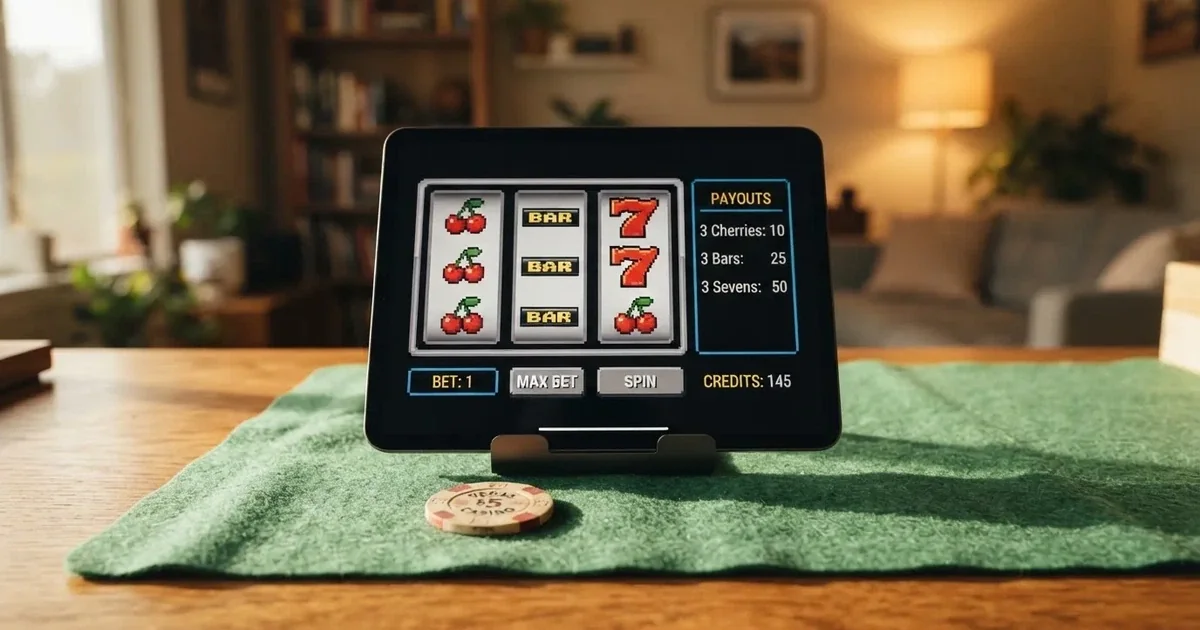
The real cost of buying the bonus round at ten UK-licensed casinos
 Available in US
The bonus-buy button turns a slot’s feature round from something that may or may not trigger into something a player pays for in one click. The price is whatever the game sets — most often fifty to one hundred times the line stake — and the spend is the player’s money, settled in a single transaction with no refund whether the round returns a fraction of it, ten times it, or nothing at all. At a UK-licensed casino that purchase counts toward the same stake and loss limits as any other spin, runs at the same minimum 2.5-second cycle, and sits under a wagering regime that changed the economics of every bonus offer from 19 December 2025. This page walks through ten Gambling Commission-licensed operators on what each one puts on each side of that trade, and on what the rules underneath them cost the player in pounds and in time.

Current as of 23 September 2026 · Gambling Commission public register checked at gamblingcommission.gov.uk
Table of Contents
- Best bonus-buy slots UK — the landscape of ten licensed operators
- What the bonus-buy incentive actually does on a UK slot
- The Gambling Commission frame and the fundamentals of UK slot licensing
- Domains, white labels and the jurisdictional record
- Stake limits and the rules that make bonus buys safer by design
- Bonuses, free spins and the 10× wagering cap
- Paddy Power — Flutter’s PPB Games, the multi-brand account
- kwiff — Eaton Gate Gaming, a newer account number
- Betway — Betway Limited, the multi-market sportsbook parent
- bet365 — Hillside (UK Gaming) ENC, the world’s largest online bookmaker
- Unibet — Platinum Gaming Limited, the Kindred subsidiary
- 888casino — 888 UK Limited, the long-running casino brand
- Virgin Games — Gamesys Operations, the only white-label in the set
- Midnite — Dribble Media, the newest of the ten
- Betfred — Petfre (Gibraltar) Limited, the high-street legacy
- BetVictor — BV Gaming Limited, the independent bookmaker
- Key safer gambling requirements for online slots
- Frequently asked questions about bonus-buy slots at UK casinos
Best bonus-buy slots UK — the landscape of ten licensed operators
The ten operators below are listed on the Gambling Commission’s public register as the holders of an active remote casino operating licence and as the operator of at least one GB-facing domain. They are presented in the order the research places them; the differences between them run thinner than the marketing does, because every one of them sits inside the same regulatory frame, the same stake tier (£5 over 25s, £2 for 18–24s), the same minimum spin time, and the same 10× wagering ceiling for any bonus they hand a player.
| Brand | Licence holder and GB remote casino licence | Domain status on the register |
|---|---|---|
| Paddy Power | PPB Games Limited · 039411-R-319335-010 | Active |
| kwiff | Eaton Gate Gaming Limited · 044448-R-323408-017 | Active |
| Betway | Betway Limited · 039372-R-319367-029 | Active |
| bet365 | Hillside (UK Gaming) ENC · 055149-R-331499-004 | Active |
| Unibet | Platinum Gaming Limited · 045322-R-324275-019 | Active |
| 888casino | 888 UK Limited · 039028-R-319297-014 | Active |
| Virgin Games | Gamesys Operations Limited · 038905-R-319430-022 | White-label |
| Midnite | Dribble Media Limited · 042647-R-321653-022 | Active |
| Betfred | Petfre (Gibraltar) Limited · 039544-R-319290-010 | Active |
| BetVictor | BV Gaming Limited · 039576-R-319370-028 | Active |
Three things stand out before the operator write-ups begin. Nine of the ten run their own licence account; Virgin Games alone is registered as a white-label domain of Gamesys Operations Limited, which means a player signing in to Virgin Games is playing on Gamesys’s licence rather than a separately authorised one — the same Gamesys account that has historically sat behind several other well-known UK brands, so the regulator’s reach is the same in every direction but the operational responsibility is concentrated on a single holder. Every licence number follows the format the Commission publishes: six leading digits repeat the account number, the “R” marks the licence as remote (online), and the trailing suffix identifies the licence variant — readable, traceable, and verifiable against the public register without a login. And the ten account numbers stretch from Betway’s 39372 (one of the older remote casino accounts on the file) through kwiff’s 44448 (one of the newer ones), which says more about the regulator’s filing history than about how each operator behaves today.
What the licence column does not show is the game-by-game cost of buying a bonus, the deposit and withdrawal friction, the reality-check cadence, or the wagering arithmetic a player would actually have to run to clear a sign-up offer. Those are the rows the table above does not have room for, and they are what each operator write-up further down the page takes up.
What the bonus-buy incentive actually does on a UK slot
The slot machine itself predates the bonus round by several decades. Charles Fey of San Francisco built the first automatic three-reel slot, the Liberty Bell, with reels bearing horseshoes, diamonds, spades, hearts and a bell symbol — three aligned bells paid ten nickels, fifty cents. Before that device, Sittman and Pitt of Brooklyn had assembled a five-drum poker-based machine in 1893, though it had no automatic payout at all. Herbert Mills produced a copy of the Liberty Bell in 1907 and the basic form held. The step that made bonus-buy possible came in 1984, when Norwegian mathematician Inge Telnaes patented a system using a random number generator to pick the reel-stop positions; for the first time, what the screen showed could be weighted independently of how often each symbol appeared on a physical reel.
That decoupling is what a “bonus buy” sits on. A modern video slot is paid as a series of independent outcomes drawn from an RNG, with the visible reel layout weighted so that the long-term return comes out to a percentage the operator sets. Most of the time, the bulk of that return sits inside the bonus round — free spins, pick bonuses, expanding-wild features — and the base game pays small amounts frequently enough to keep the meter moving. The bonus-buy button collapses the wait. The player pays an upfront price, usually expressed as a multiple of the line stake (50×, 75×, 100× and 200× are common), and the bonus round is entered on the next spin. The price is the bet. There is no refund if the round returns less than the entry price.
What changes is the volatility profile of the session. The base game of a typical bonus-buy slot pays a long series of small amounts that the maths expects to lose slowly; the bonus round pays a small number of large amounts that the maths expects to lose slowly too, but over fewer cycles. Buying the round concentrates the loss into one transaction instead of spreading it across several hundred spins, which is what the marketing calls “instant access” and what the math calls the same expected value delivered faster. The RTP of the game does not usually change between base-play and bonus-buy on the same title, because the maths is set to deliver the same return either way — but the distribution of outcomes around that return does, which is why a player who buys ten rounds in a row can plausibly lose the entire ten before the maths catches up.
Volatility is the technical word for that distribution. A low-volatility slot pays smaller wins more regularly; a high-volatility slot pays fewer but bigger wins. Bonus-buy slots are, almost by construction, high-volatility products: the prize the feature round carries is the same prize the base game has been slowly funding, so buying the round is a way of front-loading exposure to that single large outcome. Some operators and some review sites use a five-tier scale (low, medium-low, medium, medium-high, high); a small number of regulators, including the UK Gambling Commission, expect operators to publish that rating alongside the game’s advertised RTP so a player can read both before staking. What the rating does not tell the player is how long the average bonus round lasts in spins, what the largest possible single win is, or what proportion of the published RTP sits behind the feature round rather than in the base game — details that vary title by title and that only the developer’s paytable carries.
The studios have not built bonus-buy into every slot on the catalogue, and the reason is partly commercial. A bonus-buy slot has to be designed around the option, which means the maths has to be calibrated to deliver the same return whether the player buys or waits — a constraint a casual three-reel game does not have. Some providers have built bonus-buy into most of their recent releases; others have kept it for the games the maths can carry. Either way, the choice is the developer’s, not the casino’s, and a player cannot assume the feature exists on a particular title just because the casino has it on the lobby. The game-by-game mark is what tells the player where the option is.
What sits behind the price is the question the rest of the page tries to answer. The bonus-buy entry is a stake under UK law, and the rules on stakes are the rules on bonus buys — which is the seam the next two sections pick up.
The Gambling Commission frame and the fundamentals of UK slot licensing
Every operator in this set holds the same type of licence: a remote casino operating licence, granted by the Gambling Commission under the Gambling Act 2005 and exercisable across Great Britain — England, Scotland and Wales. Northern Ireland sits under separate legislation, which is why a “UK licence” on a casino’s footer is read carefully rather than assumed. The Commission is sponsored by the Department for Culture, Media and Sport; the licence itself is published, in full, on a public register that anyone can search and that the Commission updates as CSV and Excel downloads.

As of 23 September 2026, that register listed 139 businesses holding an active remote casino operating licence. The number is not a count of brands — it is a count of licence holders, and many of those holders run several brands on the same licence. Paddy Power, Betfair and Sky Casino sit under PPB Games Limited’s wider group; Coral, Ladbrokes and Gala Bingo all sit under LC International Limited. The register counts the holder, not the front-end, which is why a player who wants to know who actually runs the games in front of them has to read the licence account above the brand. That is also why a “UK-licensed casino” claim in a footer is a more careful thing than it looks: it can mean a single regulated account running one site or several, and the player-protection regime is the same in either case.
The Commission has held the online casino licence function since the Gambling Act 2005 came into force, and the rules attached to that licence have thickened in steps since. Since 7 May 2019, every UK-licensed casino has to verify a customer’s name, address and date of birth before their first deposit or first wager — no anonymous play, no deposit-and-go, and the verification is not a one-off at registration but a standing obligation. Since 14 April 2020, no credit card may fund a gambling transaction, including one routed through an e-wallet, which closes the obvious workaround. Since 31 March 2020, every online licence-holder has been a participant in GAMSTOP, the national self-exclusion scheme; a player who has self-excluded cannot open a new account at any participating site for the duration of their exclusion (six months, one year or five years), and the exclusion cannot be lifted early. The combination of these rules is what makes a “UK-licensed casino” mean something concrete: identity verified, no borrowed money, and a self-exclusion register that catches new attempts at the door.
The licence is not the only thing the regulator does. The Commission’s Licence Conditions and Codes of Practice (LCCP) set the social responsibility code, and the Remote Technical Standards set the technical bar — the rules on random number generation, game outcome logging, return-to-player monitoring, and so on. UK remote gambling operators must measure the actual RTP their games are returning against the figure they publish, and raise an alert when performance drifts outside the acceptable range; a confirmed drift is reported to the Commission as a key event, and the Commission’s annual games testing audits review the monitoring process itself. The point is not that every game’s maths is publicly re-audited every year; the point is that the operator’s own monitoring is auditable, and that a confirmed drift is not the operator’s secret to keep. For a player who treats the maths as fixed, the practical effect is that the published RTP on a UK slot is a figure the operator has an obligation to defend if it stops holding.
What the licence does not do is set a deposit or loss ceiling. There is no state-imposed maximum on what a player may stake over a session; the operator must prompt the customer to set a financial limit before the first deposit, but the figure is the customer’s. The exception is the financial vulnerability check, in force since 28 February 2025: at £150 of net deposits in a rolling 30-day window, the operator must run a vulnerability assessment using public data only. The wider financial risk assessments the Commission has announced are not yet in force. The combination — identity verification at sign-up, the GAMSTOP gate, the credit-card ban, the RTP-monitoring obligation, the vulnerability check — is what the regulator’s safer-by-design regime amounts to, and a bonus-buy purchase sits inside it like any other stake.
What this means for the page is that any comparison between the ten operators below is, in regulatory terms, a comparison between ten implementations of the same regime. The licence column in the table is the first layer of that comparison; the operator write-ups are the second. The third layer, the game-by-game and offer-by-offer layer, sits below both and is what a player actually has to work through before signing up.
Domains, white labels and the jurisdictional record
The Commission’s register carries two separate records. The first is the licence-holder list — the 139 active remote casino operating licences, with the company name and licence number. The second is the domain list — every website that is operated under one of those licences, classified as Active, Inactive or White Label. On 23 September 2026 the register held 1,065 active and 361 white-label domain entries. The active entries are sites the licence-holder runs in its own name; the white-label entries are sites that trade under another company’s licence — a smaller brand using a larger operator’s licence as its regulatory backstop, which is exactly what Virgin Games does under Gamesys Operations Limited in the table above. Reading the licence alone tells a player who is responsible for the regulator’s conduct rules; reading the domain entry tells a player who is responsible for the front-end product.

The licence number itself is a fixed format, and the format is part of what makes the register useful. A remote casino licence number has the form account-R-number–suffix: the leading six digits repeat the licence-holder’s account number on the Commission’s file, the “R” marks the licence as remote (online), and the trailing suffix identifies the specific licence variant under that account. Paddy Power’s licence, 039411-R-319335-010, decodes as account 39411 (PPB Games Limited), a remote licence, variant 010. Reading any licence number from this set against the register should return the same account, the same holder and the same active status — and that is the test a player can run before signing up.
White labels are the row a player reads most carefully. A white-label site has to obey every rule the underlying licence-holder obeys — identity verification, GAMSTOP participation, the £5 / £2 stake ceiling, the 2.5-second spin minimum — because the licence-holder is the entity the Commission regulates. What it does not have is a separate compliance file, a separate games testing audit, or a separate financial vulnerability framework; those sit at the licence-holder, and the white-label sits on top. For most players this changes nothing operationally. For a player who has had a complaint or a dispute at a brand under one licence-holder and now wants to try a different brand under the same licence-holder, it changes everything: the alternative dispute resolution route, the Commission’s complaints process, and the customer-fund segregation rules are the same file, so a complaint about one white-label site travels to the licence-holder, not to a separate regulator.
A further wrinkle sits in the corporate structure of several of the licence-holders in this set. Some are UK-domiciled (888 UK Limited, Platinum Gaming Limited, BV Gaming Limited, Betway Limited, Dribble Media Limited); others are incorporated elsewhere but hold a UK licence (Petfre (Gibraltar) Limited, Hillside (UK Gaming) ENC). The domicile is a corporate fact, not a regulatory one — the Commission regulates the licence-holder for what it offers to UK players regardless of where the holder itself is seated. For a player the distinction is mostly invisible: every site in the table accepts UK customers under the same Commission oversight, and every dispute runs through the same ADR route. The place the domicile does matter is in the corporate structure above the licence-holder, which can matter if a player wants to read the parent group’s wider compliance record rather than the licence-holder’s UK file.
What the register does not carry is the bonus-buy catalogue. The licence and the domain tell a player who is regulated and how; the catalogue is a separate publication that each operator runs on its own site. The next section is about the rules the regulator has laid on top of that catalogue, and on what they cost a player who wants to use the bonus-buy option.
Stake limits and the rules that make bonus buys safer by design
A bonus-buy purchase is a stake. The Gambling Commission treats it as one — the price paid to enter the bonus round is a stake under the slot stake rules, and a player spending £100 on a 100× bonus-buy entry on a £1 line stake has spent £100 in one transaction, exactly as if they had spun the reels a hundred times at a pound each. Two rules flow from that classification, and both bite a bonus buy harder than they bite a slow base-game session.
The first is the stake ceiling. Since 9 April 2025, the maximum stake per game cycle on an online slot is £5 for players aged 25 and over; from 21 April 2025, the ceiling dropped to £2 for players aged 18 to 24. A “game cycle” is the unit the Commission measures against, and a bonus-buy entry counts as one cycle: the player pays, the round is delivered, the result is logged. So a 25-and-over player can pay at most £5 to enter a bonus round, and an 18-to-24 player at most £2 — which, in practice, is what makes a bonus-buy feature usable at all. A 100× bonus buy at a £0.05 line stake costs £5, the top of the tier; the same feature at a £0.10 line stake costs £10, which the regulator will not allow that player to spend in a single cycle. Studios publish bonus-buy prices as multiples of the line stake precisely because the regulator’s stake ceiling is the first constraint those prices run into.
The reason for the lower ceiling on under-25s is the regulator’s own risk assessment. The UK government has stated that 18 to 24 year olds have the highest average problem gambling score of any age group, and combined that with lower disposable income and ongoing neurological development to justify the lower stake limit. The £2 figure is the operational consequence: a smaller single spend, a smaller single loss, and a smaller single amount the operator can take from a player in one click. For the under-25 segment of the audience this is the rule that changes the maths, because many bonus-buy products are designed around a £1–£5 entry price and a £2 ceiling excludes the higher end of that range entirely.
The second is the safer-by-design package. Slot spins may not be faster than 2.5 seconds — a minimum spin time the Commission set as a permanent rule, with the explicit rationale that faster spins compress the loss-experience and erode the player’s track of time. Auto-play is banned permanently, on the same basis: the Commission’s research said the feature caused players to lose track of their gambling activity, and the ban removed it from UK-facing slots. Losses disguised as wins — a slot paying less than the bet but celebrating the win with lights and sounds as if it were a profit — are also banned, which closes a category of UI manipulation the regulator considered misleading. The full package of safer-design rules came into force on 31 October 2021: spin time, auto-play ban, losses-disguised-as-wins ban, and the related ban on reverse withdrawals, which had previously let a player cancel a withdrawal and put the money back into play.
For a bonus-buy slot, the practical effect is that the “instant access” the marketing sells comes with the same minimum cycle time, the same no-auto-play, and the same loss-disguised ban as a base-game spin. The 2.5-second minimum applies to the spin that delivers the bonus round, not to the time the player has to wait between bonus-buy entry and the round starting — which is what the studios have designed around. A bonus-buy slot is, mechanically, a single stake followed by a single spin, and the safer-by-design rules apply to both halves.
There is no state-set deposit or loss ceiling on UK slots. The operator must prompt a customer to set a financial limit before the first deposit (a rule in force since 31 October 2025), but the figure itself is the customer’s. The exception is the financial vulnerability check: at £150 of net deposits in a rolling 30-day window, the operator must run an assessment using public data only. The check is the operator’s first obligation to intervene, not a deposit cap; the wider financial risk assessments the Commission has announced are not yet in force. The combination — a stake ceiling by age, a minimum spin time, an auto-play ban, no loss-disguised wins, a financial-vulnerability check at a £150 net-deposit threshold — is what the regulator’s safer-by-design package amounts to, and a bonus-buy purchase sits inside it like any other stake.
The other regulatory layer that affects a bonus-buy slot is GAMSTOP. Every operator in the table is a participant, which means a player who has self-excluded cannot open an account at any of them for the period they have set, and the exclusion cannot be reversed early. For a bonus-buy slot, the relevance is the same as for any other slot: the GAMSTOP gate sits at sign-up, not at the slot, and the only protection it offers is that a self-excluded player cannot reach the bonus-buy button at all. The GamCare National Gambling Helpline and GambleAware sit behind GAMSTOP as the support routes a player can use instead of or alongside a self-exclusion.
Bonuses, free spins and the 10× wagering cap
A “bonus buy” is the slot buying you a bonus round. A “bonus” is the casino buying you some spins, a credit, or a free-bet balance. They are different things, but they meet on the same transaction page: a player clicks the bonus-buy button on a slot, pays the entry price, plays the round, and the result is logged as a stake with whatever wagering contribution the bonus terms set; separately, a player signs up, takes a welcome offer, and finds the casino’s credit comes with a wagering requirement that has to be cleared before any of it becomes withdrawable cash. The 10× cap is on the second, not the first.
Since 19 December 2025, the Gambling Commission has capped wagering requirements at 10× the bonus amount for any casino offer to a UK player. A £10 bonus carries at most £100 of wagering; a £100 bonus carries at most £1,000. The cap covers deposit bonuses, free spins converted to bonus funds, and any other promotional credit a casino hands a player; it also closes off mixed-product bonuses, where a casino could previously offer a sportsbook bet with casino spins attached — that construction is banned. The cap is the single biggest change to UK casino bonus economics in years, and it sits on the casino’s side of the deal rather than on the game’s: the slot’s RTP and the bonus-buy price are unaffected, but the casino’s offer has to clear in at most a tenth of the play-through it used to.
The reason this matters on a bonus-buy page is the meeting point. A player who takes a £50 welcome bonus with the 10× cap has £500 of wagering to clear. If they play a slot with a 96% RTP, the expected loss on that £500 of play is £20 — the bonus’s real cost, the price the player pays for the credit the casino has handed them. If the same player spends a chunk of the bonus on bonus-buy entries, each entry is a stake under the same wagering terms, and the wagering contribution counts at the rate the game is set to: usually 100% for slots, sometimes less for table games. A bonus-buy slot is a high-contribution slot by construction, because slots are, and a bonus player working through their wagering requirement at a bonus-buy slot is working through it faster per pound staked than they would at a low-volatility base-game slot. That is the trade: faster wagering clearance in exchange for higher variance per cycle.
The 10× cap also bounds how generous a casino offer can be. A pre-cap casino could attach a 35× or 50× wagering requirement to a £100 bonus, which meant £3,500–£5,000 of stake before withdrawal. At 96% RTP that is £140–£200 of expected loss to clear a £100 bonus — the bonus’s real cost could exceed the bonus itself. The 10× cap closes that arithmetic: the worst-case expected loss on a £100 bonus at 96% RTP is £40, which is below the bonus amount. Bonuses are still net-negative on average, because the maths is the maths; the cap makes the average less punishing, not the average positive.
The practical effect for a bonus-buy slot is that the wagering requirement is bounded at 10× the bonus amount, and that every bonus-buy stake counts at the game’s wagering-contribution rate (usually 100% for slots). A player working through a £100 bonus at a bonus-buy slot with a £1 line stake and 100× bonus-buy entries would clear the full £1,000 of wagering in ten entries — ten transactions, ten 2.5-second spin cycles, ten opportunities for the maths to land. The expected loss on the £1,000 is £40 at 96% RTP; the variance is concentrated into ten outcomes rather than spread across a thousand. The calculation section further down the page works through the band of required turnover in pounds and in time.
A separate rule worth noting is the credit-card ban. Since 14 April 2020, no credit card may fund a gambling transaction at a UK-licensed casino, including one routed through an e-wallet. A bonus-buy entry funded from a credit card is not a legal transaction; the deposit channel has to be a debit card, a bank transfer, or an e-wallet funded from a non-credit source. The rule does not change the maths of the bonus, but it does change the channels a player can use to fund the wagering.
Paddy Power — Flutter’s PPB Games, the multi-brand account
Paddy Power’s licence account on the Gambling Commission register is 39411, held by PPB Games Limited, with the active remote casino operating licence 039411-R-319335-010 and Paddy Power listed as an active domain. The number says what the table already said: PPB Games is the same licence-holder that runs Betfair and Sky Casino under the wider Flutter group, which means the player-protection regime is one file even if the front-end product is several. Paddy Power is the flagship of that file for casino play, and the register records the brand with no special exemption from any of the rules the other nine operators are bound by.
The brand carries the same wagering ceiling, the same £5 / £2 stake tier, the same 2.5-second spin minimum, the same auto-play ban, and the same GAMSTOP participation as every other UK-licensed casino. It does not carry a separate catalogue of bonus-buy slots from what other Flutter properties carry, but the catalogue itself runs to several hundred titles and a meaningful slice of them feature the bonus-buy option. The trade-off a player makes by signing up at Paddy Power rather than at a smaller account is the trade-off a player makes by signing up at any multi-brand licence-holder: the operator has more resources to throw at compliance, more games to choose from, and a longer audit history behind the games-testing regime. The cost is the same licence-holder sitting across multiple brands the player has had a complaint with before, because the alternative dispute resolution route is the same file. For most players that is not a meaningful cost. For a player who has disputed a bonus decision at Paddy Power before, it is.
Verdict: A multi-brand Flutter operator with the expected regulatory standards and a long games-testing history. Recommended for the catalogue size and parent-level compliance, though a previous dispute at a sibling brand affects the ADR route.
kwiff — Eaton Gate Gaming, a newer account number
kwiff’s licence account is 44448, held by Eaton Gate Gaming Limited, with the active remote casino operating licence 044448-R-323408-017 and kwiff listed as an active domain. The account number is one of the higher ones in the table — newer file, newer operator — and Eaton Gate Gaming is a smaller holder than the multi-brand groups above and below it. The licence is the same type, the rules are the same set, and the regulatory regime is the same safer-by-design package.
What a newer account number tends to bring is a thinner compliance history at the operator end. The Commission’s annual games testing audits review the monitoring process, not the file’s age, but a licence-holder that has held its account for several years has had more of those audits to learn from. The trade-off runs the other way for a newer account: smaller holder, more focused product, and a tighter operational team to manage the licence. For a player the practical effect is small — every kwiff customer is verified at registration, every bonus-buy purchase is logged under the same stake and wagering rules as at every other site in the table, and every GAMSTOP exclusion catches the account at sign-up. The difference is in the licence-holder’s audit history, not in the player’s day-to-day experience.
Verdict: A single-brand account under a smaller holder with the standard safer-by-design framework. The games-testing regime is reviewed annually, making this suitable for players who prefer a focused product over a large group catalogue.
Betway — Betway Limited, the multi-market sportsbook parent
Betway’s licence account is 39372, held by Betway Limited, with the active remote casino operating licence 039372-R-319367-029 and Betway listed as an active domain. Betway Limited sits inside the Super Group parent, the same group that runs Spin Casino and several other gaming brands internationally, but the UK casino product is held under a UK-domiciled licence-holder with its own Gambling Commission file. The account number is one of the older ones in the table, which puts the licence-holder’s compliance history back several audit cycles.
What the longer history buys a player is a longer file of resolved disputes, a longer games-testing track, and a longer operational record under the LCCP and the Remote Technical Standards. The cost is the multi-market scope of the parent group, which means the UK product sits inside a wider international operation — not a problem for a UK player under the UK licence, but a feature of the corporate structure that some players prefer to know about. Bonus-buy products on the UK-facing catalogue run to the same selection of providers as the rest of the table; the parent group’s wider international catalogue is not available on the UK site, because the UK licence is the regulator’s only test of what may be offered to a UK player.
Verdict: A long-standing licence-holder with an extensive compliance record and a casino-first approach. Ideal for players looking for a dedicated platform with a deep history in the regulated UK market.
bet365 — Hillside (UK Gaming) ENC, the world’s largest online bookmaker
bet365’s licence account is 55149, held by Hillside (UK Gaming) ENC, with the active remote casino operating licence 055149-R-331499-004 and bet365 listed as an active domain. ENC is the company form, an overseas company incorporated outside the UK — a structure the Commission has accepted for several of the larger online operators, and one that does not change the UK-facing regulatory regime. The account number is one of the larger ones in the table, which puts Hillside on a more recent Commission file than the older UK-domiciled holders.
What a Hillside licence brings is operational scale. bet365 runs one of the largest online gaming platforms globally, and the UK licence-holder is the corporate entity the Commission regulates for everything that touches UK customers. The bonus-buy catalogue is broad, the safer-by-design package is the same as everywhere else in the table, and the regulator’s file on the licence-holder is updated by every games-testing audit. The trade-off is the same as at every multi-brand or multi-product holder: the licence sits across a large international parent, and the alternative dispute resolution route is the same file a player has used at any other Hillside-run brand.
Verdict: a global gaming platform with a UK-facing remote casino licence, the same regulatory regime as every other site, and the operational scale to match the catalogue. Worth it for the size of the bonus-buy range and the regulator’s familiarity with a long-running platform; less compelling for a player who wants a smaller UK-domiciled licence-holder.
Unibet — Platinum Gaming Limited, the Kindred subsidiary
Unibet’s licence account is 45322, held by Platinum Gaming Limited, with the active remote casino operating licence 045322-R-324275-019 and unibet.co.uk listed as an active domain. The .co.uk domain is the giveaway: Unibet runs a UK-domained product under a UK-facing licence-holder that sits inside the Kindred Group, the same parent that runs several other European gaming brands. The .co.uk is a regulatory feature rather than a marketing one — the Commission has historically been comfortable with the .co.uk domain for UK-facing operators, and the public register lists it as an active entry under Platinum Gaming’s account.
What a .co.uk licence-holder brings is a UK-domiciled file with a UK-domiciled regulator-facing compliance function. The Kindred parent group is a multi-market operator, but the UK product is run under a UK licence, and the games-testing regime is reviewed by the Commission on the same annual cycle as every other licence-holder in the table. Bonus-buy products on the UK catalogue are the same selection of providers as the rest, and the safer-by-design rules apply on the same terms. The trade-off is the multi-market parent and the same alternative dispute resolution route across all Kindred brands — a file the player ends up in if they have a complaint at any of them.
Verdict: a UK-domained licence under a UK-facing holder, with a Kindred parent behind it and the same regulatory regime as every other site. Worth it for the .co.uk framing and the parent’s long compliance history; less compelling for a player who wants a single-brand account.
888casino — 888 UK Limited, the long-running casino brand
888casino’s licence account is 39028, held by 888 UK Limited, with the active remote casino operating licence 039028-R-319297-014 and 888casino listed as an active domain. 888 UK Limited is the UK-facing arm of 888 Holdings, a long-running gaming operator that has been on the Commission file under several predecessor names. The account number is one of the older ones in the table, which puts the licence-holder’s compliance history back further than most of the other entries.
What the longer history brings is the same as at Betway: a longer file of resolved disputes, a longer games-testing track, and a longer operational record under the LCCP. 888casino is a casino-first brand rather than a sportsbook-with-casino product, which shapes the catalogue more than the licence does. Bonus-buy products on the casino catalogue run to the same providers as the rest of the table, and the safer-by-design rules apply on the same terms. The trade-off is the same multi-market parent — 888 Holdings runs other gaming brands internationally, and the UK file is the regulator’s only test of what may be offered to UK players.
Verdict: A single-brand account under a smaller holder with the standard safer-by-design framework. The games-testing regime is reviewed annually, making this suitable for players who prefer a focused product over a large group catalogue.
Virgin Games — Gamesys Operations, the only white-label in the set
Virgin Games’ licence account is 38905, held by Gamesys Operations Limited, with the active remote casino operating licence 038905-R-319430-022 and Virgin Games listed as a white-label domain. The white-label status is the distinguishing row in the table: Virgin Games trades under Gamesys’s licence rather than running its own. The implication is operational, not regulatory — every rule the Commission applies to Gamesys applies to Virgin Games, because Gamesys is the licence-holder.
The practical effect for a player is that the alternative dispute resolution route, the Commission’s complaints process, and the customer-fund segregation rules all run to Gamesys Operations Limited, the same file a player ends up in if they have a complaint at any other Gamesys-licensed brand. Several well-known UK casino brands have historically sat under the Gamesys licence, and the white-label structure concentrates regulatory responsibility on a single licence-holder. For a player this is a feature: one operator is responsible for the safer-by-design implementation, the games-testing audits, the GAMSTOP participation, and the financial-vulnerability framework across every front-end on the licence. For a player who has had a previous complaint at a Gamesys-licensed brand, it is the same feature working against them.
Verdict: a white-label product under a single, well-established licence-holder, with the regulatory responsibility concentrated and the same regime as every other site. Worth it for a player who values the consolidated compliance of a single licence-holder; less compelling for a player who has had a previous dispute inside the same file.
Midnite — Dribble Media, the newest of the ten
Midnite’s licence account is 42647, held by Dribble Media Limited, with the active remote casino operating licence 042647-R-321653-022 and Midnite listed as an active domain. Dribble Media is one of the smaller, newer licence-holders in the set — the account number is in the middle of the range, but the holder is a focused, UK-domiciled operator with a tighter operational team than the multi-brand groups.
What a smaller, newer holder brings is a thinner compliance history at the regulator end — fewer annual audits on the file, fewer resolved disputes, a shorter track record. The games-testing regime is reviewed by the Commission on the same annual cycle, but a newer licence-holder has had fewer cycles to learn from. The catalogue is smaller than at the multi-brand holders, which means a thinner selection of bonus-buy titles; the safer-by-design rules and the GAMSTOP participation apply on the same terms. For a player the trade-off is operational focus against compliance history — both are real, neither is dispositive.
Verdict: A UK-domiciled operator with a focused product line and consistent regulatory compliance. Suitable for players who value operational independence and a tighter, single-brand management team.
Betfred — Petfre (Gibraltar) Limited, the high-street legacy
Betfred’s licence account is 39544, held by Petfre (Gibraltar) Limited, with the active remote casino operating licence 039544-R-319290-010 and Betfred listed as an active domain. The Gibraltar incorporation is a corporate feature rather than a regulatory one — the UK licence is what the regulator tests against, not the holder’s domicile. Petfre (Gibraltar) Limited is the Betfred group’s UK-facing entity for the online casino product, and the Commission has accepted the structure for the length of the licence.
What a Gibraltar-domiciled holder brings is the same as at the other multi-product operators: a longer corporate history through the Betfred shops, a longer audit cycle at the Commission, and a wider product scope than a single-vertical licence-holder. Bonus-buy products on the online catalogue are the same selection of providers as the rest of the table, and the safer-by-design rules apply on the same terms. The trade-off is the multi-product parent and the same alternative dispute resolution route across all Petfre-run brands — a file the player ends up in if they have a complaint at any of them.
Verdict: A long-standing operator with the high-street heritage and broader product scope of the Betfred group. Suitable for those who appreciate familiar brand presence and established audit processes.
BetVictor — BV Gaming Limited, the independent bookmaker
BetVictor’s licence account is 39576, held by BV Gaming Limited, with the active remote casino operating licence 039576-R-319370-028 and BetVictor listed as an active domain. BV Gaming is the operator behind BetVictor and several other UK-facing gaming brands, including the former William Hill offline businesses that the company acquired in 2022 — the corporate scope is wider than the brand front-end suggests. The UK licence-holder is the entity the Commission regulates, and the licence is on the same terms as every other entry in the table.
What a BV Gaming licence brings is the same as at the other multi-product holders: a UK-facing licence with a wider corporate history, a longer audit cycle at the Commission, and a multi-brand file. The catalogue is casino-and-sportsbook rather than casino-only, which shapes the bonus-buy selection. The safer-by-design rules and the GAMSTOP participation apply on the same terms. For a player who values a UK-facing licence with a long-running sportsbook history, BetVictor’s file is one of the longer ones in the table.
Verdict: An established holder with a sportsbook heritage and a multi-brand corporate structure. Recommended for those who value a long regulatory record and the broader infrastructure associated with a major operator.
Key safer gambling requirements for online slots
| Feature | Requirement | Implementation |
|---|---|---|
| Spin speed | 2.5s minimum | Hard-coded into game design |
| Auto-play | Prohibited | Removed from UK-facing UI |
| Reverse withdrawals | Prohibited | Payment processing change |
| Stake limits | £5 / £2 | Mandatory per age band |
The 10× wagering cap is the simplest of the regulator’s recent bonus rules, and it is the one a player meets first. A £100 bonus has at most £1,000 of wagering attached. A £50 bonus has at most £500. A £10 bonus has at most £100. The cap is per bonus, not per casino — a player who takes three separate £20 bonuses over a year is bound by the 10× cap on each, not on the £60 total.
What the cap produces is a turnover band rather than a single number. Across the realistic range of UK casino bonuses — from a small free-spins conversion in the low single pounds to a deposit match of several hundred pounds — the required turnover runs from £10 at the floor (a £1 bonus) to roughly £5,000 at the ceiling (a £500 bonus), with the upper end pinned by the cap rather than by the casino’s offer. The condition is that this is the turnover figure before the bonus becomes withdrawable; the expected loss the player carries through that turnover depends on the RTP of the slot they play it on, and the variance of the loss depends on the volatility of the title. The 10× cap closes the wagering figure. It does not close the expected loss.
Take a typical 96% RTP slot and a £100 bonus. Required turnover is £1,000. Working through that at a £1 line stake means 1,000 spins; at the 2.5-second minimum spin cycle, that is 2,500 seconds, or about 42 minutes of cycle time. The expected loss on £1,000 of stake at 96% RTP is £40 — the bonus’s real cost, what the player pays for the credit the casino has handed them. At a £0.10 line stake, the same £1,000 of turnover means 10,000 spins and around 4 hours 10 minutes of cycle time, with the same £40 expected loss in aggregate. Lowering the line stake does not change the maths; it changes the time the player has to spend inside it.
Now move to a bonus-buy slot at the same 96% RTP. A player spending a £100 bonus at a 100× bonus-buy entry on a £1 line stake pays £100 per round and contributes £100 to wagering per round — assuming the slot’s wagering contribution is 100%, which is the standard figure for slots. Ten such entries clear the full £1,000 of wagering on a £100 bonus. The expected loss on £1,000 of stake is the same £40. The cycle time is ten 2.5-second spins plus the gap between entries — minutes rather than 42 minutes. The variance is concentrated: the £40 expected loss is the same in aggregate, but it can land on one entry or across several, and the player’s bankroll has to absorb the concentration.
The pre-cap arithmetic is what makes the 10× rule the regulator’s most consequential bonus intervention in years. A 35× cap on a £100 bonus meant £3,500 of turnover and, at 96% RTP, £140 of expected loss — more than the bonus itself. A 50× cap meant £5,000 of turnover and £200 of expected loss. The 10× cap closes that arithmetic: the worst-case expected loss on a £100 bonus at 96% RTP is £40, which is below the bonus amount. Bonuses are still net-negative on average; the cap makes the average less punishing without making it positive.
Stating it as a band: at a 96% RTP slot, the worst-case expected loss on a 10×-capped bonus runs from £0.40 on a £1 bonus to £40 on a £100 bonus, with the upper end reaching £200 on a £500 bonus. The condition is that the wagering contribution is 100% and that only the bonus amount is being wagered — a player who tops up the wagering with their own cash increases both the turnover and the expected loss proportionally. The figure a player can clear in their own time depends on the line stake they pick and the volatility of the game they pick it on; the figure the regulator caps is the turnover itself.
Frequently asked questions about bonus-buy slots at UK casinos
What does it actually cost to buy a slot’s bonus round in pounds?
The price is whatever the game sets, most often 50× to 100× the line stake. At a £1 line that is £50 to £100 for one entry. The player pays it as a single stake under the same ceiling rules as any other spin — at the £5 maximum for 25-and-over players and the £2 maximum for 18-to-24s, higher entries are blocked. There is no refund if the round returns less.
Does a bonus-buy entry count toward the same stake ceiling as a regular spin?
Yes. The Gambling Commission treats a bonus-buy entry as one stake under the same game-cycle rules. A £5 maximum stake per cycle applies to 25-and-over players and a £2 maximum to 18-to-24s, so the price the game charges for the round has to fit inside that ceiling, or the operator cannot offer it.
Can I buy the bonus round on every slot at a UK-licensed casino?
No. The bonus-buy feature is a game-design choice the studio makes, and only a slice of slots on any UK-licensed casino include it. Most providers mark the games that offer the feature on their own catalogues, and a player can usually tell from the in-game lobby whether the option is present on a particular title.
Does the published RTP change when a player buys the bonus instead of waiting?
Typically no. Most bonus-buy slots are designed so the published return-to-player percentage holds whether the player buys the round or waits for it to trigger, with the difference showing up in how that return is distributed across the spins. What does change is the volatility of the session: bonus-buy concentrates the variance into one transaction.
Does a casino have to hold a Gambling Commission licence to offer bonus-buy slots to UK players?
Yes. Any operator taking customers in Great Britain — England, Scotland and Wales — needs a Commission licence under the Gambling Act 2005, regardless of where the operator itself is based. A Curaçao, Malta or Gibraltar licence alone is not a substitute, and an unlicensed site cannot offer the bonus-buy feature in this market without breaking the law.
Prepared by the casinoappguideuk editorial staff.