Bitcoin Cash casinos in the UK: where the ledger meets the licence
 Available in US
A page comparing casinos that take Bitcoin Cash for British readers cannot start by pretending the two things sit together. The Gambling Commission’s public register, downloaded on 18 September 2026, lists the operators that may legally take a real-money bet from someone in England, Scotland or Wales; none of those names carries a Bitcoin Cash payment rail, because the Commission rates the asset as high-risk under its anti-money-laundering framework, and any operator that wants to add it must first rewrite its risk assessment and notify the Commission. A site that advertises BCH deposits for UK customers is, with very few exceptions, operating outside that register. The comparison that follows is therefore a comparison of two different markets held in one article: ten licensed British brands whose cashier pages show pounds, debit cards and bank transfers, and the wider Bitcoin Cash casino world that exists precisely because the licence line kept crypto out.
Current as of 23 September 2026. Licence claims checked against the Gambling Commission’s public register of gambling businesses.
Table of Contents
- How a Bitcoin Cash casino fits (and fails to fit) inside UK rules
- What the licensed half of the comparison looks like
- What a player gives up by stepping off the register
- The arithmetic at a licensed British casino: how long the bonus really takes
- The arithmetic on the other side: what a BCH session costs
- The wider crypto landscape, briefly
- Tax and the conversion a BCH player actually does
- What an offshore Bitcoin Cash casino cannot offer a British player
- The ten licensed brands, in the order the register puts them
- Where the comparison lands
- Frequently asked questions
How a Bitcoin Cash casino fits (and fails to fit) inside UK rules
Bitcoin Cash forked from Bitcoin on 1 August 2017 at block height 478,559, giving every holder of Bitcoin at that moment an equal amount of BCH. The split was contentious, with the mining pool ViaBTC proposing the name “Bitcoin Cash” in the days before the fork and backers such as Bitmain and Roger Ver pushing it through. The new chain kept Bitcoin’s SHA-256 proof-of-work, its roughly ten-minute block time and its 21 million coin cap, but lifted the block size limit to 32MB in 2018 — a change that made it cheaper to settle transactions on-chain and is the technical reason a casino cashier page that quotes “low fees” and “instant settlement” tends to settle on BCH rather than BTC. A further split in November 2018 produced Bitcoin SV, which is a separate asset entirely and does not appear in any casino cashier list here.
That is the asset. The regulatory frame around it is what makes a UK comparison hard to write. The Gambling Act 2005 covers Great Britain, with the Commission as regulator under Department for Culture, Media and Sport sponsorship, and the Gambling (Licensing and Advertising) Act 2014 made sure any operator taking GB customers needs a Commission licence no matter where the company sits. A Curaçao, Maltese or Gibraltar licence does not substitute. Online casino is a licensable activity and the public register is the test: if a brand does not appear there with an active domain and a remote licence, it is not licensed for British players. On 18 September 2026 the register listed 139 businesses holding an active remote casino operating licence and 1,065 active domains under them, with another 361 white-label sites — domains that trade under another company’s licence rather than their own.
The Commission’s own guidance on blockchain technology and crypto-assets treats Bitcoin Cash as a high-risk payment method for anti-money-laundering purposes among GB licensees, and Licence Condition 12.1.1 forces any operator that wants to add a crypto-asset payment method to rewrite its risk assessment and notify the Commission first. That is why the cashier page at a licensed British casino does not show BCH, and why the ten brands in the ranking below all run their deposits in sterling through debit cards, bank transfers and a handful of e-wallets. The licensed market and the Bitcoin Cash market are not adjacent; they are fenced apart by design.
What the licensed half of the comparison looks like
The ten brands ranked below are pulled from the Commission’s public register, not from an advertising list. Every one of them holds a remote casino operating licence and has a domain the register recognises as active or as a white-label trade name. Where several domains share one licence — Ladbrokes and Gala Bingo both sit under LC International Limited’s account 54743, with the same licence number — they are presented as a single licence holder rather than as separate operators, because for the purpose of regulation they are one. Every GB-licensed online operator must take part in GAMSTOP, and that single fact is what the rest of the page turns on.
Licensed British Casino vs. Offshore BCH Casino: Key Differences
| Feature | Licensed British Casino | Offshore BCH Casino | Status |
|---|---|---|---|
| Regulator | Gambling Commission (UKGC) | Various (e.g., Curaçao) | Varying |
| GAMSTOP Membership | Mandatory | No | Mandatory |
| Deposit Limits | Mandatory prompt | Optional | Required |
| Complaints Process | ADR / UKGC | Operator terms only | Varying |
| Currency | GBP (£) | Crypto (e.g., BCH) | Legal |
| Brand | Licence holder and GB remote casino licence | Domain status on the register | BCH support |
|---|---|---|---|
| Casumo | Recro Limited — 061549-R-336718-002 | Active | — |
| Gala Bingo | LC International Limited — 054743-R-330863-014 | Active | — |
| MrQ | Tek Fox Ltd — 060629-R-337532-004 | Active | — |
| Virgin Games | Gamesys Operations Limited — 038905-R-319430-022 | White label | — |
| bet365 | Hillside (UK Gaming) ENC — 055149-R-331499-004 | Active | — |
| Betway | Betway Limited — 039372-R-319367-029 | Active | — |
| Betfair | PPB Games Limited — 039411-R-319335-010 | Active | — |
| Ladbrokes | LC International Limited — 054743-R-330863-014 | Active | — |
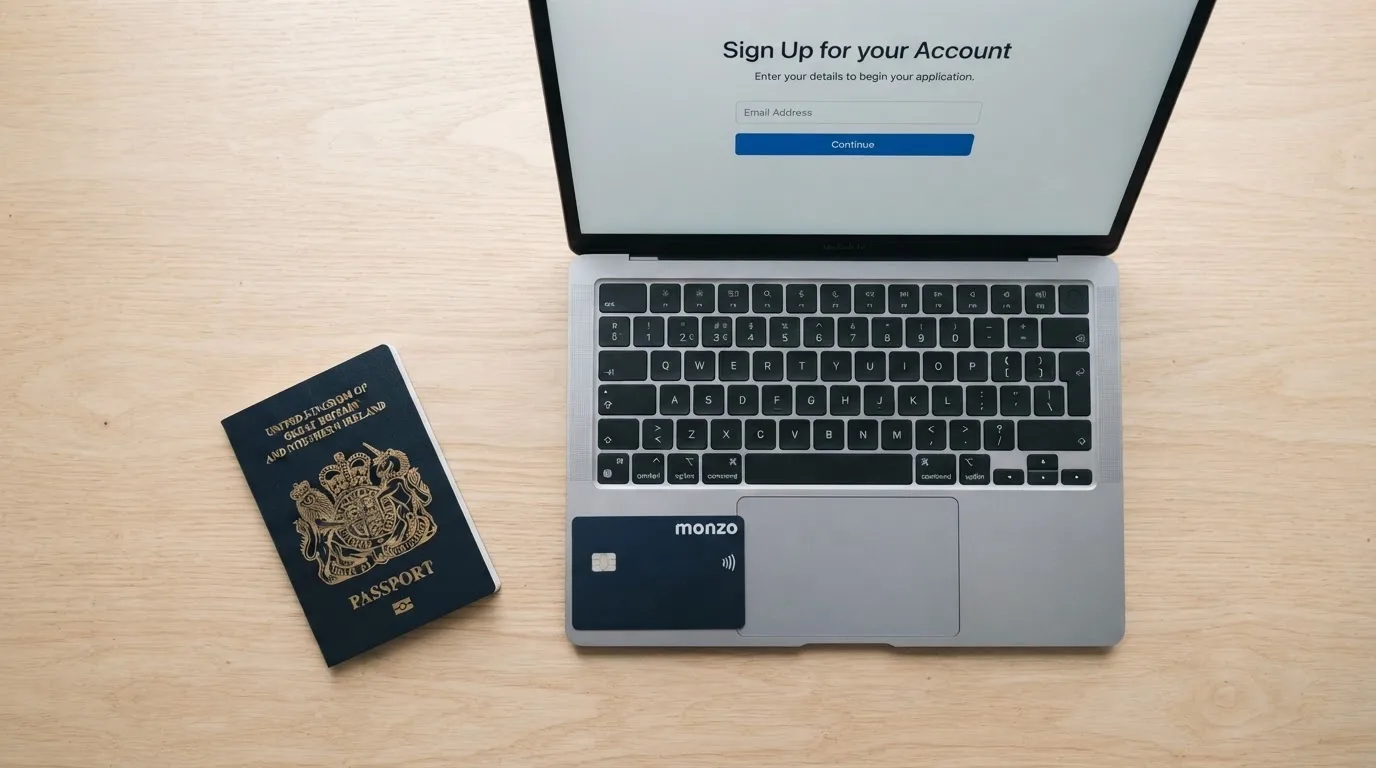
— a six-digit account, an R for remote, a sequence number and a suffix — and every domain is a row in the same downloadable register. The trailing em dash in the last column is not a missing fact; it is the honest answer to “does this brand accept Bitcoin Cash?”, which for every licensed brand on 18 September 2026 is “no”. The “blockchain” image lands here, because this is where the comparison between a BCH cashier page and a licensed cashier page first becomes visible.
The cluster of LC International brands — Gala Bingo and Ladbrokes — is the clearest example of why “ten operators” on a comparison page can be five companies. Two domains, one licence, one customer protection regime, one set of GAMSTOP obligations, one anti-money-laundering risk assessment. The white-label entry — Virgin Games under Gamesys Operations Limited — is a different arrangement: the domain does not carry its own licence but trades under another holder’s, which means a player complaining about Virgin Games complains to Gamesys and the Commission complaint route runs through the same licence account.
What a player gives up by stepping off the register
The licensed half of the comparison is not just the half where the cashier shows pounds. It is the half where a player has somewhere to complain, a body to check that games pay out as advertised, and a self-exclusion register that follows them from one site to the next. A Bitcoin Cash casino operating outside GB licensing offers none of that. The rest of the page is the cost of that gap, in concrete terms rather than as a general warning.
GAMSTOP, deposit prompts and the things that disappear at the door
Every GB-licensed online operator must offer GAMSTOP self-exclusion, with periods of six months, one year or five years that cannot be cancelled early; that has been a mandatory licence condition since 31 March 2020. A player who has self-excluded through GAMSTOP cannot open an account at any licensed site for the period they chose, and the licensed site must run the GAMSTOP check before the first deposit is accepted. A Bitcoin Cash casino that does not hold a Commission licence is not part of GAMSTOP, which means the self-exclusion does not block a BCH-funded account at that site. For a player who has self-excluded to manage a gambling problem, the practical effect is that the protection stops where the licence line stops. Self-exclusion is a British player protection tool, and outside the British licence it does not reach.
The same is true of the rest of the GB social responsibility code. Since 31 October 2025 a licensed operator must prompt a customer to set a financial limit before the first deposit; since 28 February 2025 it must run a financial vulnerability check using public data at £150 net deposits in a rolling 30 days, with wider financial risk assessments still to come into force. Online slots at a licensed site carry a maximum stake per game cycle — £5 for players aged 25 and over, £2 for 18-24 — and auto-play is banned, with a minimum spin interval of 2.5 seconds and losses disguised as wins prohibited. None of these rules travels with the player to a non-GB-licensed site. The site that pays in BCH may set its own deposit ceiling, its own loss limit, its own spin interval, or none of these. A British player at that site has whatever protection that site’s owner decides to offer, and the Commission cannot enforce a code on a brand it does not licence.
Where to complain when the cashier shows BCH
A complaint at a licensed site has somewhere to land: the operator first, an Alternative Dispute Resolution provider approved by the Commission if the operator’s own process fails, and the Commission itself for serious breaches. A Bitcoin Cash casino outside the register has none of that chain. The Commission’s enforcement powers — cease-and-desist notices, search-engine delisting, payment and hosting referrals — are aimed at stopping the site from reaching British customers, not at making the site pay out a disputed jackpot. The Commission’s published guidance makes this explicit: providing gambling to people in Great Britain without a licence is an offence under section 33 of the Gambling Act 2005, but the penalty is aimed at the operator. The player is not prosecuted; the player simply loses the protection.
What the player actually loses on an unlicensed site is the answer to “what happens if they refuse to pay”. At a licensed site the answer runs through ADR and the Commission. At a BCH-only site the answer runs through the operator’s own terms page, which may favour the operator, and through whatever regulator sits in the jurisdiction the licence was issued in — Curaçao, Anjouan, sometimes nothing at all. A dispute that takes six months at a licensed site can take much longer at an offshore one, and the outcome is less predictable.
The arithmetic at a licensed British casino: how long the bonus really takes
Since 19 December 2025 the Commission’s rules cap wagering requirements at 10x for any bonus offered to GB customers, and the same package of changes banned mixed-product bonuses (a sports bet bundled with casino spins, for example). That cap is the single most important number on the licensed half of the comparison, because every bonus a GB player can claim runs through it.
How long to clear a bonus at 10x
Take a £100 deposit bonus at a 10x wagering cap. The required turnover is bonus times the wagering factor, so £100 × 10 = £1,000 of qualifying play. At a £1 stake per spin, that is 1,000 spins; at the licensed 2.5-second minimum spin interval, 1,000 spins take 2,500 seconds, or roughly 42 minutes of pure spinning. At a £5 stake — the maximum allowed per game cycle for players aged 25 and over — the turnover is reached in 200 spins, taking 500 seconds, or just over eight minutes. The actual time varies with the stake, but the band is the same shape: at a low stake the clear is a slow grind, at the £5 ceiling it is a short sprint. The licensed spin interval is the floor on how fast the clear can run, and at 2.5 seconds the floor matters more than the wagering multiple does.
This is the part of the offer where “10x” sounds gentle compared to the 30x or 40x multipliers that used to dominate, and the rule is genuinely player-friendly against that historical baseline. The licensed spin interval, the ban on auto-play and the £5 stake cap combine to put a ceiling on how fast a player can churn a bonus even when the multiple is low, which is the actual defence against a bonus being turned over inside an hour by a script. The 10x cap and the spin-speed rules are not separate policies; they are two ends of the same protection.
What the bonus is worth after the clear
The bonus’s real cost, once the wagering is done, depends on the game’s RTP and on whether the bonus was paid in cash or in bonus funds. A cash bonus with no further requirement is worth its face value to the player, minus the expected loss over the wagering turnover. At a 96% RTP and £1,000 of turnover, that expected loss is £1,000 × (1 − 0.96) = £40. The £100 bonus therefore costs about £40 in expected play, leaving a net expected gain around £60 before any subsequent deposit or withdrawal. The exact RTP varies by title, but the shape is constant: a 10x bonus on a 96% slot is worth most of its face value, with the expected loss coming out of the turnover rather than out of the bonus itself.
That is the licensed picture, and it is the picture a BCH casino is competing against. At a non-licensed site the wagering cap does not apply, and offers of 40x or 60x the bonus are common, with the same spin speeds a player can set themselves rather than the 2.5-second floor. The licensed 10x cap is part of why a GB player pays in pounds rather than in BCH at a BCH casino: the offer itself is cheaper to clear, even if the cashier page is less exotic.
The arithmetic on the other side: what a BCH session costs
The wagering formula changes once the licence line is crossed, and so does the calculation that justifies the offer. At a BCH casino outside GB licensing, the wagering multiple can run higher than 10x, and the spin interval is whatever the site allows. The arithmetic the page reaches for is not the licensed 10x clear but the expected cost of a session at the cashier’s quoted spin price.
Expected loss at a BCH slot
The expected loss over a session is spins × stake × (1 − RTP). At 1,000 spins, a £1-equivalent stake and a 96% RTP, that is 1,000 × 1 × 0.04 = £40 of expected loss — the same shape as the bonus-clear calculation, but framed as a session cost rather than a bonus cost. At a lower RTP — 94%, common at older slots and at branded titles — the same session costs 1,000 × 1 × 0.06 = £60. The RTP is the single biggest variable a player can move, and at a BCH casino the RTP disclosure is whatever the game provider publishes: there is no Commission requirement to surface it on the cashier page. The “high volatility” label a casino attaches to a slot is a marketing word for a wider payout distribution, not a refund guarantee, and it tends to arrive in the same sentence as a smaller advertised RTP.
A player who treats the BCH session as entertainment rather than as a wagering-clear pays £40 to £60 of expected loss for an hour of play at a £1 stake, on top of the price of converting pounds to BCH and back again. That round-trip cost is the second number the licensed side does not carry: a BCH transaction incurs a network fee, an exchange spread on the way in and another exchange spread on the way out, and the spread is wider for BCH than for the more-traded BTC because the market is shallower. A £500 deposit converted to BCH, played through and converted back to pounds, can lose 2% to 4% of its face value to spreads and fees alone, before any spin has run.
Why a “high roller bonus” at a BCH casino is rarely the deal it sounds
The marketing word on a BCH casino’s welcome page is usually the size of the bonus — 200%, 300%, “up to 5 BTC” — paired with a wagering multiple that runs from 30x to 60x. At 40x, a bonus worth £200 of BCH requires £8,000 of turnover, and at a £1 stake that is 8,000 spins, taking 20,000 seconds, or roughly 5.6 hours at the unlicensed spin interval of around 2.5 seconds. The bonus is bigger than a GB-licensed offer, but the clear takes longer and the expected loss over the wagering is £8,000 × (1 − 0.96) = £320 at a 96% RTP, which is more than the bonus is worth. The offer is structured so that the player is statistically likely to lose the bonus and a chunk of their own deposit before the wagering is done. The licensed 10x cap is a hard rule against exactly that shape of offer, and a BCH casino outside the cap is free to run it.
This is where the comparison’s “costs the reader” angle meets the page: the bigger headline bonus is, in expectation, the more expensive bonus, because the wagering multiple scales faster than the bonus amount does. A reader who sees a 5 BCH welcome offer and a 10x wagering rule on a licensed site has read a different offer than a reader who sees the same headline on a 40x site.
The wider crypto landscape, briefly
Bitcoin Cash does not stand alone among the cryptocurrencies a casino cashier page might list. Binance Coin (BNB) launched in July 2017 as an Ethereum-based token issued by the Binance exchange, raised about $15 million through an initial coin offering the same year, and migrated from Ethereum to Binance Smart Chain in September 2020, with the chain rebranded BNB Smart Chain in 2022. BNB runs on a proof-of-stake consensus mechanism with a maximum supply of 200 million tokens, and by 2021 it had the third-highest market capitalisation among cryptocurrencies. The technical details differ from BCH — proof of stake rather than proof of work, a smart-contract platform rather than a payments-focused chain — but the regulatory position in the UK is similar: Binance Coin is a cryptoasset for the purposes of anti-money-laundering and tax rules, and a UK cryptoasset business handling it must register with the Financial Conduct Authority under the Money Laundering Regulations, with the FCA’s new authorisation regime under the Financial Services and Markets Act opening for applications on 30 September 2026.
For the purpose of this comparison, the relevant detail is the regulatory symmetry: any cryptoasset a casino cashier lists sits in the same high-risk band under the Commission’s anti-money-laundering framework, and the same Licence Condition 12.1.1 obligation to review the risk assessment applies. Bitcoin Cash is the headline asset because this article focuses on that coin, but the legal status of BCH, BNB and BTC at a licensed British casino is the same: not accepted.
Tax and the conversion a BCH player actually does
HMRC does not treat cryptoassets such as Bitcoin Cash as currency; it treats them as property. That means a UK resident who disposes of BCH — selling it, exchanging it for another cryptoasset, spending it on goods or services, or gifting it — is potentially liable for Capital Gains Tax on the gain. Income Tax can also arise on BCH received from mining, staking or airdrops. The same treatment applies to Binance Coin and to other cryptoassets. A player who funds a casino account with BCH is therefore making at least two taxable events around the play: a disposal when pounds are converted into BCH, and another disposal when the remaining BCH is converted back into pounds at withdrawal. Whether either event produces a gain depends on the price movement between the two points; in a falling market the disposal at withdrawal can crystallise a loss rather than a gain, and in a rising market it can crystallise a taxable gain on top of any casino winnings.
The licensed side carries none of this. A GB-licensed casino pays out in pounds, the player pays no tax on gambling winnings, and the conversion between pounds and BCH never happens. The tax asymmetry is part of the cost a BCH player takes on, and it is independent of whether the casino is licensed or not: HMRC’s treatment applies to the asset, not to the venue.
What an offshore Bitcoin Cash casino cannot offer a British player
Pull the threads together and the offshore side of the comparison is offering four things and asking for four things in return. It offers: faster on-chain settlement than a bank transfer, lower transaction fees than card networks, an account that does not require a verified identity, and bonuses whose headline sizes exceed the GB-licensed market. It asks, in return: that the player sits outside the Commission’s player protection regime, that the player accepts whatever complaint process the operator runs (which may favour the operator), that the player takes on the conversion cost and the tax event of going through BCH, and that the player gives up the GAMSTOP self-exclusion that protects a player trying to manage a gambling problem. The “image” of a low-friction crypto cashier is part of the offer; the friction the offer removes is mostly the friction of being checked.
For a player who wants Bitcoin Cash settlement for its own sake — because they hold BCH, because they value the speed, because they have a reason to keep their gambling in a crypto wallet rather than in a bank statement — the trade-off is their trade-off to make, with eyes open. For a player who has self-excluded through GAMSTOP and is looking for a way around the exclusion, the answer is that the protection they put in place does not reach the unlicensed site, and the lack of reach is the gap the offer is built to occupy. The same casino cashier page reads very differently depending on which side of that gap a reader is standing.
The ten licensed brands, in the order the register puts them
The ranking below keeps the order the Commission’s register puts the licence accounts in, which is not a recommendation order and not a quality order; it is the order the register downloads in. Where two domains share a licence they appear together as one licence holder.
1. Casumo — Recro Limited
Casumo runs on licence 061549-R-336718-002, held by Recro Limited under account 61549, and the register lists Casumo as an active domain. The brand is part of the licensed mainstream for GB players, with the usual licensed cashier — debit cards, bank transfers, e-wallets — and the standard social responsibility code applied. A player who wants to fund with Bitcoin Cash will not find a BCH option in the cashier, because the licence does not extend to crypto-asset acceptance in this segment. The brand is a clean fit for a player who values a licensed cashier over a crypto one, and the absence of a BCH rail is a consequence of that licence, not an oversight.
2. Gala Bingo — LC International Limited
Gala Bingo trades on licence 054743-R-330863-014, held by LC International Limited under account 54743, with Gala Bingo listed as an active domain. The same licence number also covers Ladbrokes, because both domains sit under LC International. For a player looking at a BCH casino comparison, what matters is that this brand is part of the licensed set and the cashier is sterling-only; the bingo product shape is a separate consideration from the payment shape. The LC International licence is one of the largest on the register by domain count, and the player protection regime that comes with it is the same as for any other active domain on that licence.
3. MrQ — Tek Fox Ltd
MrQ sits on licence 060629-R-337532-004, held by Tek Fox Ltd under account 60629, with MrQ as an active domain. Tek Fox Ltd is a smaller holder than LC International and the licence is younger by suffix, but the obligations are identical: GAMSTOP membership, the financial vulnerability check at £150 net deposits in 30 days, the spin interval rule, the stake cap, the 10x wagering cap. A BCH player who opens an MrQ account is opening a sterling account, not a BCH account, and the licensed protections apply in full.
4. Virgin Games — Gamesys Operations Limited
Virgin Games is a white-label domain of account 38905, Gamesys Operations Limited, on licence 038905-R-319430-022. White-label means the domain trades under another company’s licence rather than its own — the player is playing on Gamesys’s licence and Gamesys’s regulatory standing, not on a separate Virgin licence. The same rules apply: sterling cashier, GAMSTOP, social responsibility code. The white-label shape is the reason a brand can carry a different name and product while sitting under the same player protection regime as every other GB-licensed site.
5. bet365 — Hillside (UK Gaming) ENC
bet365 runs on licence 055149-R-331499-004, held by Hillside (UK Gaming) ENC under account 55149, with bet365 as an active domain. The brand is one of the largest licensed operators in Great Britain by customer base, and the licence obligations are the standard set. The cashier is sterling and the social responsibility code is the GB one; a BCH-funded account at bet365 does not exist, because the licence does not extend to crypto-asset deposits.
6. Betway — Betway Limited
Betway is on licence 039372-R-319367-029, held by Betway Limited under account 39372, with Betway as an active domain. The licence has been live long enough to carry a high suffix number, and the obligations are the standard GB set. A player who wants Bitcoin Cash settlement is looking at the wrong cashier page, and a player who wants a long-running GB-licensed brand with full social responsibility code is looking at the right one.
7. Betfair — PPB Games Limited
Betfair trades on licence 039411-R-319335-010, held by PPB Games Limited under account 39411, with Betfair as an active domain. PPB Games is the Paddy Power Betfair entity for the GB market, and the licence obligations are the same as every other active domain on the register. The cashier is sterling; the GAMSTOP and social responsibility code is the GB one; there is no BCH rail.
8. Ladbrokes — LC International Limited
Ladbrokes sits on the same LC International Limited licence as Gala Bingo, account 54743, licence number 054743-R-330863-014, with Ladbrokes as an active domain. The two brands share a licence holder and therefore share a player protection regime, which is the relevant fact for a comparison built around what a BCH casino cannot offer. The product shapes differ; the regulatory shape does not.
9. Midnite — Dribble Media Limited
Midnite is on licence 042647-R-321653-022, held by Dribble Media Limited under account 42647, with Midnite as an active domain. Midnite is a newer brand on the register and the licence is younger than the legacy holders, but the obligations are the standard set: GAMSTOP, financial vulnerability check, 10x wagering cap, spin interval, stake cap. Sterling cashier, no BCH rail.
10. PokerStars — Stars Interactive Limited
PokerStars closes the ranking on licence 039108-R-319334-026, held by Stars Interactive Limited under account 39108, with PokerStars as an active domain. Stars Interactive is the GB-facing entity behind the PokerStars brand, and the licence obligations are the standard set. The cashier is sterling; there is no Bitcoin Cash rail; a player who wants to play poker with BCH is looking at an unlicensed site, not at PokerStars.
Where the comparison lands
The ten licensed brands above offer a player a single thing a Bitcoin Cash casino cannot: protection that runs through the Gambling Commission, with GAMSTOP self-exclusion, a complaints route through ADR, financial vulnerability checks, a 10x wagering cap, a £5 stake cap on slots for over-25s, a £2 cap for 18-24, a minimum 2.5-second spin interval, and a ban on losses disguised as wins. None of them offers BCH settlement. The Bitcoin Cash casino offers a player a different thing: on-chain settlement in a coin with a 32MB block size limit and roughly ten-minute block times, no identity check at the cashier, and a bonus offer that can scale higher than 10x because no Commission cap applies. None of them offers the GB protection regime.
For a player who values the licensed regime, the licensed cashier is the only one worth opening. For a player who values BCH settlement for its own sake, the licensed half of the comparison is the wrong half to be reading. The two halves are not competing offers at the same product; they are two different products whose payment rails happen to overlap on the same web page. A comparison that pretends they are equivalent misleads both readers; a comparison that names the gap and lets each reader pick a side is what the page above has tried to be.
Frequently asked questions
Does any Gambling Commission-licensed casino currently accept Bitcoin Cash deposits?
No. The Commission’s public register shows no licensed operator with a Bitcoin Cash payment rail on 18 September 2026, because the Commission rates BCH as a high-risk payment method under its anti-money-laundering framework, and any licensed operator adding it would have to rewrite its risk assessment under Licence Condition 12.1.1 first.
What happens to identity verification at a Bitcoin Cash casino operating outside UK licensing?
Verification at an offshore BCH casino is whatever the operator chooses to set, and many accept wallet deposits without a name, address or date of birth check. A licensed British casino has to run those checks before the first deposit since 7 May 2019, and the offshore site has no equivalent obligation, which is why the cashier page can be faster at the offshore site.
Is a casino accepting Bitcoin Cash automatically unlicensed for British players?
Not automatically, but the BCH-accepting sites that take GB customers mostly are. The Commission’s register is the test: a brand not on it is not licensed for British players, and a brand that takes GB customers without a licence commits an offence under section 33 of the Gambling Act 2005, even if it holds a Curaçao, Maltese or other overseas licence.
What self-exclusion cover does a player lose by using a Bitcoin Cash-only casino?
A player self-excluded through GAMSTOP is blocked from every GB-licensed site for six months, one year or five years from the date of registration, but a non-GB-licensed BCH casino is not part of GAMSTOP, so the self-exclusion does not block an account there. The protection stops where the licence line stops.
How does funding an account with Bitcoin Cash differ from a standard UK bank transfer?
A UK bank transfer is a sterling payment between two verified accounts, settles in seconds through Faster Payments, leaves a paper trail in the bank statement, and is covered by the licensed casino’s deposit-limit prompt. A BCH transfer is an on-chain settlement between wallets, takes roughly ten minutes per confirmation, leaves no bank-statement trace, and may carry a wallet-to-wallet network fee plus an exchange spread on the way in and out, with no deposit-limit prompt unless the operator builds one.
Why do most UK-licensed casinos avoid accepting cryptocurrencies such as Bitcoin Cash?
Because the Commission’s anti-money-laundering rules treat cryptoassets as high-risk, and adding one forces a licensed operator to redo its risk assessment and notify the Commission before going live. Most licensed operators decide the cost of that process, plus the loss of Faster Payments integration, is not worth a payment rail that the GB customer base does not demand.
Published by the casinoappguideuk team.