
What a 300% Welcome Bonus Actually Costs in the UK (2026)
Data current as of 24 November 2026, cross-checked against the Gambling Commission’s public register of gambling businesses.
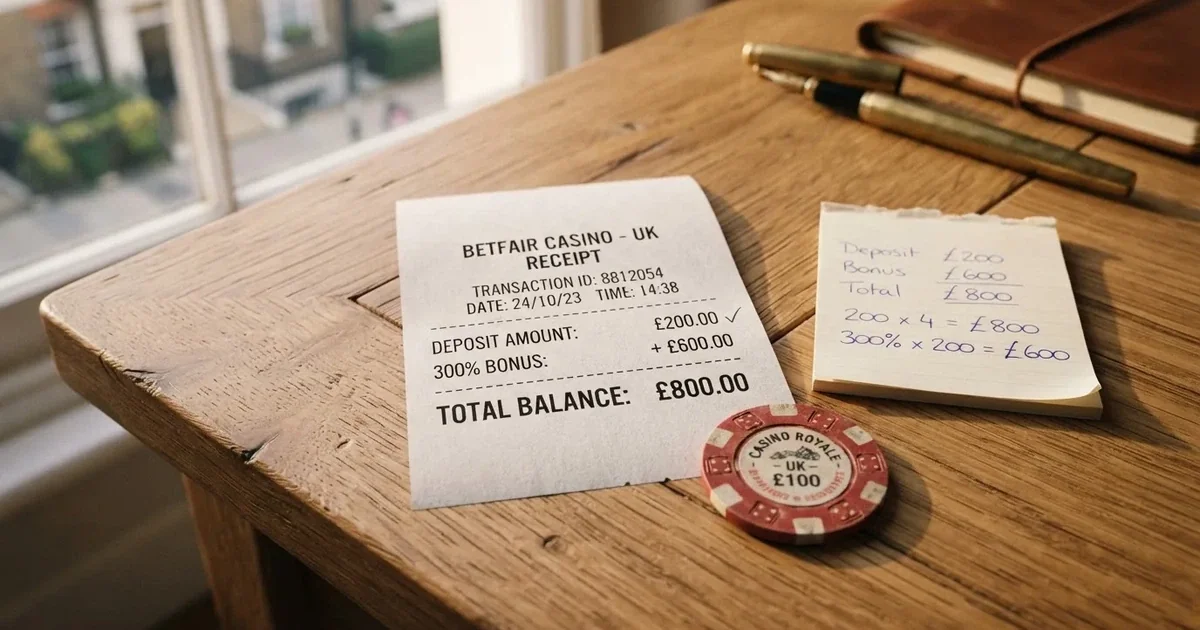
The maths behind a 300% welcome bonus is straightforward on the surface: deposit £10, the casino adds £30, and the player has £40 to play with. Quadrupling the bankroll in a single transaction sounds like the sort of edge that makes a casino page worth bookmarking. The number that actually decides whether the offer is worth taking sits one layer deeper, in the wagering requirement, in the cap on bonus size, and in the £10 itself, which a UK player cannot top up with a credit card and cannot spend without first passing a financial vulnerability check. This page walks through those mechanics, names what the marketing words cost the reader, and lays out the licensed brands a British player can actually use to clear such an offer.
The angle is simple. A 300% bonus is the most generous headline ratio a UK casino can advertise without breaking the December 2025 wagering rules, so every operator that runs one is pushing up against the same ceiling. Knowing the ceiling tells the reader more than any individual brand write-up does.
Table of Contents
- The UK Gambling Commission framework that shapes every 300% offer
- Responsible play and the protection that comes with a UK licence
- Payments that trigger a 300% bonus — and the ones that do not
- How a 300% bonus is structured, and what the wagering terms hide
- The licensed brands a UK player can clear a 300% bonus at
- The wider licensed landscape and what the register does not show
- A close read of the 300% bonus against the 10x cap
- Where this leaves the reader
- Frequently asked questions about 300% casino bonuses in the UK
The UK Gambling Commission framework that shapes every 300% offer
Every online casino that takes British customers operates under the Gambling Act 2005 and is overseen by the Gambling Commission. The Commission’s public register is the only test that matters when a player asks whether a brand is legal to use, and the register is downloadable in full from gamblingcommission.gov.uk. On 18 September 2026 it listed 139 businesses holding an active remote casino operating licence, with 1065 active and 361 white-label domain entries alongside those licences. A white-label site trades under another company’s licence, which is why two distinct URLs can sit behind one licence number.
The licence itself has a strict format: the first six digits repeat the licence holder’s account number, then comes an “-R-” flag marking the licence as remote (online), then a unique number, then a suffix. So a licence that reads “039108-R-319334-026” is the remote casino licence of account 39108 — a number a player can match against the register to confirm the brand on the other side of the screen.
Because the 2014 Act pulled every operator serving British customers into one regime, a Curaçao or Maltese licence alone is not enough. A site may hold multiple licences in different jurisdictions and still need a UK one. That requirement is also why an offshore brand running a 300% offer and taking GBP deposits is, on the British side of the transaction, doing so without the protections the rest of this page assumes: no GAMSTOP self-exclusion, no Commission complaints route, no approved alternative dispute resolution. The bonus is not illegal in itself; the operation is.
The December 2025 wagering cap and what it does to a 300% match
On 19 December 2025 the Gambling Commission brought the 10x wagering requirement cap into force across all UK-licensed online casinos. Every bonus of any kind — deposit match, free spins, cashback attached to wagering — must now clear at a multiplier of ten or less. A 300% match bonus offered above that multiple is, at a licensed operator, simply not a product that exists.

The cap is paired with a ban on mixed-product bonuses. A 300% casino offer that comes bundled with a free bet on sports, or with a slot spin package that carries a separate wagering requirement, is no longer permitted either. The headline figure is what the player sees; the cap is what determines whether the headline survives regulatory review.
The wagering band of a 300% match
| Deposit Amount | Bonus Amount | Required Turnover |
|---|---|---|
| £10 | £30 | £300 |
| £50 | £150 | £1,500 |
| £100 | £300 | £3,000 |
Stake limits, age verification and the rules a bonus cannot override
The 300% headline also sits inside several constraints that pre-date the wagering cap. Online slots in Great Britain carry a maximum stake per game cycle — £5 for players aged 25 and over (from 9 April 2025) and £2 for those aged 18 to 24 (from 21 May 2025). A game cycle, in Commission language, means a single spin or a single round of play; it is not a session. The £2 ceiling for the younger cohort alone means that the deposit-then-bonus pattern most players picture — flat stake, steady clearing — moves at half the speed for the under-25s.
Age verification runs before the first deposit or any play, since 7 May 2019, and the operator must verify name, address and date of birth. Anonymous play is not a feature of any UK-licensed site, and a 300% bonus attached to an unverified account cannot be claimed in the first place. The verification step is also where GAMSTOP screening happens, and GAMSTOP exclusion — six months, one year or five years, with no early cancellation — overrides any promotion.
From 31 October 2025 operators must prompt a player to set a financial limit before the first deposit. There is no state-set ceiling; the operator offers a limit, the player accepts or sets their own, and only then does the deposit go through. A 300% bonus offered without that prompt, or with the prompt but no limit set, is a compliance failure on the operator’s side and a useful tell on the brand’s side.
Responsible play and the protection that comes with a UK licence
The responsible gambling architecture around a 300% bonus is part of the offer, not a separate topic. The headline figure is four times the deposit; the architecture is what stops that figure from becoming a problem.
GAMSTOP is mandatory at every online licence since 31 March 2020. A player who has registered with GAMSTOP — whether for six months, one year or five years — is blocked from any UK-licensed operator during the period, including from claiming a 300% bonus. The scheme is a single sign-up across the entire market, not a per-brand exclusion, which is the only kind of exclusion that actually works at a British player who holds accounts at multiple sites.
Financial vulnerability checks were strengthened from 28 February 2025. Once a player’s net deposits cross £150 in a rolling 30-day window the operator runs a check using public data — open-source information about the player’s financial position. The check is light-touch and does not require a credit pull; its purpose is to flag a pattern the player may not have noticed themselves. The wider financial risk assessments the Commission has signalled are not yet in force; what is in force is the £150 threshold, and any 300% bonus a player chases across multiple deposits reaches it faster than a smaller bonus would.
Reality checks interrupt play at intervals the operator sets, and auto-play is banned since 31 October 2021. A slot spin may not be faster than 2.5 seconds, which is the technical floor on how fast a player can grind through a wagering requirement at any licensed site. Combined with the stake limits, that floor is the real speed at which a 300% bonus clears.
Where to get help if a 300% bonus has stopped being fun
Two services matter, and a UK player should know their names rather than search for them in a moment of crisis. GamCare runs the National Gambling Helpline on 0808 8020 133, free from any UK phone, and offers live chat and email support alongside the phone line. GambleAware funds treatment and research and is the Commission’s partner on public-facing harm prevention.
Neither service is part of any operator; both are independent. A casino’s own responsible gambling page may link to them, and a 300% bonus page that does not link to them is one the player should treat as marketing rather than as information.
Payments that trigger a 300% bonus — and the ones that do not
A 300% match is paid on top of a real-money deposit, so the payment method a player chooses at the cashier is the trigger for the bonus. The Commission’s credit card ban, in force since 14 April 2020, removes one of the most common triggers from the menu: no credit card deposit, including a credit card routed through an e-wallet, qualifies. That leaves debit cards, bank transfers, e-wallets loaded from a debit card or bank account, and prepaid solutions such as paysafecard.
Bank transfers inside the UK move through the Faster Payments Service, which Pay.UK has operated since 2008. The system runs 24 hours a day, seven days a week, and most payments arrive instantly or within a couple of minutes; the worst case is two hours. The Faster Payments scheme itself sets a £1,000,000 per-transaction limit, but the bank on the player’s side usually caps it lower for a new payee. For a 300% bonus the deposit is small enough that the per-transaction limit is rarely the binding constraint; the time the payment takes to clear is, especially if the player wants the bonus to start earning on the same sitting.
The minimum deposit a 300% offer typically requires
The £10 floor is the most common threshold a UK 300% match sets, because £10 keeps the bonus at a digestible £30 and the turnover at the £300 a player can realistically clear in a sitting. Below £10 the offer does not appear; above £100 most UK 300% matches stop matching, and the player gets the £100 cap rather than the ratio. A £10 to £100 deposit window is the band in which almost every UK 300% offer lives, and the bonus is paid on the whole of the deposit — not on a stepped portion.
The maths behind that ratio is what the wagering requirement acts on. A £10 deposit at 300% with a 10x requirement turns over £300 of bonus funds. A £50 deposit at 300% with a 10x requirement turns over £1,500. A £100 deposit at 300% with a 10x requirement turns over £3,000. Every figure is a band the rest of the page returns to, because the offer’s real cost is the same formula applied at three points.
Paysafecard, Apple Pay and the prepaid route
A paysafecard-funded deposit counts as a real-money deposit for bonus purposes, the same as a debit card or a bank transfer. The voucher itself is the funding source; the operator sees a paysafecard transaction, the player sees their voucher balance drop by the deposit amount, and the bonus is credited on top. The catch is one the player should set before buying the voucher: any deposit — bonus-funded or not — still counts against the player’s own financial limit, and a paysafecard deposit will not feel the way a debit card deposit feels until the limit is reached.
Apple Pay is a different mechanism. It is a tokenised wallet that replaces the actual card number with a device-specific Device Primary Account Number and generates a dynamic security code for each transaction; in-store payments go over near-field communication with a contactless terminal, and online payments are authenticated on the device itself — a double-click of the side button on a Face ID iPhone, or a double-click of the Home button on a Touch ID model. For the casino’s cashier the underlying card is what matters: a debit card routed through Apple Pay is a debit card deposit, and qualifies; a credit card routed through Apple Pay is still a credit card deposit, and the Commission’s 2020 ban applies.
Apple Pay launched on 20 October 2014 in the United States and reached UK-issued cards on 14 July 2015. Apple itself states that a supported card from a participating issuer is required and that Apple Pay is not available in every market, which is why some UK players see the option at a cashier and some do not. Where it appears and the card behind it is a debit card, the deposit counts.
Crypto deposits and the offshore path
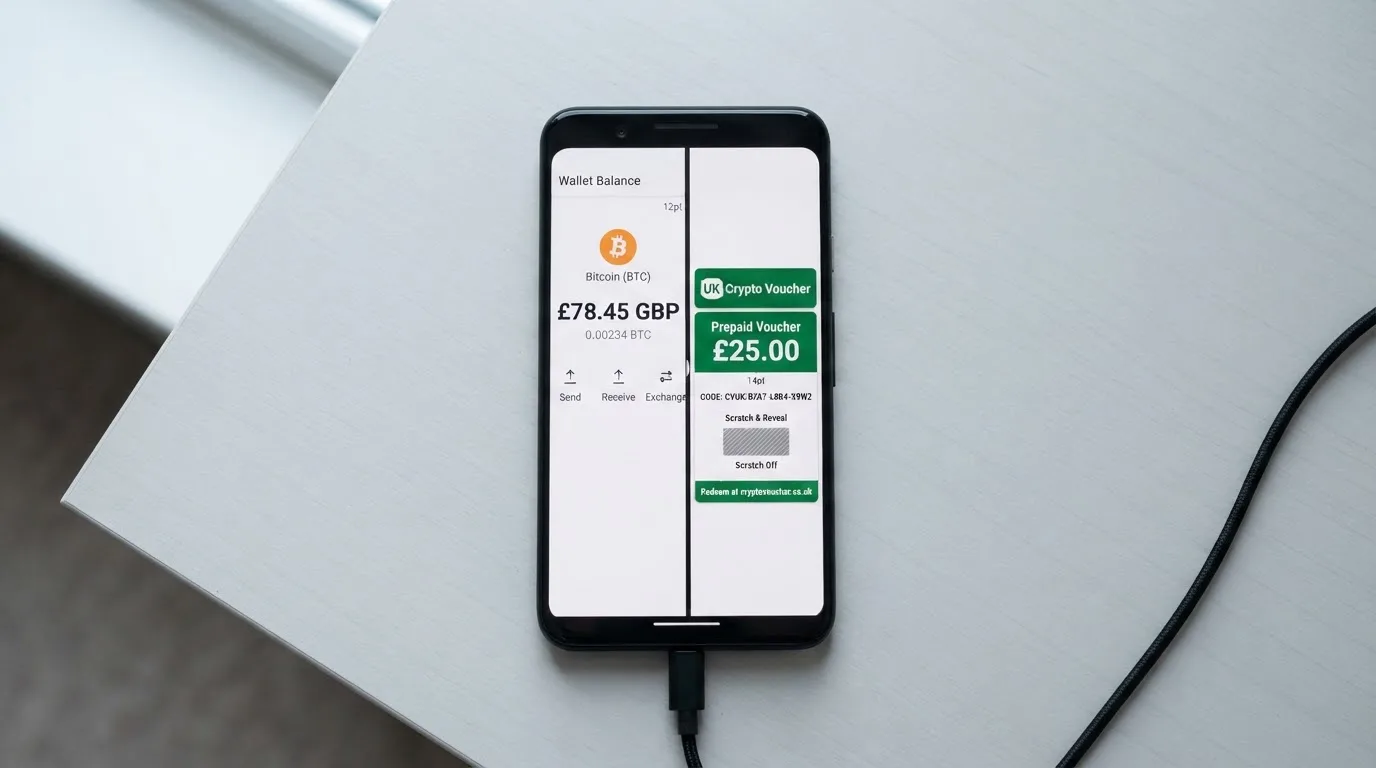
The UK does not regulate crypto-specific casino products inside the licensed market, and the £150 financial vulnerability check plus the 10x wagering cap assume a sterling deposit. A licensed operator does accept some e-wallets that handle crypto on the back end, but the player is depositing pounds, not bitcoin, and the 300% match applies to the sterling figure that lands in the account. The phrase “crypto casino 300% welcome bonus UK” in the search results usually points to an offshore brand; some of those brands do offer 300% matches in crypto, and a few will accept GBP through a third-party processor. The cost of taking that offer, for a British player, is leaving the protections named above at the door.
The Commission has no ISP-blocking power, but it does issue cease-and-desist notices, refers payment and hosting providers to the relevant channels, and pushes search engines to delist offending sites. No penalty is aimed at the player; what is lost is the route back. A withdrawal dispute at an offshore site has no ADR service to escalate to, no Commission complaints form to file, and no GAMSTOP block to lean on if the player decides mid-session they want out.
How a 300% bonus is structured, and what the wagering terms hide
The 300% match is a deposit bonus with a single number attached to it: the percentage. The mechanics underneath are a stack of small decisions that decide whether the player comes out ahead.
The deposit sits in the real-money balance; the bonus sits in a separate bonus balance. The casino plays the bonus balance first at every licensed site; winnings from those bets drop back into the bonus balance and remain subject to wagering. Once the wagering requirement clears — turnover at the stated multiple of the bonus — the remaining bonus balance converts to real money and becomes withdrawable. Some operators split the conversion across the bonus; the player keeps whatever is left of the bonus balance at the moment wagering reaches its target.
The 10x cap and the band it leaves for a 300% bonus
The 10x wagering cap, in force since 19 December 2025, defines the band a 300% bonus lives in. Lower multiples are allowed and are common — 30x and 40x were the pre-cap norm, and a few UK sites still market offers at 20x or 25x by structuring the bonus as cashback with a low ceiling. The 300% match, which is the most generous ratio the cap permits a casino to advertise, almost always sits at the 10x ceiling because anything tighter eats the appeal and anything looser is not legal.
The 10x wagering cap on a 300% bonus creates a consistent turnover requirement across the market. A £10 deposit results in a £30 bonus with a £300 turnover target; a £50 deposit means a £150 bonus and £1,500 of turnover. At a £100 deposit, the bonus is £300 and the turnover reaches £3,000. These figures represent the total play required before bonus funds become withdrawable, helping players gauge the value of an offer before depositing.
The other term the marketing tends to bury is the max-cashout cap. A few 300% offers write a ceiling on the winnings the bonus can produce — for example, “max withdrawal from bonus funds: 5x deposit”. At a £50 deposit that caps the bonus-derived winnings at £250, regardless of how much the wagering actually returns. The 10x cap does not ban a max-cashout term; the term sits alongside it. A player who has read only the headline has missed the most expensive number on the page.
Time limits, game weighting and the slots-only clause
Most 300% matches carry a time limit on the wagering requirement — typically 30 days from credit, sometimes 14. The clock starts at the moment the bonus lands, not at the moment the player first plays, and the requirement is forfeit if it does not clear in time. A player who treats the bonus as a side bet on a quiet week loses the bonus, the wagering-progress and any winnings attached to it, which is one of the sharper edges of the offer.
Game weighting is the other term that decides whether the offer is worth the time. Slots typically contribute 100% of every £1 wagered to clearing; table games contribute 10% or 0%; live casino sits somewhere in between. A 300% match advertised as a “casino bonus” is almost always a slots-only bonus in practice, because the wagering requirement does not clear at the same speed on the games outside the slot catalogue. A player who takes the bonus and then sits at a blackjack table is grinding at 10% of the headline pace.
The 2.5-second floor on a slot spin, in force since 31 October 2021, fixes the upper bound on how fast the wagering requirement can clear even at full weight. At a £2 stake (the under-25 ceiling), 150 spins clear a £300 requirement; at the 2.5-second floor that is six minutes and fifteen seconds of uninterrupted play. At a £5 stake the spins drop to 60 and the time to two and a half minutes, but the wagering requirement at a £100 deposit is £3,000 and the time to clear it scales accordingly.
The licensed brands a UK player can clear a 300% bonus at
The ten brands below are taken from the Gambling Commission’s public register of gambling businesses. Each is listed against a licence account, with the licence number recorded in the format the Commission publishes. None of them is recommended over any other; the register lists every brand that holds a remote casino operating licence, and the table is the test of whether a 300% offer can be cleared at a site that takes British players under the protections named above.
| Brand | Licence holder | Remote casino licence | Domain status |
|---|---|---|---|
| BetVictor | BV Gaming Limited | 039576-R-319370-028 | Active |
| Betfair | PPB Games Limited | 039411-R-319335-010 | Active |
| kwiff | Eaton Gate Gaming Limited | 044448-R-323408-017 | Active |
| Ladbrokes | LC International Limited | 054743-R-330863-014 | Active |
| Virgin Games | Gamesys Operations Limited | 038905-R-319430-022 | White-label |
| Betway | Betway Limited | 039372-R-319367-029 | Active |
| Jackpotjoy | Gamesys Operations Limited | 038905-R-319430-022 | Active |
| Betfred | Petfre (Gibraltar) Limited | 039544-R-319290-010 | Active |
| Sky Vegas | Bonne Terre Gaming Limited | 065519-R-339675-002 | Active |
| 888casino | 888 UK Limited | 039028-R-319297-014 | Active |
Several of these brands share a licensee. Virgin Games and Jackpotjoy both sit under Gamesys Operations Limited (account 38905) — the first as a white-label domain, the second as an active domain, which is exactly the split the Commission’s domain status field is built to surface. Ladbrokes, Coral and Gala Bingo are also grouped under LC International Limited; only Ladbrokes is featured here, but the licence number on the table covers the wider group.
The Commission’s data does not say which of these brands currently runs a 300% match, and the register is not built to carry bonus terms. A reader looking up a specific offer has to cross from the licence number on the table to the brand’s own promotions page; the licence tells them the brand is legal to play at, not what the brand is offering this week. The Commission’s role stops at the licence.
BetVictor — the long-standing sportsbook with a casino bolted on
BetVictor (Betvictor.com) sits under BV Gaming Limited (account 39576) on licence 039576-R-319370-028. The brand is best known as a sportsbook, and the casino side is the secondary product — useful for a player who wants the convenience of one wallet across sports and slots, less useful as a dedicated slots destination. The remote licence covers the full remote casino catalogue and the brand’s domain is an active entry on the register.
A reader who values a single account across verticals will find the setup straightforward. A reader who is shopping specifically for a 300% match and wants the brand most likely to push the promotional ratio to the cap should look at brands that lead with the casino rather than the sportsbook.
Betfair — the exchange brand with a casino attached
Betfair (Betfair.com) runs under PPB Games Limited (account 39411) on licence 039411-R-319335-010. The exchange is the brand’s centre of gravity and the casino is a satellite, similar to BetVictor but with the bettor profile that comes from exchange pricing. The licence covers the remote casino offering in full; the domain is an active entry.
For a reader who plays the exchange and wants the casino bonus to fund the same wallet, the licence makes the casino available. For a reader who is choosing a brand primarily on its 300% offer, the casino is a side product on a sportsbook-led brand and the promotional calendar reflects that priority.
kwiff — the smaller brand on its own licence
kwiff (Kwiff.com) sits with Eaton Gate Gaming Limited (account 44448) on licence 044448-R-323408-017. The licence account number is in the higher range and the licence itself is comparatively recent in the Commission’s register, which matches kwiff’s position as a smaller brand that built its identity outside the legacy sportsbooks. The domain is an active entry.
The smaller scale cuts both ways: a thinner promotional calendar, but also a more focused set of offers when one runs. A reader who prefers to play at a brand with fewer moving parts on the bonus side may find the smaller licensee easier to read.
Ladbrokes — the legacy high-street brand turned online
Ladbrokes (Ladbrokes.com) is the highest-numbered licence in the table — 054743-R-330863-014 — held by LC International Limited (account 54743). The licence covers a group that includes Coral and Gala Bingo under the same corporate umbrella; only Ladbrokes appears here, but the reader should know that the licence behind it is doing more work than the single brand.
The legacy positioning means a wide payments menu and a customer base that includes players who came in from the betting shop. A reader who values a brand that has run a UK licence through several regulatory cycles will find the licence depth reassuring; a reader chasing a specific 300% ratio will find the calendar weighted toward the sportsbook side.
Virgin Games — the white-label route into Gamesys
Virgin Games sits as a white-label domain under Gamesys Operations Limited (account 38905) on licence 038905-R-319430-022. The white-label status is the key fact: the brand trades under Gamesys’s licence rather than its own, which is the standard structure for a media-led brand that wants casino products without running a separate gambling operation. The Commission’s domain register surfaces this directly, and a reader cross-checking the licence will see the same licence number on both Virgin Games and Jackpotjoy.
A reader who values the brand on the front of the account and the operator behind the curtain will find this arrangement routine. A reader who wants to know exactly who is holding the licence they are betting under needs only to read the licence number.
Betway — the international brand on a UK-specific licence
Betway (Betway.com) sits with Betway Limited (account 39372) on licence 039372-R-319367-029. The brand runs across multiple jurisdictions; the UK licence is the slice that lets the brand take British customers. The domain is an active entry.
A reader who already plays Betway in another market will find the UK licence the channel that makes the brand available domestically. A reader new to the brand will see the same casino product the international sites offer, framed inside the UK-specific rules.
Jackpotjoy — the active twin of Virgin Games
Jackpotjoy (Jackpotjoy.com) sits under Gamesys Operations Limited (account 38905) on the same licence as Virgin Games — 038905-R-319430-022 — but is listed as an active domain rather than a white-label one. The licence account and the licence number are identical to Virgin Games; the only difference is the relationship between the brand and the licence holder.
A reader who knows both brands should treat them as two front doors into the same operation. The promotions, the wagering terms and the payments menu are set centrally; the brand page is the surface.
Betfred — the legacy bookmaker with a deep casino catalogue
Betfred (Betfred.com) runs under Petfre (Gibraltar) Limited (account 39544) on licence 039544-R-319290-010. The Gibraltar-incorporated licence holder is a reminder that a UK remote casino licence can be held by a company registered elsewhere, so long as the Commission has issued the licence and the brand appears on the register. The domain is an active entry.
The legacy bookmaker position gives Betfred a wide payments menu and a customer base that has stayed with the brand across the move from the shop floor to the screen. A reader who values longevity will find the licence depth matches the brand’s history.
Sky Vegas — the broadcast brand on a Bonne Terre licence
Sky Vegas sits with Bonne Terre Gaming Limited (account 65519) on licence 065519-R-339675-002. The licence account number is the highest in the table, which matches the brand’s relatively recent appearance as a standalone online casino rather than a section of a sportsbook. The domain is an active entry.
A reader who comes to the casino via the broadcast tie-in will find the licence covers the full remote product. A reader who shops by licence age may note that this is the freshest licence in the table.
888casino — the standalone casino brand
888casino (888casino) runs under 888 UK Limited (account 39028) on licence 039028-R-319297-014. The brand is one of the few on the table that leads with the casino rather than the sportsbook; the licence is built around the casino product, and the promotional calendar reflects that priority. The domain is an active entry.
For a reader chasing a specific 300% ratio at a brand whose core product is the casino itself, 888casino is the closest fit in the featured set. The brand is also one of the longest-running on the Commission’s register, and the licence number is in the low 39000s to match.
The wider licensed landscape and what the register does not show
The ten brands above are a slice of the 139 businesses holding an active remote casino operating licence on 18 September 2026. The Commission’s register lists every one of them; the featured set here is a representative cross-section rather than the whole market, and the choice of any brand from the table is a choice of operator, not an endorsement of its current promotional calendar.
A 300% match bonus is a promotional offer, not a structural feature of a licence. The licence permits the operator to run a casino; it does not promise a particular ratio on any given week. The reader who wants a 300% offer specifically should expect to compare promotional calendars rather than licences, and should treat the licence as the floor — the requirement that the operator takes British customers under the rules named above — rather than as a guarantee of any headline ratio.
White-label structures are common enough that the Commission’s domain register separates “Active” from “White Label” status on every entry. A reader who sees a brand running under another company’s licence is not looking at a quirk; the register is built to surface that arrangement, and the same licence number on two brands is the normal outcome.
What an unlicensed 300% offer actually means for a UK player
A 300% match from a brand not on the Commission’s register is, by definition, an offer from an operator that has not met the requirements named above. Some of those brands are legitimate businesses in their home jurisdictions; some are not. For a British player the relevant cost is the loss of the UK protections: no GAMSTOP, no Commission complaints route, no ADR escalation, no financial vulnerability check at £150 of net deposits, no 10x wagering cap, no stake limit, no age verification that runs against the Commission’s standards.
The Commission’s enforcement against unlicensed sites is real but partial. It issues cease-and-desist notices, refers payment and hosting providers to the relevant channels, and pushes search engines to delist offending URLs. It does not have ISP-blocking power and it does not penalise the player. The action takes time, and a withdrawal dispute at an unlicensed site happens in that window.
The credit card ban and the wagering cap do not bind an unlicensed site. A 300% offer with a 40x wagering requirement and a credit card deposit is exactly the product the licensed market has been designed to make uncompetitive. The licensed alternative is, by construction, less generous on its face; the reader has to decide whether the protections justify the difference.
A close read of the 300% bonus against the 10x cap
A 300% match sits at the marketing end of the range the 10x wagering cap permits, and the band the cap leaves the offer inside is the key takeaway for a player.
A £10 deposit — the typical minimum — produces a £30 bonus. The 10x cap on a £30 bonus means the player must turn over £300 of bonus funds before any winnings become withdrawable. At a £2 stake per spin (the under-25 ceiling, and the more common stake for a player on a £10 deposit), that is 150 spins; at the 2.5-second floor on each spin, 150 spins is roughly six minutes and fifteen seconds of uninterrupted play. The £300 turnover figure is the floor of the band.
A £50 deposit produces a £150 bonus and £1,500 of turnover. At a £2 stake that is 750 spins, or about 31 minutes of play at the technical floor. At a £5 stake (the 25-and-over ceiling) it is 300 spins, or 12 and a half minutes.
A £100 deposit — the typical cap — produces a £300 bonus and £3,000 of turnover. At a £2 stake the spin count is 1,500 and the time at the technical floor is just over an hour; at a £5 stake it is 600 spins and 25 minutes. The £3,000 turnover figure is the ceiling of the band.
The band runs from £300 to £3,000 of required turnover, with the player’s stake and age deciding how many spins sit underneath that figure and how long the slot floor makes those spins take. None of those numbers is a payout; the bonus is a play requirement, not a guarantee of return, and the house edge on the slots clearing the wagering sits on top of every figure above.
The arithmetic above assumes the player is wagering only the bonus balance, not their own deposit. The Commission’s rules require the bonus balance to be played first at UK-licensed sites, which is the standard the calculation rests on. Once the bonus is exhausted, real-money wagering begins — and that real-money play does not contribute to clearing the bonus. A player who deposits again before clearing forfeits the original bonus on most UK sites.
The cost in time, not money
The honest comparison is between the £300 turnover at the floor and the £3,000 turnover at the ceiling, both measured in the same unit — minutes at the 2.5-second slot-spin floor. The lower end is a coffee break; the upper end is a working afternoon. The 300% headline does not distinguish between them, and the player has to do that work themselves by reading the bonus cap and the wagering requirement together.
The stake limit decides where the player lands inside that band. A 25-and-over player at a £5 stake clears a £300 bonus in roughly two and a half minutes and a £3,000 bonus in 25 minutes. An under-25 player at the £2 ceiling triples the time at every point — seven and a half minutes at the floor, an hour and 15 minutes at the ceiling. The 300% match is the same offer to both cohorts; the time it costs is not.
Where this leaves the reader
A 300% match at a UK-licensed casino is the most generous headline ratio the December 2025 rules permit, and every operator that runs one is operating at the same wagering ceiling. The figure that decides whether the offer is worth taking is the required turnover, not the percentage; the percentage quadruples the bankroll, the wagering requirement is what the player has to play through to make the bankroll withdrawable.
The £10-to-£100 deposit window is where the offer lives. Below £10 the bonus does not trigger; above £100 the ratio stops scaling and the bonus caps at £300. Inside the window, the wagering requirement runs from £300 to £3,000 of turnover, the stake limit decides the time cost, and the game weighting decides whether the offer is a slots-only product in practice. A player who has read those three numbers has read the offer; a player who has only read the headline has not.
The licensed brands above are the operators a British player can use to clear such an offer. The Commission’s register is the test of legality, the licence number is the test of identity, and the 10x wagering cap is the test of whether the headline survives regulatory review. The decision the player has to make is between the generosity of the ratio and the cost of the wagering — and the cost is the same arithmetic at every licensed brand.
Frequently asked questions about 300% casino bonuses in the UK
How does a 300% casino bonus actually work?
A 300% match is a deposit bonus that adds three times the deposit in bonus funds on top of the real-money balance. A £10 deposit produces a £30 bonus; the bonus sits in a separate balance and is played before the deposit. The wagering requirement is applied to the bonus at a multiple that, since 19 December 2025, cannot exceed 10x.
What deposit size do I need to claim a 300% match?
Most UK 300% offers accept deposits between £10 and £100. Below £10 the offer does not trigger; above £100 the bonus usually caps at £300 and the player gets the ceiling rather than the ratio. The deposit that produces the highest bonus without crossing the cap is £100.
Can I claim a 300% bonus with paysafecard?
Yes, where the operator accepts paysafecard as a deposit method. The voucher is the funding source; the operator credits the bonus on top of the paysafecard deposit in the same way it would on a debit card or a bank transfer. The deposit still counts against the player’s own financial limit.
What wagering requirement applies to a 300% deposit match?
Since 19 December 2025 every UK-licensed online casino bonus has been capped at a 10x wagering requirement. A £30 bonus therefore carries £300 of required turnover; a £150 bonus carries £1,500; a £300 bonus carries £3,000. Lower multiples are permitted, but the 300% match is almost always at the cap.
Do crypto deposits qualify for a 300% welcome bonus?
Inside the UK licensed market, no — the products are denominated in sterling and the bonus applies to the sterling deposit that lands in the account. Offshore brands that take GBP through a third-party processor do offer 300% crypto-funded matches, but the British player loses the protections named in this page by playing there.
Is there a time limit to use a 300% bonus?
Yes — typically 30 days from credit, sometimes 14. The clock starts at the moment the bonus lands and the wagering requirement is forfeit if it does not clear in time, along with any winnings attached to it. The time limit is one of the terms the marketing tends to bury, and it is worth reading before the deposit goes in.
