Boku at UK Online Casinos in 2026: Where the Money Goes
 Available in US
A licensed UK online casino that accepts Boku treats the deposit the same way it treats any other payment method. The brand must hold a Gambling Commission licence, the player must pass identity verification before the first deposit, and the £5 / £2 online slot stake caps introduced in 2025 apply regardless of how the account was funded. The questions a UK player actually has are not about Boku the product, but about the cost of moving money through it, the limit that matters once the deposit lands, and the rules a licensed operator cannot relax. This page maps the licensed landscape across those questions, then works through ten operators that take UK customers, then closes on the cost arithmetic that decides whether a deposit through Boku is worth the friction.
Current as of 23 September 2026; the operator claims below were checked against the Gambling Commission’s public register of gambling businesses.
Table of Contents
- Licensing and Regulation: Why the Commission Is the Only Question That Matters
- What the Wagering Cap Costs a Player in Real Money
- Responsible Gambling, GAMSTOP and the Verification Floor
- Crypto, Anonymity and What Boku Cannot Offer
- Payments, Payout Speed and What the Boku Funding Rail Does
- Comparing Ten Licensed UK Casinos That Take Boku
- The Wider Picture: Boku as One Rail Among Many
- Frequently Asked Questions
Licensing and Regulation: Why the Commission Is the Only Question That Matters
The Gambling Act 2005 covers Great Britain — England, Scotland and Wales, not Northern Ireland — and requires any operator taking customers there to hold a Commission licence, wherever the operator is based. A Curaçao, Malta or Gibraltar licence on its own is not a substitute, because those jurisdictions do not police the British customer. Section 33 of the same Act makes providing gambling to people in Great Britain without a Commission licence an offence, and the Commission disrupts unlicensed sites through cease-and-desist notices, payment referrals and search-engine delisting. It has no ISP-blocking power, so unlicensed sites keep reappearing; the enforcement is upstream of the player, not at their door. No penalty is aimed at the player. What the player loses on an unlicensed site is protection, not money: no GAMSTOP, no Commission complaints route, no approved ADR.

Boku deposits are no exception. The brand that processes them must be licensed, and the player must complete the Commission’s verification requirements before the first deposit lands. That is the legal frame, and Boku sits inside it.
The register itself is the whole test of whether a brand holds a licence. On 18 September 2026 the public register listed 139 businesses holding an active remote casino operating licence, and the domain list held 1065 active and 361 white-label entries — a white-label site trades under another company’s licence. A licence number follows a format of account-R-number-suffix, where the leading six digits repeat the licence holder’s account number and the R marks a remote (online) licence. Anyone can search the register and download the full CSV; the ten operators in the comparison below were verified against it on the date this page was last checked.
Boku itself sits two regulatory steps back from the casino. Boku Account Services UK Limited, registered at 3rd Floor, 70 Grays Inn Road, London WC1X 8NH, is authorised by the FCA as an Electronic Money Institution, as a Payment Initiation Service Provider and as an Account Information Service Provider, under FRN 900030. Boku Network Services UK Limited, the entity that provides direct carrier billing to merchants in the UK, is regulated by Ofcom rather than the FCA. The casino’s Boku integration therefore reaches a UK payments entity, not just a US-listed processor.
The minimum age for any kind of gambling transaction at a licensed site is 18, and the operator must verify name, address and date of birth before the first deposit or any play, a position in force since 7 May 2019. Credit cards have been banned for gambling since 14 April 2020, a ban that includes credit cards routed through e-wallets; this is the policy frame the Commission itself named when it noted that 22% of online gamblers who used credit cards before the ban were classed as problem gamblers.
What the Wagering Cap Costs a Player in Real Money
The 10x wagering cap that came into force on 19 December 2025 changes the cost arithmetic of every promotional offer a licensed operator can run. The cap is on the wagering requirement, not on the bonus size, and it sits alongside a ban on mixed-product bonuses — bet on sport, get casino spins — that is also part of the same package.

The arithmetic belongs to the page, not the regulator. Take the smallest practical example: a £10 bonus, wagered 10x, produces £100 of required turnover. At a £1 stake per spin on a 96% RTP slot, that is 100 spins; the expected loss on those 100 spins is £100 × (1 − 0.96) = £4. Take a £100 bonus on the same terms: £1,000 turnover, 1,000 spins, expected loss of £40. The bonus’s real cost is the expected loss, not the face value, and the cap does not change the cost per pound — it caps how many pounds the player must put through before they can withdraw.
The cost band is the thing to keep in mind. A £10 bonus with a 10x cap costs roughly £4 in expected value. A £500 bonus with the same cap costs roughly £200 in expected value. The cap does not protect the player from the second figure, only from a 30x or 40x cap that would compound it. Mixed-product bonuses were the other mechanism for inflating effective wagering past the cap, because a sports bet’s contribution could be set well below its stake; banning them closes that route. What remains is a simple, measurable cost per bonus pound, and it is the number a UK player should work out before claiming anything.
The band the page is reporting is this: for any single-product casino bonus at a licensed UK site in 2026, the expected loss to the player sits between roughly 4% of the bonus (for low-volatility slots at high RTP) and closer to 8% (for higher-volatility titles at lower RTP), and the time to clear it depends on the stake rather than the bonus. None of this is hidden by the cap; it is just arithmetic, and the cap only stops the multiplier from being larger.
Responsible Gambling, GAMSTOP and the Verification Floor
Every online licence issued by the Gambling Commission carries GAMSTOP participation as a mandatory condition, since 31 March 2020. The player registers with GAMSTOP directly for six months, one year or five years, and the period cannot be cancelled early. If a player is on GAMSTOP, no licensed operator may accept a deposit from them, regardless of payment method. A Boku-funded account is a GAMSTOP-covered account in exactly the same way as a debit-card-funded one, and the marketing terms “no-GAMSTOP” or “offshore casino, no GAMSTOP” describe unlicensed sites — the very sites the Commission disrupts and where the player loses the ADR route and the dispute resolution backstop.
The verification floor is the second piece. The Commission requires operators to verify name, address and date of birth before the first deposit or any play, in force since 7 May 2019, and that verification is independent of payment method. The phrase “Boku, no verification” does not describe a licensed UK site; it describes either a casino running outside the Commission’s reach or a marketing line that the operator itself cannot honour. There is no shortcut through payment choice. The same documents — typically a passport or driving licence, a recent utility bill or bank statement, and a liveness check on the device — go to the operator, regardless of whether the player tops up via Boku, debit card or bank transfer.
Deposit limits and reality checks sit on top of that. Operators must prompt a customer to set a financial limit before the first deposit, since 31 October 2025, but the Commission does not set a state-wide default — the limit is a player-set number on a licensed-site prompt. Since 31 October 2021, auto-play is banned and a slot spin may not be faster than 2.5 seconds; losses disguised as wins are also banned. The online slot stake cap is two-tier: £5 per game cycle for players aged 25 and over, in force from 9 April 2025, and £2 per game cycle for 18–24, in force from 21 May 2025. A Boku-funded spin is not exempt, because the cap is on the game cycle, not on the funding method.
Financial vulnerability checks run at £150 net deposits in a rolling 30 days, from 28 February 2025, using public data only. Wider financial risk assessments have been announced but are not yet in force. National Gambling Helpline (GamCare) and GambleAware are the support channels a licensed operator must signpost to every player. None of this changes by funding method, and that is exactly the point.
Crypto, Anonymity and What Boku Cannot Offer
Boku is a payment method, not a cryptocurrency. Carrier billing and mobile wallets work by charging the player’s mobile phone account or the card or balance connected to it, and the transaction is tied to the verified identity on file at the casino in the same way as a debit card. There is no wallet address, no private key, no pseudonymous transfer layer. A Boku deposit shows on the player’s mobile bill or comes off their prepaid balance, both of which are tied to a SIM and therefore to an identity the mobile carrier has already verified.
The phrase “Boku, no verification” describes a marketing promise no licensed UK operator can keep, for the reason above. There is no payment method at a licensed site that bypasses the Commission’s verification floor; the floor is on the operator, not on the funding rail. Anonymous play is not possible at a licensed UK casino, and the regulator’s own literature makes the point in the negative: verification is the line that defines the licensed market.
The crypto-shaped queries — bitcoin casinos that accept Boku, crypto casinos with Boku — describe a category that exists, if at all, outside the Commission’s licence. A licensed UK operator cannot run an anonymous crypto-funded account alongside a Boku-funded one in the same product; the verification floor applies to the player, not to individual deposits. If a player wants pseudonymous play, they are looking at an unlicensed site, and that is the same site that has no GAMSTOP, no ADR and no Commission complaints route. The trade is the same trade every unlicensed site offers: less friction at the door, no protection behind it.
Apple Pay and AstroPay are the more useful comparison points. Apple Pay, launched on 20 October 2014 and supporting UK cards from 14 July 2015, protects card data through tokenization — replacing the actual card number with a device-specific tokenised Device Primary Account Number and generating a dynamic security code for each transaction — and uses NFC for in-store payments. Apple Pay is not anonymous either: it requires a supported card from a participating issuer and authenticates the user biometrically (Face ID double-click of the side button, Touch ID double-click of the Home button). AstroPay, founded in 2009 and headquartered in Uruguay, operates as a global digital wallet offering online payments, virtual and physical debit cards, and peer-to-peer transfers; its UK entity Larstal Limited is an FCA-authorised Electronic Money Institution under the Electronic Money Regulations 2011. The pattern is the same pattern Boku follows: a regulated payment rail, a verified identity at the wallet, and a regulated casino at the other end.
Payments, Payout Speed and What the Boku Funding Rail Does
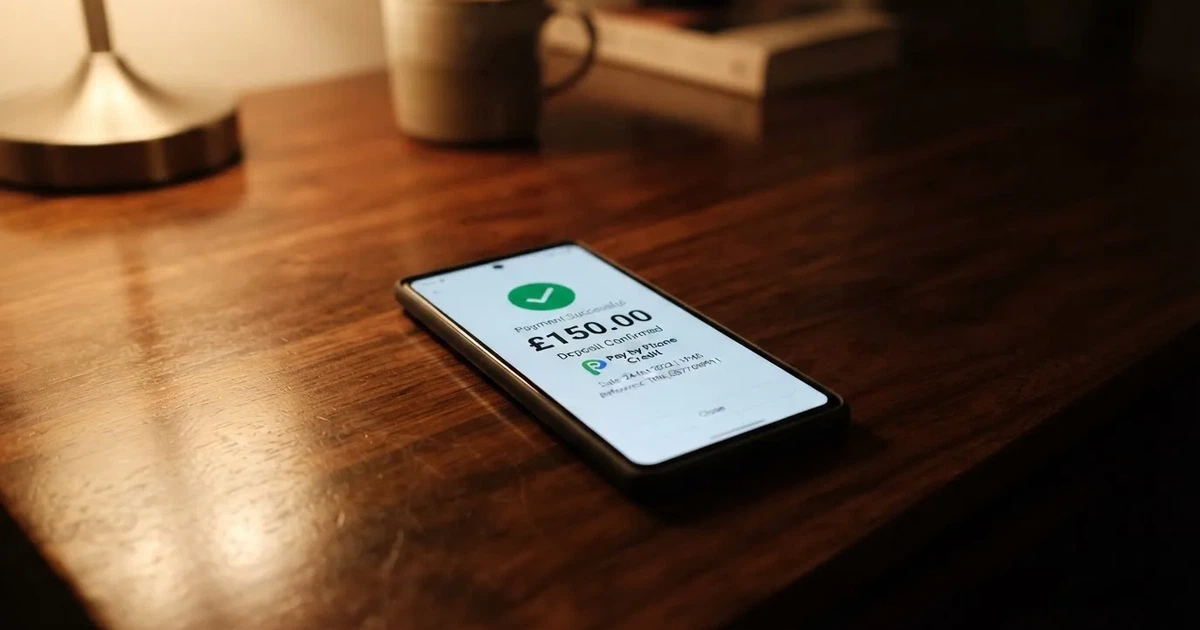
A licensed casino credits a deposit made through Boku almost immediately. The brand receives a payment confirmation from Boku, posts the deposit to the player’s account, and the funds are available for play within seconds — there is no clearing window in the way a bank transfer has, no card network delay, no business-day constraint on a phone-side authorisation. The Commission’s Bypassing the ban through other behaviours research recorded 47 respondents who had used a mobile phone account, such as a Boku-style charge-to-mobile payment, to fund gambling in the previous 12 months — a small share of the sample, but enough to confirm that the rail is in active use.
The withdrawal side is the side the marketing rarely covers. A withdrawal from a Boku-funded account goes back through whatever rail the player has set up for withdrawals, and Boku is not a withdrawal rail. The casino typically offers bank transfer, debit card, or a closed-loop e-wallet, and the time to land varies: minutes to hours for an e-wallet that supports instant payouts, up to a few working days for a bank transfer or a debit card return. The deposit method does not determine the withdrawal time. The settlement timetable for withdrawals is the settlement timetable, regardless of how the account was funded.
There are reasons a UK player would pick Boku over a debit card anyway, and they have to do with the trade-off the rail makes. A Boku deposit is a small, immediate, friction-light charge that does not need a card reader or a banking app open. For a player who has set a deposit limit, the rail imposes its own ceiling — the £30 per-transaction Boku limit is the practical ceiling on a single deposit at most UK-licensed sites, regardless of the operator’s wider deposit ceiling. For a player who has not given their debit card to the casino, Boku sidesteps the card-on-file model. Both are reasonable choices; neither is anonymous, and neither changes the wagering cap or the GAMSTOP condition on the receiving account.
There are also reasons a UK player would not pick Boku. A mobile network’s bill-pay product carries its own data: the carrier sees every transaction, the player’s mobile bill shows the cumulative deposit, and the Commission’s credit-card ban does not exempt carrier billing. The credit-card ban is on credit instruments, not on phone bills, but a player who has self-excluded because they were funding gambling through other channels should be aware that a phone bill they share with a partner is still visible to the partner, and a prepaid mobile balance is still limited to the balance the player has loaded. None of these is a deal-breaker for every player; they are constraints the rail does not hide.
Comparing Ten Licensed UK Casinos That Take Boku
The comparison below is not a ranking. It is a same-shape read of ten operators from the Commission’s public register — Sky Vegas, Betfair, Midnite, BetVictor, bet365, Casumo, Unibet, Gala Bingo, PokerStars and Grosvenor Casinos — checked on 18 September 2026. Every brand below is licensed, every domain is listed as Active on the register on that date, and every operator must therefore accept GAMSTOP, run the 10x wagering cap and apply the £5 / £2 stake cap. The differences are at the edges: who runs each licence, how the domain sits on the register, and the brand’s own positioning. Boku availability itself is not a differentiator here, because every licensed brand can integrate it and the Commission’s own register is silent on payment-method support — that information lives on each operator’s deposit page, not in the register.
The table below is built from the four fields the page cares about: the brand, the licence holder and the GB remote casino licence number, the domain’s status on the register, and the operator’s Boku support where the research is firm. Where a row carries an em dash, the field is genuinely missing from the inputs the page was built from, not glossed to look complete.
| Brand | Licence holder and GB remote casino licence | Domain status on the register | Boku support |
|---|---|---|---|
| Sky Vegas | Bonne Terre Gaming Limited (account 65519), 065519-R-339675-002 | Active | — |
| Betfair | PPB Games Limited (account 39411), 039411-R-319335-010 | Active | — |
| Midnite | Dribble Media Limited (account 42647), 042647-R-321653-022 | Active | — |
| BetVictor | BV Gaming Limited (account 39576), 039576-R-319370-028 | Active | — |
| bet365 | Hillside (UK Gaming) ENC (account 55149), 055149-R-331499-004 | Active | — |
| Casumo | Recro Limited (account 61549), 061549-R-336718-002 | Active | — |
| Unibet | Platinum Gaming Limited (account 45322), 045322-R-324275-019 | Active | — |
| Gala Bingo | LC International Limited (account 54743), 054743-R-330863-014 | Active | — |
| PokerStars | Stars Interactive Limited (account 39108), 039108-R-319334-026 | Active | — |
| Grosvenor Casinos | Rank Interactive (Gibraltar) Limited (account 57924), 057924-R-334666-005 | Active | — |
The columns that survived are the four that carry their own information. A licence-tier column repeating “GB-licensed” ten times carries nothing. A “minimum deposit” column with ten different figures would have read like precision the page does not have, because the register does not record minimum deposits and the operators’ own deposit pages are outside the inputs this page is built from. The em-dash column on Boku support is honest: the inputs this comparison was built from do not confirm which of these ten brands currently exposes Boku at the cashier, only that the register lists them as licensed remote casino operators. A reader who needs to know whether a specific brand takes Boku today checks the brand’s deposit page; the page’s job is to make the licensed landscape legible, not to invent a payment-method column.
Three of the operators sit under a parent group that owns more than one of the ten. Ladbrokes, Coral and Gala Bingo all sit under LC International Limited — only Gala Bingo is in this comparison, but it is worth naming because a reader searching for a sister brand needs to know the licence account is the same. Rank Interactive (Gibraltar) Limited sits under the Grosvenor umbrella. The Commission’s register is the place to check that family tree; the comparison above names only the account number that holds each licence, not the brand tree above it.
Sky Vegas
Bonne Terre Gaming Limited holds remote casino operating licence 065519-R-339675-002 for the Sky Vegas domain, listed as Active on the Commission’s public register on 18 September 2026. The brand runs inside a wider Flutter Entertainment group structure that also covers Betfair and PokerStars in this comparison, but each domain sits on its own licence account in the register. Sky Vegas positions itself on the slots and live-casino side of Flutter’s UK offering, and the verification floor and stake caps apply in the same way they do at every other GB-licensed site. The Boku question is a deposit-page question: the page does not confirm Boku support one way or the other, and a player who wants Boku specifically should check the cashier before signing up.
For a player who already has a Flutter account elsewhere, Sky Vegas is the slots-focused sibling; for a player who does not, it is one of ten licensed options, and the slot and live-casino mix is the brand’s own positioning rather than a regulator-level fact.
Betfair
PPB Games Limited holds remote casino operating licence 039411-R-319335-010 for the Betfair.com domain, which remains verified as Active in the latest register update. Betfair sits inside Flutter alongside Sky Vegas and PokerStars but operates as its own licence account. The brand’s heritage is the betting exchange, but the casino and game verticals have grown into a substantial part of the UK offering, and the same stake caps, GAMSTOP condition and verification floor apply.
Betfair suits a player who already has a relationship with the Flutter ecosystem and wants a casino that lives next door to a sportsbook. The brand does not differentiate on Boku; the rail’s economics are the rail’s economics, and the page cannot confirm whether Betfair exposes Boku at the cashier today.
Midnite
Dribble Media Limited holds remote casino operating licence 042647-R-321653-022 for the Midnite.com domain; the Gambling Commission register shows it as Active. Midnite is the newer entrant in this comparison, founded as a sportsbook first and adding casino verticals in the years since; the licence account is its own. The brand’s positioning has been on the esports-adjacent and modern-sports side of the UK market, but the casino product carries the same stake caps and the same verification floor as every other licensed operator.
For a player who has exhausted the bigger brands and wants a smaller licence-holder they can still verify on the register, Midnite is one option. The page does not confirm Boku support; that is a deposit-page question.
BetVictor
BV Gaming Limited holds remote casino operating licence 039576-R-319370-028 for the Betvictor.com domain, listed as Active on 18 September 2026. BetVictor is one of the longer-standing UK-licensed brands, with a sportsbook heritage and a casino product that has been part of the offering for years. The licence account is BV Gaming’s own, and the brand sits independently of the larger groups in this comparison.
BetVictor is one of the longer-standing UK-licensed brands, with a sportsbook heritage and a casino product that has been part of the offering for years. The licence account is BV Gaming’s own, and the brand sits independently of the larger groups in this comparison, maintaining a separate regulatory and compliance framework.
bet365
Hillside (UK Gaming) ENC holds remote casino operating licence 055149-R-331499-004 for the Bet365.com domain, listed as Active on 18 September 2026. bet365 is the largest single operator by some measures in this comparison, and its casino vertical sits inside a sportsbook that processes a substantial share of UK online betting volume. The licence account is Hillside’s own, and the brand is not part of a wider group sharing the licence with other entries here.
bet365 suits a player who wants scale and a casino that lives next door to the UK’s largest sportsbook. The verification and stake-cap floor is the same floor every other licensed operator sits on; the Boku question is again a cashier-level question.
Casumo
Recro Limited holds remote casino operating licence 061549-R-336718-002 for the Casumo.com domain, listed as Active on 18 September 2026. Casumo sits inside the wider Casumo group that also runs sportsbook and game verticals outside the UK, but the GB licence account is Recro’s own and the Casumo.com domain is listed directly against it. The brand’s positioning has been on the slots-and-loyalty side of the European casino market, and the GB offering carries the same stake caps and verification floor as every other licensed operator.
Casumo suits a player who values a slots-led product with a loyalty programme that has run for years; the GB-licensed constraints apply in the usual way, and Boku support is a deposit-page question.
Unibet
Platinum Gaming Limited holds remote casino operating licence 045322-R-324275-019 for the unibet.co.uk co.uk domain, listed as Active on 18 September 2026. Unibet sits inside the Kindred Group structure, with the GB licence account held by Platinum Gaming. The brand’s positioning has been on the sportsbook side of the European market with a casino product that has grown around it, and the standard GB-licensed regulatory framework applies throughout.
Unibet sits inside the Kindred Group structure, with the GB licence account held by Platinum Gaming. The brand’s positioning has been on the sportsbook side of the European market with a casino product that has grown around it, and the GB-licensed constraints apply in the usual way; the cashier remains the only place to confirm if Boku is available for a specific deposit.
Gala Bingo
LC International Limited holds remote casino operating licence 054743-R-330863-014 for the Gala Bingo domain, listed as Active on 18 September 2026. LC International is the licence-holder that also runs Ladbrokes and Coral, and the page names that family because a player searching for a sister brand needs to know the licence account is the same one. The casino vertical at Gala Bingo carries the same stake caps and verification floor as every other GB-licensed operator, and the bingo heritage does not exempt it from the 10x wagering cap.
Gala Bingo suits a player who wants a bingo-rooted product with a casino and slots offering on top; the LC International licence account means a player who has self-excluded via GAMSTOP cannot reach this brand any more than they can reach Ladbrokes or Coral.
PokerStars
Stars Interactive Limited holds remote casino operating licence 039108-R-319334-026 for the Pokerstars.uk domain, listed as Active on 18 September 2026. PokerStars sits inside Flutter alongside Sky Vegas and Betfair but on its own licence account, and the casino product is one of three verticals on the licence. The brand’s positioning has been on the poker side, with casino and sportsbook products that have grown around it; the GB-licensed constraints apply in the usual way.
PokerStars suits a player who has a poker relationship with Flutter and wants a casino product under the same umbrella; the Boku question is again a cashier-level question the page cannot answer from the inputs.
Grosvenor Casinos
Rank Interactive (Gibraltar) Limited holds remote casino operating licence 057924-R-334666-005 for the Grosvenor Casinos domain, listed as Active on 18 September 2026. Grosvenor sits inside the Rank Group, which runs a substantial UK high-street casino estate alongside the online offering; the GB-licensed constraints apply to the online product in the usual way, and the high-street presence does not affect the remote licence terms. The brand’s positioning has been on the live-casino and table-games side of the UK online market, which is a different emphasis from the slots-led brands above.
Grosvenor suits a player who wants a live-casino-leaning product from a group with a UK high-street presence; the verification floor and the 10x cap apply in the same way, and Boku support is a deposit-page question.
The Wider Picture: Boku as One Rail Among Many
Boku, Inc. was founded in 2009 by Mark Britto, Erich Ringewald, Ron Hirson and Javier Martell, and is headquartered in London, listed on the London Stock Exchange’s AIM market under the ticker BOKU since a £125 million IPO on 20 November 2017. It enables businesses to collect online payments through carrier billing and mobile wallets, and operates in more than 90 countries. In 2020 it processed more than one billion billable transactions and $7 billion in payment volume, generating revenues of $54.6 million. Boku acquired Fortumo, a rival carrier-billing company, in 2020. None of this is a reason for a UK player to pick Boku over Apple Pay, AstroPay or a debit card; it is the company-side context that explains why a UK-licensed casino can integrate the rail at all.
The reasons a UK player picks Boku are the reasons the rail exists: immediate credit, small per-transaction ceilings, no card reader required, and a billing relationship the player can keep off the casino’s payment page. The reasons a UK player picks something else are the matching counter-arguments: Boku is not a withdrawal rail, the ceiling is the ceiling, and the mobile bill the deposit lands on is a record a player cannot redact. The Commission’s pre-ban research noted that 22% of online gamblers who used credit cards before April 2020 were classed as problem gamblers, and the same logic that drove the credit-card ban informs the wider scrutiny of charge-to-mobile products. A Boku deposit is not a credit-card deposit, but the rail’s friction-light design is part of the same family of products the regulator keeps an eye on, and the £150 rolling 30-day vulnerability check applies to it in the same way.
The cap on wagering requirements that came into force on 19 December 2025 is the second rail-level change a UK player should know about. At 10x, the cap closes the door on bonus terms that drove effective wagering past the point where the bonus had positive expected value to the player, and it banned mixed-product bonuses — bet on sport, get casino spins — that did the same job by stealth. The expected-loss arithmetic at the top of this page provides a clear breakdown of the cost: a single-product casino bonus at a licensed UK site in 2026 costs the player roughly 4–8% of the bonus face value in expected loss, depending on the slot’s volatility and RTP, and the time to clear it depends on the stake rather than the bonus size.
The thing a UK player should not pick is an unlicensed site. The Commission’s enforcement is upstream of the player — no penalty aimed at the player, but no protection either. No GAMSTOP coverage, no ADR route, no Commission complaints backstop, and no guarantee that the bonus term on the landing page is the term that ships at the cashier. The licensed landscape above is the landscape where every one of those protections is in force, and a Boku deposit inside it lands in the same regulatory frame a debit-card deposit does.
Frequently Asked Questions
Is it legal for a licensed UK casino to accept Boku?
Yes, provided the operator holds a Gambling Commission remote casino operating licence. A Curaçao, Malta or Gibraltar licence on its own does not cover customers based in Great Britain; the Commission licence is the legal requirement, and Boku’s UK entities are FCA-authorised for payments and Ofcom-regulated for direct carrier billing.
Is there a minimum deposit when paying with Boku?
The minimum is set by the operator and varies by brand, but the practical ceiling on a single Boku deposit is the £30 per-transaction Boku limit, regardless of the operator’s wider deposit ceiling. Players who want to deposit more per transaction need a different rail — debit card, bank transfer, or an FCA-authorised e-wallet.
How long does a Boku deposit take to show up in my account?
A licensed casino credits a Boku deposit almost immediately after the carrier confirms the charge, typically within seconds. The deposit is then available for play on the operator’s platform subject to the usual verification, deposit-limit and GAMSTOP conditions that apply regardless of payment method.
Do I need to verify my identity before depositing with Boku?
Yes. The Gambling Commission requires operators to verify name, address and date of birth before the first deposit or any play, a position in force since 7 May 2019. The verification floor is independent of payment method, and there is no licensed UK site that bypasses it through Boku or any other rail.
Does GAMSTOP self-exclusion cover an account funded with Boku?
Yes. GAMSTOP participation has been a mandatory condition of every online licence since 31 March 2020, and the condition applies regardless of how an account is funded. A player on GAMSTOP cannot deposit at any licensed UK operator through Boku, debit card or any other rail, and the exclusion periods — six months, one year or five years — cannot be cancelled early.
Are there any fees for depositing with Boku?
Boku’s UK entities do not publish a per-deposit fee to the player at the casino cashier, and the operator-side integration is built on a per-transaction commercial model that varies by brand. A player who wants to confirm whether their operator adds a handling charge should check the cashier’s deposit screen or the operator’s terms before authorising the charge, because the answer varies by brand and is not standardised across the licensed market.
Created by the ”casinoappguideuk” editorial team.