
No-wagering casino sign-up offers in the UK: what the small print actually pays
A no-wagering sign-up offer is the only casino bonus where the word free does some honest work. There is no turnover multiple hiding at the bottom of the terms, no “wagering requirement of 65x bonus” waiting to claw back what looked like a payout. Whatever the bonus converts into is yours to withdraw from the moment it does. That is the pitch. It is also where most write-ups about these offers stop talking.
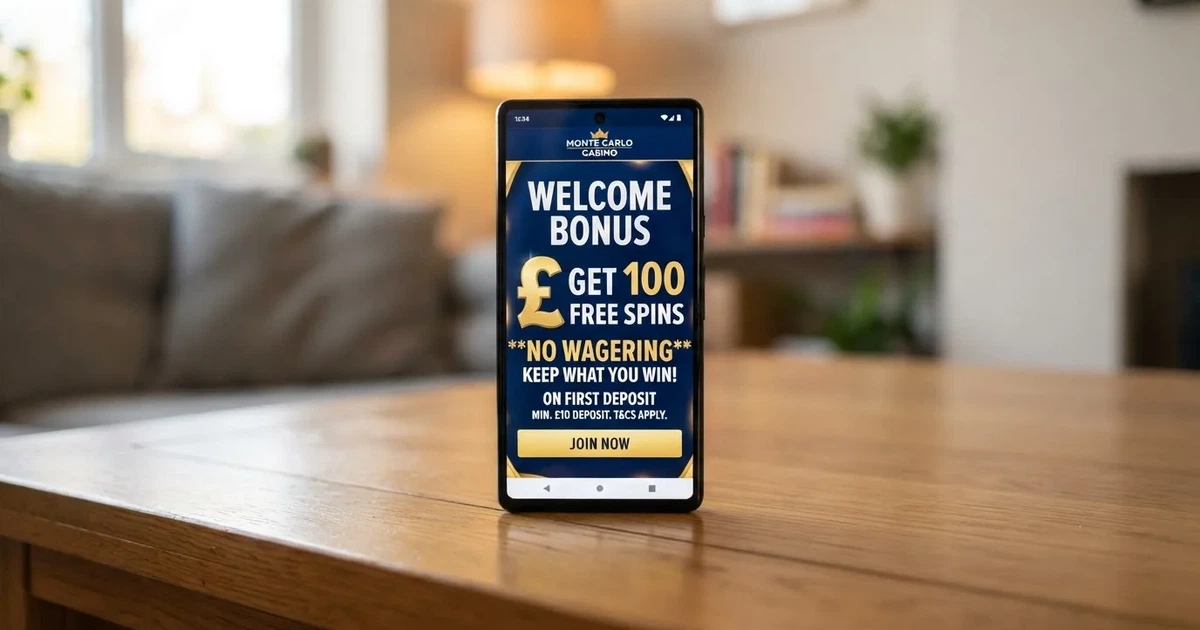
The truth is more interesting, and more expensive. The Commission has tightened the rules so hard over the last five years that the gap between a wagered offer and a no-wagering one has narrowed dramatically — and the player pays the difference in a smaller headline, fewer free spins, or both. This page walks through what the offer actually costs, what sits behind it on the Gambling Commission’s register, and what to look for before claiming one in 2026.
Data current as of 7 November 2026 against the Gambling Commission’s public register of gambling businesses.
Table of Contents
- The legal frame the offer sits in
- Safer-gambling mechanics behind every no-wagering offer
- Getting money in and out: payment routes that survive the rules
- The incentive itself: how a no-wagering offer is built
- The ten licensed brands, compared on what the register shows
- How a no-wagering sign-up offer actually works
- Grosvenor Casinos — land-rooted, online-licensed
- Betfred — sportsbook first, casino second
- 32Red — long-running remote-only brand
- BetVictor — multi-vertical under BV Gaming
- William Hill — high-street legacy, online-only relevant here
- Virgin Games — white-label by structure
- Ladbrokes — part of the LC International group
- Paddy Power — Flutter’s casino product
- Betfair — same operator, different brand front
- Jackpotjoy — Gamesys’s flagship casino brand
- Frequently asked questions
The legal frame the offer sits in
Every casino sign-up offer a UK player can claim is built on a single regulatory stack. The Gambling Commission, working under the Gambling Act 2005 and the Gambling (Licensing and Advertising) Act 2014, hands out operating licences to businesses that take remote bets from customers in Great Britain. A licence from Malta, Curaçao or Gibraltar is not a substitute. The Commission is the test, and it is unforgiving about who passes it.
The register itself is unusually candid for a regulator. On 18 September 2026 it named 139 businesses holding an active remote casino operating licence, plus a separate domain list of 1,065 active and 361 white-label website entries — the latter being sites that trade under another company’s licence rather than running on their own. The register can be searched online and downloaded in full as a CSV or an Excel file, which is why so many of the figures on this page can be checked against a specific row in a specific column. The licence number itself follows a fixed pattern: account-R-number-suffix. The leading six digits repeat the licence holder’s account number, the “R” marks a remote (online) licence, and the suffix identifies the individual licence under that account. So 039411-R-319335-010 belongs to account 39411, the tenth remote licence held under that account.
That stack changed twice in the run-up to 2026 and the changes matter here.
The first is the wagering cap. From 19 December 2025 the Commission prohibits any online casino bonus from carrying a wagering requirement higher than 10x the bonus amount. A £50 bonus cannot require more than £500 of qualifying turnover before withdrawal. Any older offer you remember from a few years ago — 35x, 50x, the eye-watering 65x on some free-spin bundles — is now outside the rules. From the same date, mixed-product bonuses are banned: a casino cannot offer you a sportsbook free bet in exchange for opening a casino account. The two verticals stay separate at the marketing layer.
The second is the credit card ban, which has been in place since 14 April 2020. No credit card can fund a gambling account in Great Britain, online or offline, including credit cards routed through e-wallets. Debit cards and bank transfers were untouched. The Commission estimated at the time that around 800,000 UK consumers had used credit cards to gamble in 2018 and found that 22 per cent of online gamblers who used credit cards fell into the problem-gambling category. The number to remember is the second one. That is why the ban exists, and it is the reason every “fast withdrawal” pitch a player meets is, by definition, a debit-card pitch.
One consequence the player rarely sees stated clearly: because no-wagering offers are the most generous thing the operator can run without being clawed back by the regulator, they are also the offer type most likely to be quietly trimmed when remote gaming duty changes. From 1 April 2026 the duty rose from 21 per cent to 40 per cent. The player does not pay that tax. The operator does. Operators pay it out of the margin that funded the bonus in the first place, so the player’s slice of that margin shrinks, and “no wagering” is the first place the trimming tends to show.
Safer-gambling mechanics behind every no-wagering offer
A no-wagering offer is unusually fast for the player to evaluate precisely because the regulator has done so much of the work already. Every UK-licensed casino must run a fixed set of safer-gambling mechanics, and the player can assume they are there before reading a single term.

Age and identity are the first gate. Minimum age is 18. Since 7 May 2019 the casino must verify name, address and date of birth before the first deposit or any play. Anonymous play is impossible at a licensed site; it has not been a feature of the UK market for the better part of a decade. The fast sign-up the marketing copy talks about is fast within that frame — a few minutes to enter details and upload a document, not “no checks”. The mechanics are still there.
Stake limits on online slots are the second frame. From 9 April 2025 a player aged 25 or over can stake up to £5 per game cycle. From 21 May 2025 a player aged 18 to 24 can stake only £2. “Game cycle” is the technical term the Commission uses for one full spin including any gamble or feature bet — it is not a per-spin cap that can be reset. There is no state-set deposit or loss ceiling. What there is instead is a prompt: since 31 October 2025 every UK-licensed casino has to ask a new customer to set a financial limit before the first deposit goes through. Refusing to set one is not a route past the prompt; the casino must record the refusal.
Auto-play is banned. Since 31 October 2021 an online slot spin may not run faster than 2.5 seconds, and the game may not be played in auto-play mode. Losses disguised as wins — a slot animation celebrating a payout that is smaller than the stake — are banned in the same breath. The 2.5-second minimum is what stops a player from pretending the bonus was cleared faster than it actually was. It also feeds directly into the time-cost arithmetic further down this page.
GAMSTOP is the line in the sand. Every UK-licensed online casino has been a mandatory participant in GAMSTOP since 31 March 2020. A player who registers with GAMSTOP for six months, one year or five years is blocked from opening an account, depositing, or playing with any GB-licensed operator for the full period. The exclusion cannot be cancelled early. It is the single safer-gambling tool that actually closes every door at once, and it is the test of whether a casino the player is looking at is licensed at all. Offshore sites do not connect to GAMSTOP. If a casino does not check GAMSTOP, the casino is not licensed in Great Britain. Full stop.
Financial vulnerability checks sit on top of that. From 28 February 2025 a casino has to run a check on any customer whose net deposits cross £150 in a rolling 30-day window, using public data only at this stage. The wider financial risk assessments the Commission has signalled have not yet come into force. The £150 figure is the one a player is most likely to notice: it is the level at which a casino may pause withdrawals to ask more questions, and it sits below most no-wagering bonus conversions, so it rarely affects the sign-up offer itself. It does affect anything that follows.
Three free services a player should keep to hand regardless of which casino they choose: the National Gambling Helpline, run by GamCare, for confidential advice; GambleAware, for information and self-assessment tools; and GAMSTOP itself, for the actual block. A bonus is a marketing tool. Those three are the safety net.
Getting money in and out: payment routes that survive the rules
The credit card ban shaped the practical payment list more than any rule since. Anything routed through a credit balance — credit cards, credit-funded e-wallets, buy-now-pay-later — is out. Anything funded from a current account is in. The routes a UK player can actually use at a no-wagering offer are narrower than the marketing page implies.
Debit cards are the default. A Visa Debit or Mastercard Debit card issued by a UK bank will be accepted at every GB-licensed casino, will deposit in seconds, and will not run into the credit card ban at the back end. Apple Pay sits on top of that infrastructure rather than beside it. Apple Pay is developed and operated by Apple Inc., launched on 20 October 2014 in the United States, and opened to UK-issued cards from 14 July 2015. It is, in gambling terms, a front end for the same debit card the player would have used anyway: tokenisation replaces the real card number with a device-specific Device Primary Account Number, and each transaction carries its own dynamic security code. What Apple Pay adds is biometric confirmation — a double-click of the side button on Face ID models, a double-click of the Home button on Touch ID — which speeds up the deposit step but does not change the credit card status. If the underlying card is a credit card, Apple Pay is still blocked at the casino’s end.
Bank transfer sits on the Faster Payments Service. Faster Payments has been live since 2008, is run by Pay.UK, operates 24 hours a day, seven days a week, and clears most transfers instantly or within a couple of minutes; the worst case the scheme allows is two hours. It carries a £1,000,000 per-transaction limit at the scheme level, though individual banks can and do cap customers lower than that. For casino withdrawals, Faster Payments is what most operators use to push winnings back, which is why a no-wagering bonus that pays out can land in a current account within minutes rather than the “three to five working days” the marketing copy still writes from habit. The Bank of England oversees the system’s safety and provides the final settlement, but is not itself a participant. None of that helps the player if their own bank’s outbound Faster Payments limit is set at £1,000 per day. The cap the player will feel is the bank’s, not the scheme’s.
AstroPay is the long-tail option. Founded in 2009 and headquartered in Uruguay, AstroPay operates as a global digital wallet offering online payments, virtual and physical debit cards, and peer-to-peer transfers. Its UK entity, Larstal Limited, is authorised as an electronic money institution by the Financial Conduct Authority under the Electronic Money Regulations 2011; its Isle of Man entity is licensed by the Isle of Man Financial Services Authority for money transmission; its Brazilian entity is authorised by the Brazilian Central Bank; its Danish entity, Larstal Denmark ApS, is authorised by the Danish Financial Supervisory Authority. The reach matters less than the structure: where AstroPay shows up in a UK casino’s cashier page, it is sitting behind an FCA-authorised EMI rather than a paper licence from somewhere less demanding. It is also a debit-funded wallet by design — credit cards cannot top it up at the gambling end. AstroPay spun off its payment-processing business, dLocal, as a separate company back in 2016, which is occasionally useful context if the player sees dLocal on a banking statement and wonders why the AstroPay deposit is on a different row.
Two practical points carry out of this. First, the casino the player is using may advertise “Apple Pay withdrawals” but route the actual transfer through Faster Payments regardless — the wallet is the front, the rail is the back. Second, every payment method on the licensed cashier page is, by definition, debit-funded. A casino accepting credit is a casino not licensed in Great Britain, and the player has already stepped outside the safer-gambling frame described in the section above.
The incentive itself: how a no-wagering offer is built
A no-wagering offer is not a generous offer. It is an honest offer, which is a different thing. The structure is simple: the casino gives the player a small amount of bonus value — cash, free spins, or both — and the player keeps whatever that bonus converts into, with no turnover multiple and no maximum cashout cap hidden in the small print. There is no clawback.
What the player gives up is size. A no-wagering sign-up offer at a UK-licensed casino typically lands well below the equivalent wagered offer from the same brand a year or two ago. Where a 2022 casino might have dangled “100% up to £100 with 35x wagering”, a no-wagering equivalent in 2026 is more likely to be a £10–£30 bonus, or a small bundle of free spins at a low per-spin value. The reason is straightforward. A wagered offer lets the casino recoup most of its headline cost through the playthrough: a £100 bonus at 35x is a £3,500 turnover requirement that the house edge eats into regardless of whether the player wins. A no-wagering offer pays the bonus, hands over whatever it converts into, and walks away. The casino’s risk per pound of headline is much higher, so it sets the headline lower.
Free-spin no-wagering offers are the more common shape of the deal in 2026. The spins tend to be locked to one or two named slot titles, each spin carries a fixed stake value (usually the £2 or £5 stake cap depending on the player’s age), and any winnings from the spins land as cash rather than bonus funds. That last point is the one that distinguishes a no-wagering offer from a “wager-free spins” wording on a bonus with a deposit requirement attached. Read the difference carefully. “Wager-free” can mean “no wagering on the spin winnings” or “no deposit required, free to claim” — those are different offers and the second is rarer.
Mixed-product bonuses are out. From 19 December 2025 a casino cannot offer free sportsbook bets to a player who opens a casino account. The two verticals stay separate. The deposit match with wagering is still legal, but only up to the 10x cap. So the menu in 2026 has narrowed to a clean three-way split: small cash bonuses with no wagering, free-spin bundles with no wagering, or larger cash bonuses with a wagering requirement of up to 10x.
What the offer does not cover is just as important as what it does. A no-wagering offer does not cover the deposit itself; the player puts in £20, claims a £10 no-wagering bonus, and the bonus is the £10. It does not cover any subsequent deposit. It does not cover the live casino or table games in most cases; the bonus is locked to the slot the marketing page names. It does not survive a withdrawal: a player who requests a withdrawal of real-money funds before the bonus has been claimed or used forfeits the bonus in most cases. And it does not extend to the player who opened the account but did not opt in. A no-wagering bonus without an opt-in is a no-bonus at all.
What the 10x cap means if you take a different offer
For comparison, the upper edge of what the regulator now allows is 10x wagering. A £50 bonus at 10x means a player has to put £500 of qualifying bets through the casino before any bonus-related winnings clear. At the £5 maximum stake a player aged 25 or over faces, that works out at 100 spins. At five seconds per spin — the minimum the Commission allows since 31 October 2021 — the math takes around eight minutes of button-pressing. A player aged 18 to 24 is working with the £2 stake, which doubles the spin count to 250 and stretches the clock to about twenty-one minutes.
Pull the bonus up to £100 and the time roughly doubles again: 200 spins at £5, taking around seventeen minutes, or 500 spins at £2, taking roughly forty-two. Drop the bonus to £25 and the figures halve. The band runs from a few minutes of clearing time for a £25 bonus at the £5 stake, to under three quarters of an hour for a £100 bonus at the £2 stake. That is the cost a player skips by taking the no-wagering offer instead, and it is the right way to read the comparison. The casino eats the turnover, the player gives up the larger headline, and the difference lands in the bonus amount on the no-wagering version.
A caveat that matters as much as the calculation: this is statistical, not promised. Spins at a slot do not produce a fixed return. The time figures above assume the player is clicking through the spins at exactly the minimum interval, with no feature buys, no deviation to a higher stake during the playthrough, and no exits. A real session runs longer and returns less predictably. The arithmetic shows the order of magnitude; it does not guarantee an outcome.
The ten licensed brands, compared on what the register shows
The Commission is unusually quiet about which brands are running no-wagering offers this month. The public register tells the player who is licensed and under what account number; it does not list current promotions. So the comparison below is a register snapshot, not a ranking of offers. Where the columns below can say something concrete, they say it. Where the inputs are silent, the row stays silent too.
| Brand | Licence holder and GB remote casino licence | Domain status on the register |
|---|---|---|
| Grosvenor Casinos | Rank Interactive (Gibraltar) Limited, 057924-R-334666-005 | Active |
| Betfred | Petfre (Gibraltar) Limited, 039544-R-319290-010 | Active |
| 32Red | Platinum Gaming Limited, 045322-R-324275-019 | Active |
| BetVictor | BV Gaming Limited, 039576-R-319370-028 | Active |
| William Hill | WHG (International) Limited, 039225-R-319373-015 | Active |
| Virgin Games | Gamesys Operations Limited, 038905-R-319430-022 | White-label |
| Ladbrokes | LC International Limited, 054743-R-330863-014 | Active |
| Paddy Power | PPB Games Limited, 039411-R-319335-010 | Active |
| Betfair | PPB Games Limited, 039411-R-319335-010 | Active |
| Jackpotjoy | Gamesys Operations Limited, 038905-R-319430-022 | Active |
Two things stand out. Three of the ten brands in the table above sit under just two parent licences. Paddy Power and Betfair are both run by PPB Games Limited under account 39411; Virgin Games and Jackpotjoy are both run by Gamesys Operations Limited under account 38905. The Commission’s register treats these as separate domains of the same operator rather than independent competitors, which has practical consequences for any promotion that caps one offer per customer or per household.
The second is the white-label line. Virgin Games trades as a white-label domain under account 38905 — meaning it operates on Gamesys’s licence rather than holding its own. Jackpotjoy, sitting on the same licence, is listed as active. Both are licensed. The status flag on the register simply tells the player which entity the brand is the customer-facing face of.
Nothing in this table tells the player which brand is running a no-wagering offer right now, or on what terms. For that, the player has to read the live promotion page of each brand. What the table does is the one thing the player cannot negotiate around: it confirms that all ten are licensed under a current Gambling Commission remote casino operating licence, and therefore subject to the rules described in the section on the legal frame and the safer-gambling mechanics above.
How a no-wagering sign-up offer actually works
A sign-up offer is the bonus a player gets for opening a new account and, in most cases, making a first deposit. A no-wagering sign-up offer is that bonus without a turnover multiple. The mechanics of claiming it follow a fixed order.
The first step is the registration form: name, address, date of birth, email, mobile number. Since 7 May 2019 a UK-licensed casino must verify these against public data and, where the data does not match, against a document upload. Verification can take a few minutes for the fully electronic route, or longer if a passport or driving licence is requested. This is the “fast sign-up” the marketing page talks about. It is fast against the regulatory baseline; it is not instant, and it cannot be, on a licensed site.
The second step is the deposit prompt. From 31 October 2025 the casino has to ask the new customer to set a financial limit before the first deposit lands. The deposit itself can be made via any of the routes described above: debit card, Apple Pay, bank transfer through Faster Payments, or a wallet like AstroPay. The minimum deposit to claim a sign-up bonus is typically £10 to £20.
The third step is the bonus claim. Some brands credit the bonus automatically on the first deposit; others require an opt-in either at registration or in the cashier. A player who skips the opt-in does not get the bonus. This is the single most common reason a “missed” no-wagering offer is missed: the player assumed it was automatic.
The fourth step is the play. For a free-spin bundle, the spins are usually locked to a single named slot at a fixed stake value. For a cash bonus, the player can usually take the bonus, play it through once on eligible games, and withdraw what is left. “Wager-free” in this context means the playthrough does not generate a further wagering requirement. The bonus itself is played, not just held.
The fifth step is the withdrawal. This is the moment a no-wagering offer earns its name. Whatever is left of the bonus after the play is real, withdrawable cash. There is no requirement to deposit again before withdrawing, no maximum cashout cap on the bonus-derived funds (the casino can still apply a maximum cashout on free-spin winnings in some cases — read the small print), and no waiting period beyond the casino’s standard withdrawal queue.
No-deposit variants: how they differ
A no-deposit sign-up offer is the same mechanic minus the deposit step. The casino credits the bonus — a small cash amount, often £5 or £10, or a handful of free spins at a low per-spin value — without requiring the player to fund the account first. The verification step still has to complete before any withdrawal, and the small print still applies: a maximum cashout cap on the bonus winnings is more common on no-deposit offers than on deposit-triggered ones. A no-deposit offer with no wagering and no maximum cashout cap is the rarest configuration in the UK market, and it tends to appear in narrow promotional windows rather than as standing inventory.
The cost to the player of the no-deposit variant is mostly time. The bonus is small enough that the time spent registering, verifying and playing through it can easily exceed the cash value of the offer. For a player whose goal is to evaluate a casino without committing money, that trade-off is the point. For a player whose goal is to extract maximum bonus value per minute spent, a deposit-triggered no-wagering offer is almost always the larger number.
Why such offers change from month to month
Sign-up offers rotate. The Commission’s rules limit what can be offered — no credit cards, no mixed-product bonuses, no wagering above 10x, mandatory financial limit prompts — but inside that frame the casino can change the headline amount, the eligible slots for free spins, the deposit minimum, the maximum cashout on bonus winnings, and the opt-in mechanics without notice. Three forces drive the rotation: the operator’s margin position under the new 40 per cent Remote Gaming Duty, the seasonal push for new sign-ups, and the post-19 December 2025 normalisation of the 10x cap, which is still working its way through the market. A no-wagering offer a player sees in one month may not be running in the next, and the player’s most reliable defence against being misled by an out-of-date page is to check the live promotions page on the brand’s own site before depositing.
The check a player should run before claiming
Four quick checks make most surprises visible. First, the licence: confirm the brand’s domain is on the Gambling Commission’s public register as an active or white-label entry, under an account number that matches the licence holder named on the casino’s own footer. Second, the wagering language: the bonus terms should state explicitly “no wagering” or “wager-free” and should not include a multiple anywhere in the bonus paragraph. Third, the maximum cashout: a no-wagering offer can still cap the winnings from a free-spin bundle at a fixed amount — that is allowed under the Commission’s rules, and it is the single clause most likely to reduce a player’s actual return. Fourth, the eligible games: a no-deposit or no-wagering bonus tied to a single slot means the player does not get to choose the game, and the return is whatever that slot pays back on average.
Grosvenor Casinos — land-rooted, online-licensed
Grosvenor Casinos operates via account 57924, Rank Interactive (Gibraltar) Limited, which holds remote casino operating licence 057924-R-334666-005. The parent group’s high-street casino estate is the distinguishing feature for a player weighing sign-up offers. A player who has walked into a Grosvenor on the high street and values that physical brand footprint will not find a more direct online extension; a player who only cares about a remote bonus line will see most of the same options from a pure-play competitor. The brand’s position is straightforward — one active domain, one licence holder — which is the cleanest configuration on the table.
Betfred — sportsbook first, casino second
Betfred (Betfred.com) uses account 39544, Petfre (Gibraltar) Limited, holding remote casino operating licence 039544-R-319290-010. The brand is a sportsbook-first operator running a casino product as a vertical within the same account, which matters because the Commission’s ban on mixed-product bonuses from 19 December 2025 cuts both ways. The casino offer cannot be teased with a sportsbook free bet, and the sportsbook welcome cannot be teased with casino spins. For a player looking for a no-wagering casino offer specifically, the relevant page is the casino one. Petfre (Gibraltar) Limited is the licence holder for both verticals on the same domain.
32Red — long-running remote-only brand
32Red (32red) is licensed under account 45322, Platinum Gaming Limited, with remote casino operating licence 045322-R-324275-019. Platinum Gaming is a casino-only operator without the sportsbook heritage that several of the other names on this list carry, and the longevity of the brand on the UK market is part of how it positions itself. For a player who has no interest in betting shops or sports coupons, 32Red is one of the few names on the register that is exclusively a casino business end-to-end. Its register footprint is a single active domain, which is what a single-brand operator looks like.
BetVictor — multi-vertical under BV Gaming
BetVictor uses account 39576, BV Gaming Limited, holding remote casino operating licence 039576-R-319370-028. BV Gaming is the parent of several UK-facing brands beyond BetVictor itself, and the casino licence sits alongside the sportsbook and gaming verticals the group runs. A player comparing welcome offers across the group will see the same parent name in the small print on each brand’s footer; what changes is the front-end design, the bonus headline, and the eligible games. The register treats these as separate domains under one licence account.
William Hill — high-street legacy, online-only relevant here
William Hill is listed on the register as an active domain of account 39225, WHG (International) Limited, holding remote casino operating licence 039225-R-319373-015. The high-street betting shop business is licensed separately and is not what the remote licence covers; for a player in front of a screen, the relevant entity is the WHG (International) Limited account, and the offer being marketed is the one on William Hill’s casino tab. The Commission’s split between remote and non-remote licences is the line the small print draws here. A player walking into a William Hill shop is not dealing with WHG (International) Limited at all.
Virgin Games — white-label by structure
Virgin Games is the table’s only white-label domain. It is listed against account 38905, Gamesys Operations Limited, which holds remote casino operating licence 038905-R-319430-022. A white-label site trades under another company’s licence; in this case Gamesys is the licence holder and the operator, while the Virgin brand sits on the front. The consequence for the player is that any safer-gambling tool, complaints route, or ADR pathway runs through Gamesys Operations Limited rather than through Virgin as a separate entity. Jackpotjoy, the next entry, is on the same account and is listed as active rather than white-label — meaning Jackpotjoy is treated as Gamesys’s own brand even though it sits alongside the white-label arrangement above.
Ladbrokes — part of the LC International group
Ladbrokes (Ladbrokes.com) is listed on the register as an active domain of account 54743, LC International Limited, holding remote casino operating licence 054743-R-330863-014. LC International Limited is the parent group that also runs other UK-facing brands on adjacent licences — the group structure is the part the player needs to remember when offers refer to “one per customer across our brands”. The single Ladbrokes domain on the register under this account is the casino-facing piece; the same group runs separate domains under separate licences for adjacent verticals.
Paddy Power — Flutter’s casino product
Paddy Power is listed on the Gambling Commission register as an active domain of account 39411, holding remote casino operating licence 039411-R-319335-010. The account number 39411 is the same one that runs Betfair on the next entry, which means PPB Games Limited operates both brands under one remote licence. From a player standpoint the welcome offer on Paddy Power is one of two offers under the same parent group; a player who has already claimed a welcome on Betfair is likely to find the same exclusion language on Paddy Power’s terms. The Commission’s register treats the two brands as separate domains, not as one offer.
Betfair — same operator, different brand front
Betfair (Betfair.com) sits on the same register line as Paddy Power: account 39411, PPB Games Limited, remote casino operating licence 039411-R-319335-010. Both brands are active domains of the same account, with no separate licence in between. For the purposes of a no-wagering sign-up comparison, the player is looking at one operator with two distinct front doors; the small print on bonus eligibility, account-level exclusions, and the one-bonus-per-customer language is the part most likely to be shared across the two. Reading the offer on each brand’s own page is the only way to see the headline differences.
Jackpotjoy — Gamesys’s flagship casino brand
Jackpotjoy (Jackpotjoy.com) closes the table on the same licence as Virgin Games: account 38905, Gamesys Operations Limited, remote casino operating licence 038905-R-319430-022. The difference is the register status flag — Jackpotjoy is recorded as Active while Virgin Games is recorded as White-Label — which means Jackpotjoy is treated as Gamesys’s own brand on the licence rather than a third-party skin. For a player reading the safer-gambling and complaints pages, the responsible entity is Gamesys Operations Limited in both cases. The brand-level offer is what differs.
Frequently asked questions
How does a no-wagering casino sign-up offer actually work in the UK?
A no-wagering sign-up offer is a bonus credited at sign-up (sometimes requiring a deposit, sometimes not) on which any winnings are yours to withdraw from the moment they land. There is no turnover multiple on the bonus, no clawback, and the small print is unusually short by casino standards. The headline is smaller than a wagered equivalent, which is the price a player pays for the absence of wagering.
Which UK casino has the fastest sign-up process for claiming an offer?
Every UK-licensed casino has to verify name, address and date of birth before the first deposit or any play, which sets a minimum on the speed. Within that floor, the fastest sign-up tends to be at brands whose verification systems match the new player’s data on the first pass — anything from a couple of minutes for a fully electronic match to longer if document upload is required. “Fast” is measured against the licensed baseline, not against an offshore competitor that does not check at all.
Are no-wagering sign-up offers usually smaller than ones with wagering?
Yes. A no-wagering offer shifts the cost of the bonus entirely onto the operator, since the player keeps what the bonus converts into without a playthrough to recoup it. The operator compensates by setting a smaller headline — typically a £10–£30 cash bonus or a small free-spin bundle rather than a “100% up to £100” wagered match. The arithmetic of what is skipped is laid out above.
Can a no-deposit sign-up offer also have no wagering?
Yes, though it is the rarer configuration. A no-deposit, no-wagering offer credits a small bonus or free-spin bundle without requiring a deposit and without imposing a turnover multiple on the winnings. The trade-off is usually a maximum cashout cap on the bonus-derived funds, and the verification step still has to complete before any withdrawal. These offers tend to appear in narrow promotional windows rather than as standing inventory.
What should a player check before assuming a sign-up offer has zero wagering?
Four things: the licence (the brand must be on the Gambling Commission’s public register under a current remote casino licence), the wagering language in the bonus terms (an explicit “no wagering” or “wager-free” statement), any maximum cashout cap on bonus winnings (still allowed under a no-wagering offer, particularly on free-spin bundles), and the eligible games (a bonus locked to a single slot removes the player’s choice of return). The live promotions page on the brand’s own site is the only current source, since the register does not list active offers.
