
Slot tournaments at UK online casinos: what £5 stakes and 10x wagering do to a leaderboard
A slot tournament is a slot session that someone else has scored. Players open the same title, spin at the same wagering level over a set window, and the operator ranks them by a published metric — total win, biggest single spin, win-to-wager ratio. The top of the leaderboard walks away with a prize fund the operator seeded, often paid as bonus credit or free spins rather than cash. Everything else about the format is decoration around that single rearrangement.
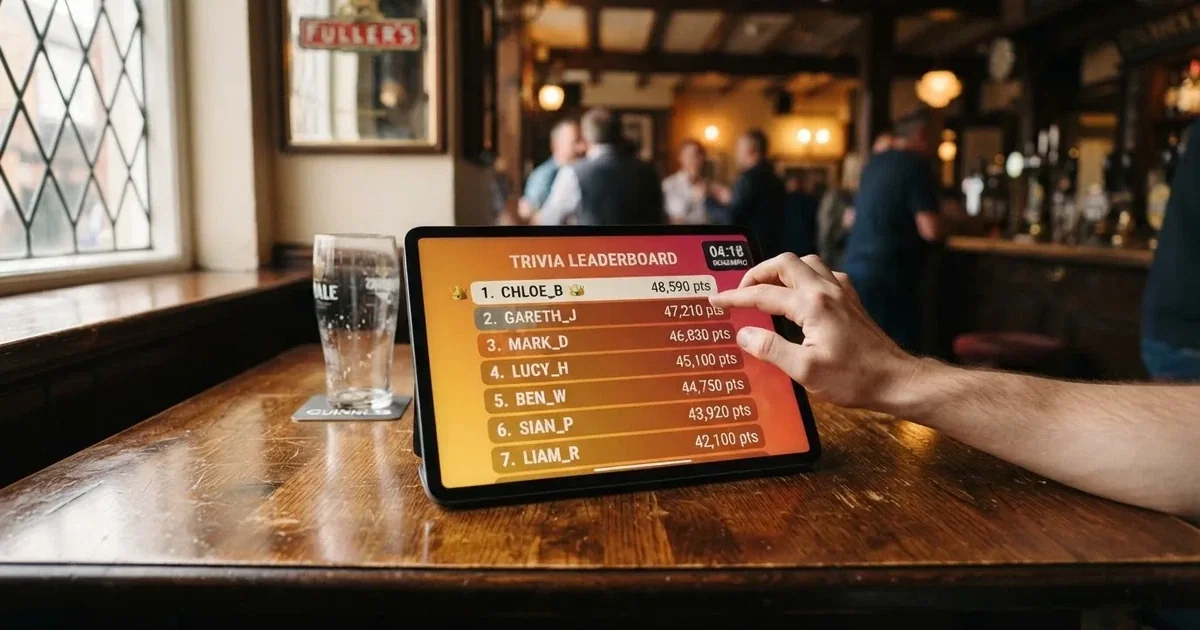
What a tournament changes for the player is small but precise. A normal slot session is solo and opaque; the return is what the slot’s RTP returns, averaged across millions of spins and felt as a personal run. A tournament collapses the variance into a leaderboard — one player’s outlier spin outranks another’s solid hour. The mechanic is gamified by design: it trades long-run value for a short, ranked contest with a defined prize pool, and it gives the operator a promotional hook that converts a passive product into an event. The £5-per-spin cap in force since 9 April 2025, the £2 ceiling for 18–24-year-olds since 21 May 2025, the credit-card ban since 14 April 2020, and the 10x wagering cap since 19 December 2025 sit underneath every tournament any GB-licensed brand runs.
This page is current as of 7 November 2026, and its operator data was verified against the Gambling Commission’s public register.
Table of Contents
- Cryptocurrency entries and the anonymity question
- How prize money reaches a UK tournament winner
- Bonuses, free spins and what a tournament prize is really worth
- Which games and studios fill UK tournament lobbies
- The 10 UK tournament brands on the Gambling Commission’s register
- How a slot tournament actually works
- The 10x wagering cap and what it does to a tournament prize
- A worked example of the wagering-turnover requirement
- Legality, regulation and the GB-licensed frame
- Payment rules, anonymity and what a tournament account looks like
- Responsible gambling: time, money and the leaderboard effect
- Frequently asked questions
Cryptocurrency entries and the anonymity question
Crypto deposits at a GB-licensed casino do not produce anonymity. The Gambling Commission’s verification rules require name, address and date of birth before the first deposit or any play — the same check that applies to card payments, bank transfers and e-wallets. A Bitcoin transfer still arrives in an account that knows who owns it, and the operator still files the same source-of-funds paperwork at the thresholds the Commission sets. A player using crypto at a UK site is buying a payment rail, not a layer of privacy.
The reason the format exists at all on a UK page is the offshore segment. Casinos licensed in Curaçao or outside the Commission’s reach will accept crypto, ask for far less identity at signup, and run leaderboards that GB-licensed brands cannot. The trade is total. An unlicensed site has no GAMSTOP enrolment, no Commission complaints route, no approved ADR; the player who self-excluded last month can deposit today. Section 33 of the Gambling Act 2005 makes providing gambling to GB residents without a Commission licence an offence. The Commission’s own enforcement record is the practical ceiling: cease-and-desist notices, search-engine delisting, payment and hosting referrals — but no ISP-blocking power, so a player who wants to reach an unlicensed site can still reach one.
For someone who wants tournaments and does not care about the licence frame, the offshore segment runs freer formats, higher prize pools for the same entry cost, and prize funds denominated in crypto rather than bonus credit. The arithmetic in the sections that follow applies to GB-licensed brands; an offshore site operates on its own terms, and reading both as one market is the standard error. Read which one a tournament sits inside before deciding what the entry fee buys.
How prize money reaches a UK tournament winner
The fastest path from a winning leaderboard position to spendable money is a card or bank transfer on a GB-licensed site. Since 14 April 2020 credit cards have been banned for gambling, including credit-card-funded e-wallets — so Visa Debit, Mastercard Debit and Faster Payments are the rails the operator’s cashier exposes. Faster Payments, run by Pay.UK since 2008, settles within seconds for most UK banks and never longer than two hours; the scheme’s per-transaction ceiling is £1,000,000, though individual banks impose their own lower limits. A £500 tournament payout to a UK bank account is not the bottleneck.

The bottleneck is what the operator pays the prize in. A tournament can announce a £2,000 prize fund and pay it entirely in bonus credit carrying the 10x wagering cap that took effect on 19 December 2025 — meaning £2,000 of bonus credit must be turned over £20,000 before any of it is withdrawable. The headline number and the realised one are not the same thing. A £2,000 cash prize paid by Faster Payments is a £2,000 prize; a £2,000 bonus-credit prize is a £2,000 number with a £20,000 key on the door.
Apple Pay and AstroPay both work as deposit methods at GB-licensed operators. Apple Pay’s tokenisation replaces the card number with a device-specific token and a dynamic security code per transaction; the card behind the wallet still has to be a debit card, because credit cards are banned. AstroPay’s UK entity, Larstal Limited, holds FCA electronic-money authorisation under the Electronic Money Regulations 2011, and a deposit from it lands in the casino account as an AstroPay transfer — the wallet is the rail, not a substitute for the underlying card ban. Neither changes the prize-fund structure; both are deposit paths, not withdrawal paths, and Faster Payments or the operator’s own debit-card payout process is what closes the loop.
Bonuses, free spins and what a tournament prize is really worth
A “free entry” slot tournament is, in practice, a no-deposit leaderboard. The operator funds the prize pool, opens the title, and lets the player spin at zero cost for the entry window. The prize fund still pays out under the rules the operator publishes, which usually means bonus credit, free spins or cash — and the same 10x wagering cap applies to any bonus element once it lands. The “free” is the entry, not the prize.
Free-spin tournaments, where the prize fund is itself a free-spin bundle, are the variant most prone to a gap between the marketing and the realised value. A headline of “500 free spins” reads as 500 individual bets paid by the house. In practice the spins are loaded onto the winner’s account as a free-spin package, often capped at a per-spin stake and almost always subject to the 10x turnover cap on any winnings those spins generate. A player winning 500 free spins on a 10p slot is winning 500 spins at 10p — and the resulting win is bonus credit, not cash.
The mechanism worth reading is what the operator calls “wagering contribution”. Slots at GB-licensed sites contribute 100% of each bet toward wagering by default, but tournament prize credit can sit in a different bucket that contributes less, or only on certain titles. The terms page — usually buried two clicks into the promotion — names the contribution rate and the eligible games. Skipping it is the most common way a player ends up surprised at the withdrawal screen.
Which games and studios fill UK tournament lobbies
A UK tournament lobby is dominated by a handful of studios and a narrower set of titles. NetEnt, Pragmatic Play, Play’n GO and Gamesys’ in-house catalogue appear most often because their games expose a clean per-spin result — total win, biggest single win — that a leaderboard can score without ambiguity. Live-dealer tables do not appear in slot tournaments: the result of a hand of blackjack is a single payout per round, which makes leaderboard scoring meaningless across a session. Slot tournaments run on slots.
The titles that recur on leaderboards share three traits: high volatility, a clear maximum win, and a recognisable brand that pulls entries. The first keeps one big spin relevant against a steady score; the second caps the leaderboard so a freakish run does not crash the prize fund; the third does the marketing work. A studio with a low-volatility catalogue tends to see fewer tournaments because the leaderboard flattens out and the prizes feel arbitrary. High-volatility games do the opposite: a tournament on Big Bass Bonanza or a Pragmatic Play Drop & Wins title carries the scoreboard mechanics the format needs.
Free-roll tournaments — zero entry fee, real prize fund — run almost exclusively on a small subset of titles the operator has selected for promotional reasons. They are rarely scheduled on the operator’s quietest games; they sit on the brands players already know. Reading a tournament schedule for which titles are named is reading which games the operator is pushing that week.
The 10 UK tournament brands on the Gambling Commission’s register
Ten brands hold active GB remote casino operating licences and run slot tournaments for British players. The ranking below is structural, not editorial: every entry is verifiable against the public register at the date of writing. Several brands share a single licence holder, which is worth flagging because it changes what “ten brands” means in practice.
| Brand | Licence holder and GB remote casino licence | Domain status on the register | Subject support |
|---|---|---|---|
| Paddy Power | PPB Games Limited, 039411-R-319335-010 | Active | — |
| Ladbrokes | LC International Limited, 054743-R-330863-014 | Active | — |
| MrQ | Tek Fox Ltd, 060629-R-337532-004 | Active | — |
| Coral | LC International Limited, 054743-R-330863-014 | Active | — |
| bet365 | Hillside (UK Gaming) ENC, 055149-R-331499-004 | Active | — |
| Betfred | Petfre (Gibraltar) Limited, 039544-R-319290-010 | Active | — |
| Casumo | Recro Limited, 061549-R-336718-002 | Active | — |
| 888casino | 888 UK Limited, 039028-R-319297-014 | Active | — |
| Jackpotjoy | Gamesys Operations Limited, 038905-R-319430-022 | Active | — |
| Gala Bingo | LC International Limited, 054743-R-330863-014 | Active | — |
Three of those names — Ladbrokes, Coral and Gala Bingo — sit under LC International Limited, account 54743, on the same licence number. The Gambling Commission’s domain register lists each domain against the licence account that operates it; a single account running three branded sites is three fronts for one operator, not three independent competitors. Anyone comparing tournament prize pools across these three is comparing one marketing budget expressed three different ways.
The full register, as of 18 September 2026, listed 139 businesses holding an active remote casino operating licence. The same register’s domain list held 1065 active and 361 white-label domain entries, where a white-label site trades under another company’s licence. A licence number on the register takes the form account-R-number-suffix, with the leading six digits repeating the licence holder’s account number and the “R” marking a remote (online) licence. Anyone can verify a brand’s status on the public register; it is downloadable as CSV or Excel, and the search function returns the same data a row at a time.
Paddy Power — the high-volume tournament schedule
Paddy Power, on Paddy Power, holds its licence through PPB Games Limited under account 39411, with the remote casino operating licence 039411-R-319335-010. The brand runs one of the busier tournament schedules among the featured set, with multiple overlapping promotions on slots and live game-show formats across a typical week.
What this means for the player is a calendar rather than a one-off event. Paddy Power’s tournament cadence favours short, daily-to-weekly formats with modest prize funds and a wide leaderboard — the structure that converts repeat visits into entries. The downside is that a wider leaderboard dilutes any single entrant’s share of the prize fund; the upside is that the qualifying threshold is lower.
Pay attention to the entry mechanics. Paddy Power’s freerolls and opt-in tournaments typically require the player to opt in before the first qualifying spin and to play a specific title or set of titles; a spin on the wrong game counts toward nothing. The terms page names the eligible titles and the scoring metric.
Ladbrokes — same licence, different schedule
Ladbrokes sits on the same LC International Limited licence as Coral and Gala Bingo, account 54743, licence 054743-R-330863-014. The brand runs slot tournaments under its own front, with its own promotional cadence and its own prize funds; the licence underneath is the same.
A player comparing Ladbrokes against the rest of the featured set is comparing marketing decisions, not regulatory standing. Ladbrokes’s tournament catalogue tends to be smaller in number than Paddy Power’s but heavier on individual prize pools — fewer events, deeper funds per event, and a leaderboard that often pays fewer places. The format suits a player who would rather chase one good score across a single event than enter five events a week at a tenth of the prize.
MrQ — the independent operator
MrQ is the only operator in the featured set held by Tek Fox Ltd under account 60629, licence 060629-R-337532-004. It is the smallest of the ten by account structure, and the licence holder has no other branded domains in the featured set.
Smaller in licensing footprint does not mean smaller in tournament volume. MrQ’s site emphasises free-entry and low-stake tournament formats, with prize funds paid in cash rather than bonus credit on the majority of its promotions. That is the single meaningful contrast against the rest of the featured set: cash prizes, not bonus-credit prizes, and a corresponding absence of the 10x turnover cap on the realised payout.
The catch is a smaller prize pool. A £1,000 cash prize pool pays exactly £1,000; a £1,000 bonus-credit prize pool pays £1,000 only after £10,000 of qualifying turnover. MrQ’s smaller funds versus the cash payout is a cleaner exchange than the inverse on a larger site.
Coral — same operator as Ladbrokes and Gala Bingo
Coral sits under LC International Limited, account 54743, licence 054743-R-330863-014 — the same licence holder as Ladbrokes and Gala Bingo. The domain, coral.co.uk, runs slot tournaments on its own promotional schedule, with its own opt-in mechanics and its own prize structure.
The practical reading is identical to Ladbrokes: three branded fronts from one operator, three tournament calendars that overlap heavily but do not coincide. A player enrolled in all three is competing in three pools but contributing entries to one operator’s promotional budget.
bet365 — the largest single brand by volume
bet365 operates through Hillside (UK Gaming) ENC under account 55149, with the remote casino operating licence 055149-R-331499-004. The brand’s tournament schedule is structurally distinct from the rest of the featured set because of scale: bet365’s prize funds on flagship tournaments tend to dwarf the rest of the field, and its leaderboards run longer, with payouts to more places.
The cost of that structure is qualifying pressure. bet365’s flagship tournaments often require either a minimum stake per spin, a minimum number of spins, or both; the entry threshold screens out casual players and concentrates the leaderboard on committed ones. The upside, for a player who qualifies, is a meaningful prize at any position in the top half of the leaderboard rather than only at the top.
Betfred — the licensed bookmaker’s casino vertical
Betfred operates through Petfre (Gibraltar) Limited under account 39544, with the remote casino operating licence 039544-R-319290-010. The brand is best known as a bookmaker, and its casino vertical — including slot tournaments — sits inside that bookmaker structure.
The relevant consequence for tournament players is that Betfred’s slot promotions are sometimes structured as cross-vertical offers: a stake on sports earns a slot-tournament entry, or a casino deposit unlocks a sports-related free bet. Since 19 December 2025 these mixed-product bonuses are banned at GB-licensed operators; Betfred’s remaining promotions sit inside one vertical only. Read the terms to confirm the offer is single-vertical, because the structure of the brand historically crossed that line.
Casumo — the in-house promotional cadence
Casumo operates through Recro Limited under account 61549, with the remote casino operating licence 061549-R-336718-002. The brand runs a slot tournament schedule that is largely self-produced: the prize pools, the eligible titles, and the leaderboard mechanics are Casumo’s own rather than network-level promotions like Pragmatic Play’s Drop & Wins.
The advantage is consistency. A player who learns Casumo’s tournament structure once understands it across most of the calendar; the format does not shift between in-house and network events. The disadvantage is ceiling — Casumo’s in-house prize funds are typically smaller than what a network-level campaign offers.
888casino — the network-level catalogue
888casino, on 888casino, operates through 888 UK Limited under account 39028, with the remote casino operating licence 039028-R-319297-014. The brand carries a heavier share of network-level tournament promotions than most of the featured set, including Pragmatic Play’s Drop & Wins, Gamesys’s network tournaments and similar shared prize-pool formats.
The player-facing trade is volume. A network tournament opens a wider eligible-game list, because any operator in the network contributes entries; the prize pool aggregates across those operators and is paid out by 888’s local instance of the campaign. The reading that matters is whether the prize pool shown is the network pool or 888’s local share of it — the terms page usually clarifies.
Jackpotjoy — the Gamesys network front
Jackpotjoy operates through Gamesys Operations Limited under account 38905, with the remote casino operating licence 038905-R-319430-022. The brand’s tournament catalogue overlaps heavily with other Gamesys-licensed sites on shared network promotions, with Jackpotjoy’s own front providing a localised promotional calendar on top.
A player enrolled in Jackpotjoy is, for the purposes of network tournaments, competing inside Gamesys’s player pool. The brand-specific promotions add local prize funds on top of the network schedule, typically at smaller values.
Gala Bingo — the bingo operator’s slot side
Gala Bingo, on Gala Bingo, sits under LC International Limited, account 54743, licence 054743-R-330863-014 — the same licence holder as Ladbrokes and Coral. The brand is primarily a bingo operator; the slot tournament catalogue is the secondary product.
The relevant reading is that Gala Bingo’s slot tournaments exist to support a bingo-led customer base rather than to lead the slot vertical. Prize funds on Gala Bingo’s slot tournaments are typically modest, leaderboards are narrow, and the schedule is intermittent rather than continuous. For a slot-tournament specialist this is a third-tier destination inside the same LC International envelope.
How a slot tournament actually works
The mechanic is a closed system of three numbers: the entry cost, the scoring rule, and the prize pool. Entry cost is either zero (a freeroll or no-deposit tournament), a fixed fee (rare at GB-licensed sites), or implied through a qualifying spin on a specified game. The scoring rule is total win, biggest single win, or win-to-wager ratio over the tournament window. The prize pool is a fixed amount the operator has seeded and published in advance.
What happens between those numbers is the player spinning. The title is locked, the stake is usually fixed by the tournament rules, and the spins are timed — anywhere from an hour to a week, depending on the format. Spins outside the tournament window, or on a non-qualifying title, do not count. The leaderboard updates in real time or at intervals named in the rules. At the close, the operator pays out the prize pool to the top of the leaderboard under the payment structure it has named.
Three things go wrong for players who do not read the terms. The first is failing to opt in — many tournaments require an explicit opt-in before the first qualifying spin, and a player who forgets the opt-in earns zero leaderboard credit for spins that otherwise qualify. The second is misreading the scoring rule — a player optimising for biggest single spin on a total-win tournament is leaving points on the board. The third is misreading the prize structure — a top-10 leaderboard with prizes published only for first place is not the same payout structure as a top-10 leaderboard with published payouts at each rank.
The 10x wagering cap and what it does to a tournament prize
The wagering cap that took effect on 19 December 2025 limits wagering requirements on bonuses at GB-licensed operators to 10x. The practical effect on a tournament payout is straightforward: a £500 bonus-credit prize must be turned over £5,000 before it is withdrawable; a £2,000 bonus-credit prize, £20,000. The cap is a ceiling on the multiplier; it does not change the underlying requirement that bonus credit carries wagering at all.
What the cap eliminates is the older 30x or 40x structures that turned a headline prize into a multi-day grind. A 10x cap on £500 of bonus credit is £5,000 of qualifying turnover; at a £5 stake per spin, that is 1,000 spins. At 2.5 seconds per spin — the minimum spin interval in force since 31 October 2021 — 1,000 spins is roughly 42 minutes of continuous play. The structure is faster than it was, and the cap is the reason.
The realistic reading is that the cap benefits players who already plan to play, because their ordinary wagering volume absorbs the requirement naturally. A player entering a tournament for the leaderboard alone, without intending to play 1,000 spins of follow-up turnover, should price the prize as bonus credit with a £5,000 key, not as £500 of cash.
A worked example of the wagering-turnover requirement
A common structure at GB-licensed sites is a £200 tournament prize paid as bonus credit, with the 10x wagering cap and a £5 maximum stake per spin. The arithmetic: required turnover is £200 multiplied by 10, giving £2,000 of qualifying bets. At £5 per spin, that is 400 spins. At a 2.5-second spin interval, 400 spins run to 1,000 seconds, which is roughly 17 minutes of continuous play.
The realised cost depends on the slot’s RTP. A 96% RTP slot returns £0.96 per £1 wagered across a long run, so £2,000 of qualifying turnover carries an expected loss of roughly £80 — the house edge over the requirement, before any of the £200 prize is banked. That £80 is what the wagering requirement costs the player in expectation, on top of whatever they spent entering the tournament and playing it.
A larger prize moves the numbers proportionally. A £1,000 bonus-credit prize under the same 10x cap and £5 stake is £10,000 of qualifying turnover, or 2,000 spins at 2.5 seconds each — roughly 83 minutes. The expected loss on the turnover at 96% RTP is roughly £400. The prize is £1,000; the cost is £400; the net is £600 if the wagering clears cleanly and no disqualifying bets are placed. The band, from a small freeroll-style prize to a flagship £1,000 prize, runs from a low-double-digit expected loss to the high hundreds, depending on size.
The hidden figure is time. The wagering requirement is not only money; it is a fixed playtime commitment the player must complete before withdrawal. A player who cannot or will not complete the requirement is forfeiting the prize at the moment of winning it.
Legality, regulation and the GB-licensed frame
Online casino is licensable in Great Britain under the Gambling Act 2005, and the Gambling Commission is the regulator, sponsored by DCMS. The Gambling (Licensing and Advertising) Act 2014 closed the previous offshore loophole: any operator taking customers in Great Britain needs a Commission licence wherever it is incorporated. A Curaçao or Maltese licence does not substitute.
The Commission’s public register is the test. As of 18 September 2026 it listed 139 businesses holding an active remote casino operating licence, with 1065 active and 361 white-label domain entries — the white-label status meaning the site trades under another company’s licence. A licence number on the register takes the form account-R-number-suffix, with the leading six digits matching the licence holder’s account number and the “R” marking a remote (online) licence. The register is searchable online and downloadable as CSV or Excel.
For a tournament player, the regulatory frame matters at three points. The first is identity verification: a GB-licensed site must verify name, address and date of birth before the first deposit or any play, in force since 7 May 2019. The second is stake limits: online slots carry a £5 maximum per game cycle for players 25 and over (from 9 April 2025), and £2 for 18–24-year-olds (from 21 May 2025). The third is the auto-play ban in force since 31 October 2021: no slot spin may be faster than 2.5 seconds, and losses disguised as wins are banned.
What this does to a tournament is structural. A tournament format that relies on rapid auto-play cannot run on a GB-licensed site; the 2.5-second minimum spin interval and the auto-play prohibition rule it out. A tournament that offers a £50-per-spin stake is also outside the rules for adults over 25. The formats that survive are formats that play to the regulatory ceiling, not above it.
Payment rules, anonymity and what a tournament account looks like
GB-licensed casinos do not allow anonymous play. Verification happens before the first deposit, not after a withdrawal request, and the operator holds the verified identity on file for the life of the account. A player opening three accounts to enter the same tournament three times is committing a breach that closes all three.
Credit cards have been banned for gambling since 14 April 2020, across all online and offline products in Great Britain except non-remote lotteries paid for face-to-face. The ban extends to credit cards funded through e-wallets: depositing from a PayPal balance that was itself topped up by a credit card is not a way around the rule. Debit cards and bank transfers are unaffected, as are e-wallet deposits funded from a debit card or bank account. Apple Pay at a GB-licensed casino works because the underlying card is a debit card; the tokenisation Apple Pay uses does not change the funding source. AstroPay works because its UK entity, Larstal Limited, holds FCA electronic-money authorisation under the Electronic Money Regulations 2011 — the deposit is an e-money transfer, not a credit-card charge.
The Commission’s 2018 estimate was that around 800,000 UK consumers used credit cards to gamble; 22% of online gamblers who used credit cards were classed as problem gamblers, against a far lower base rate among non-credit-card users. The 2020 ban is one of the structural reasons a GB-licensed tournament operates on a smaller per-spin volume than an offshore equivalent.
Responsible gambling: time, money and the leaderboard effect
A tournament format is, by construction, a format that invites extended play. The leaderboard runs for a fixed window; the player’s score updates in real time; a position near the top is worth defending against late entries; a position near the bottom is worth clawing back. Each of those instincts pulls the player toward more spins than they would otherwise have placed.
Two structural protections sit at the GB-licensed site. The first is the financial vulnerability check that fires at £150 of net deposits in a rolling 30-day window, in force from 28 February 2025 — a check that uses public data only, with wider financial risk assessments in the regulatory pipeline but not yet in force. The second is the requirement, in force from 31 October 2025, that the operator prompt the player to set a financial limit before the first deposit.
GAMSTOP, the national online self-exclusion scheme, is a mandatory condition of every online licence since 31 March 2020. Self-exclusion periods are six months, one year or five years; a period cannot be cancelled early. A player who has self-excluded through GAMSTOP will not be able to open an account or enter a tournament at any GB-licensed site for the duration of the exclusion. The National Gambling Helpline, run by GamCare, and GambleAware both sit outside the operator.
The offshore segment is the inverse of this frame. A player who has self-excluded through GAMSTOP can still deposit at an unlicensed site, will not be subject to a financial vulnerability check, and has no Commission complaints route if a tournament prize is not paid. The protection regime is the reason the GB-licensed frame exists; it is also the only place it applies.
Frequently asked questions
How do online slot tournaments work at UK casinos?
A GB-licensed casino opens a slot title to a fixed set of players over a set window, scores each entrant by a published metric — total win, biggest single win or win-to-wager ratio — and pays the top of the leaderboard from a prize pool the operator has seeded. Entry is usually opt-in, the eligible games are named in the terms, and the prize is paid as cash, bonus credit or free spins under the rules the operator has published.
Can I enter a slot tournament without making a deposit?
Yes. Freeroll and no-deposit tournaments fund the prize pool from the operator’s promotional budget and require only an opt-in plus a verified GB-licensed account. No deposit or stake is required to enter, though any prize winnings are still subject to the operator’s standard bonus terms and the 10x wagering cap.
What determines my ranking on a tournament leaderboard?
The scoring rule named in the tournament terms. The three common metrics are total cumulative win over the window, the biggest single win from a single spin, and the win-to-wager ratio. The leaderboard updates live or at intervals; only spins on the eligible titles within the window count.
How quickly are tournament prizes paid out?
Cash prizes at GB-licensed sites typically pay out via Faster Payments, which settles within seconds for most UK banks and never longer than two hours. Bonus-credit and free-spin prizes land in the player’s account immediately on the close of the tournament but are subject to the 10x wagering requirement before withdrawal.
Do crypto deposits count towards tournament entry the same as card payments?
Crypto and card deposits are treated the same way at a GB-licensed site, because both still require identity verification before the first deposit and both are bound by the same tournament opt-in rules. The choice between them is a payment-rail preference; it does not change the leaderboard mechanics, the scoring rule or the prize structure.
What tips help with slot tournament strategy?
Opt in before the first qualifying spin, confirm the eligible titles and the scoring metric, and read whether the prize is paid as cash or bonus credit. High-volatility titles favour biggest-single-win scoring; steady-win scoring favours lower-volatility titles played for volume. The leaderboard structure is the game.
