
A 100% match bonus at a UK-licensed online casino in 2026: how the rules reshape what the offer is worth
Current as of 7 November 2026 against the Gambling Commission’s public register of remote casino operating licences.
The phrase “100% bonus” still pulls search traffic because it sounds like free money: deposit £100, play with £200. It is closer to a deposit match with a turnover requirement bolted on. Since 19 December 2025 the Gambling Commission has capped that turnover at 10x, which changes the arithmetic on every offer on the market. The page below is the arithmetic. It also covers who can actually claim one — every GB-licensed site screens against GAMSTOP before the first deposit, the 18-24 stake limit is £2 per spin, and credit cards have been banned for gambling since April 2020. The 100% bonus is real; what it costs the player who takes it is the part marketing glosses over.
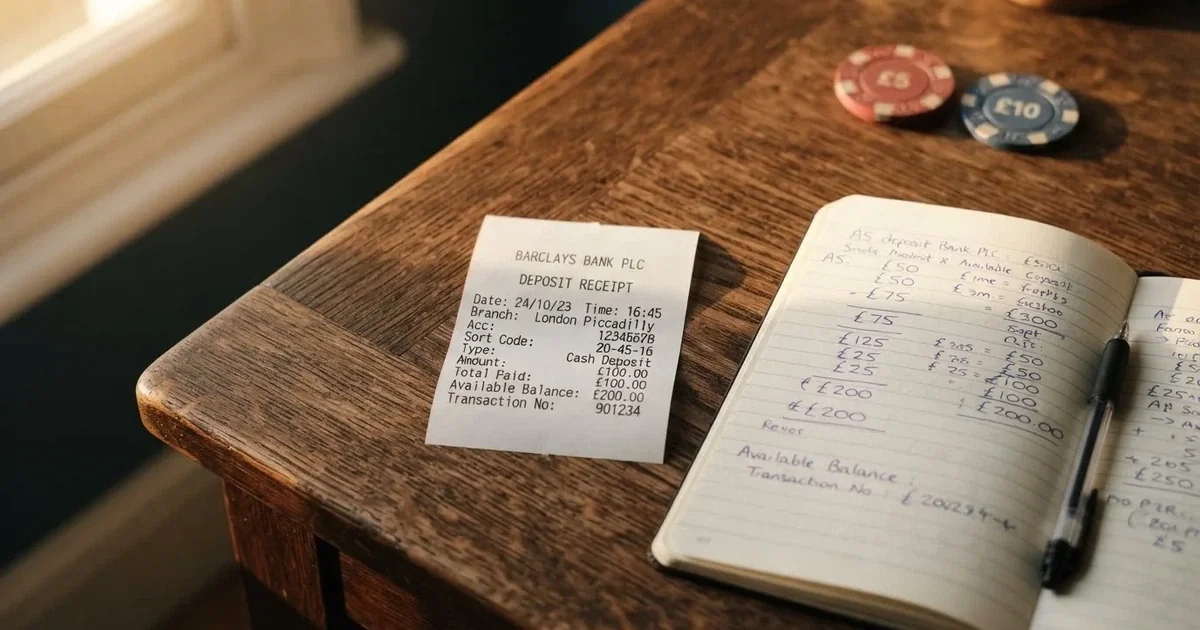
Table of Contents
- The licence under which every 100% bonus on this page is offered
- Responsible gaming controls that reach the bonus before it reaches the player
- Payments, payout speed and the minimum deposit that triggers the 100% match
- What a 100% bonus actually is and what it costs to clear
- The ten GB-licensed operators on the register
- What the comparison is actually showing
- The 100% bonus in a UK wallet: how the rules reshape the offer
- What the 10x cap does not change
- What a reader comparing offers should actually look at
- The wider frame: tax, age and where help is available
- Offshore and the cost of the protection that goes with it
- What the page is for
- Frequently asked questions about 100% casino bonuses at UK-licensed sites
The licence under which every 100% bonus on this page is offered
A 100% deposit bonus aimed at players in Great Britain sits inside one licence regime: the Gambling Commission’s, granted under the Gambling Act 2005 and tightened by the Gambling (Licensing and Advertising) Act 2014 so that the place the operator is based no longer matters. A Curaçao, Maltese or Gibraltar licence is not a substitute. Operators taking customers in England, Scotland or Wales need a Commission licence, and the public register of gambling businesses is the test of whether they hold one.
On 18 September 2026 that register listed 139 businesses holding an active remote casino operating licence. Each entry names the account holder, the licence number in the form account number-R-licence number-suffix (the leading six digits repeat the licence holder’s account number, the “R” marks a remote licence), and the domain or domains the licence covers. The same register held 1,065 active and 361 white-label domain entries — white-label sites trade under another company’s licence, which is why the same account number can turn up behind several brand names. Ladbrokes, Coral and Gala Bingo all sit under LC International Limited, for example; they look like three operators in a list and are in fact one licence with three front doors.
This is also where the page’s own list comes from. Every brand named below is one whose domain appears on the register against the licence account that runs it, with the licence number written out. It is not a ranking and it is not a recommendation; it is a closed set of ten GB-licensed operators with the bare minimum of what the register says about each.
Why the licence matters for the bonus itself
Three things change the moment an offer sits under a Commission licence. The first is the credit card ban in force since 14 April 2020 — no credit card deposit, and no credit card routed through an e-wallet either. The Commission’s reasoning, drawn from a 2018 evidence base, was that 22% of online gamblers who used credit cards to fund play fell into the problem-gambling category. A 100% bonus funded by credit would be a way to convert borrowing into play money, which is the exact pattern the ban was designed to interrupt.

The second is GAMSTOP. Since 31 March 2020 every online licence carries a GAMSTOP condition as a matter of social responsibility code. A player who has self-excluded — for six months, one year or five years, with no early cancellation — will not pass the screen and cannot claim the welcome offer. The third is the 10x wagering cap that came into force on 19 December 2025; mixed-product bonuses (bet on sport, receive casino spins) are banned in the same change. A bonus with a 20x or 30x turnover requirement is no longer a product a licensed site can sell to a British customer. That single number, 10, is what the rest of this page is built around.
Responsible gaming controls that reach the bonus before it reaches the player
A bonus is claimed at the cashier, but the checks that gate it run earlier. Three of them reshape what is on the table.
Identity and age. Every licensed site has verified name, address and date of birth before the first deposit or any play since 7 May 2019. Anonymous play is not possible at a GB-licensed operator. A paysafecard-funded deposit, sold under the marketing line that it lets a player “stay anonymous”, does not survive this step: the casino still knows who is paying, even when the payment instrument behind the deposit does not carry a card number.
GAMSTOP. The national online self-exclusion scheme is mandatory. A self-excluded player cannot deposit, cannot claim a bonus, and cannot have the account re-opened early. For everyone else, the bonus is claimable in the usual way.
The financial limit prompt. From 31 October 2025 every online operator must, before accepting a first deposit, prompt the customer to set a financial limit. There is no state-set ceiling; the limit is the player’s own choice, and the operator must offer the chance to set one. A paysafecard voucher sits inside that limit like any other deposit — the instrument does not exempt the player from the rule.
The wider financial vulnerability checks sit on top of this. Light-touch checks run at £150 net deposits in a rolling 30 days using public data only, in force from 28 February 2025. The wider financial risk assessments have been announced but are not yet in force; the picture will tighten again when they land.
Payments, payout speed and the minimum deposit that triggers the 100% match
The 100% match is a deposit offer; the deposit method decides whether it triggers. Three things matter: the minimum deposit the operator names, the payment methods that count toward the trigger, and the time it takes to get money back out.
Minimum deposit
Each operator names its own threshold. Common figures across the GB-licensed market sit in the £10 to £20 band. A deposit below the threshold does not trigger the bonus, even when the offer is described as a 100% match. The minimum is the first figure to check on the offer page; the size of the match comes second.
Payment methods that trigger the offer
Credit cards are out, banned for gambling since 14 April 2020. That leaves debit cards, bank transfers, e-wallets and prepaid vouchers. Paysafecard is among the methods that count at most sites, including for a welcome offer, but the instrument does not exempt the deposit from the player’s own financial limit. Apple Pay works on the deposit side on the operators that accept it: the technology uses tokenisation and a device-specific Device Primary Account Number, with a dynamic security code for each transaction, and the underlying funding source must be a supported debit card from a participating issuer. Apple Pay is not a funding source in itself; it is a front end over a card the bank has already approved. Bank transfers within the UK usually clear through the Faster Payments Service, which Pay.UK operates 24/7 and which most of the time arrives instantly or within a couple of minutes, with a £1,000,000 per-transaction scheme ceiling that individual banks often lower for their customers.
Withdrawal speed
Withdrawals are not the same infrastructure as deposits. The Faster Payments Service handles deposits back to UK bank accounts at the same speed it brings them in, but e-wallet withdrawals sit in a different queue and can take longer to clear. The relevant figure is not the deposit speed but the operator’s published withdrawal window. A player who has cleared wagering on a 100% bonus usually wants the cashout out the same day; the operator that publishes a same-day window is the one that suits that reader.
The credit card ban in practice
The ban catches credit cards used directly at the cashier and credit cards routed through e-wallets. A Visa debit card works; a Visa credit card does not; a deposit funded by a credit card via PayPal does not. The 2018 evidence base the Commission published — around 800,000 UK consumers used credit cards to gamble that year, and 22% of online gamblers who used credit cards were classed as problem gamblers — is the figure the rule rests on.
What a 100% bonus actually is and what it costs to clear
The “100%” is the easy part. Deposit £100 and the casino adds £100 in bonus funds; the playable balance is £200. The hard part is the wagering requirement, which is the multiple of the bonus the player has to stake through before any of the bonus balance becomes withdrawable cash. Under the 10x cap in force since 19 December 2025, a £100 bonus carries £1,000 of required turnover. The same arithmetic on a £50 bonus is £500 of turnover.
The cost band, calculated
The number the cap produces is a band rather than a single figure, because it depends on the player’s deposit. Worked against the £10 to £20 minimum that is common at GB-licensed sites, a player who deposits the bare minimum clears £100 to £200 of required turnover; a player who deposits £200 clears £2,000; a player at the £100 deposit the offer is usually pitched against clears £1,000. The bonus scales with the deposit, and so does the cost of clearing it. The number that stops mattering once another one sits beside it is the headline match — what changes the share is the deposit level that produces it.
The session cost is the other number. At a £2 maximum stake per spin for players aged 18-24 and £5 for players aged 25 and over — both rules now in force — a player working through a £1,000 turnover on £5 spins needs 200 spins. The Commission’s Remote Technical Standards set a minimum spin cycle of 2.5 seconds, which is roughly 14 minutes of continuous play for 200 spins at that stake. The faster the spin cycle on the chosen slot and the lower the stake, the longer the same turnover takes to clear. None of those numbers promises a return; they describe the work the bonus costs the player who clears it.
The stake limit and what it does to a bonus
A 100% match bonus sized to a £200 deposit produces £2,000 of required turnover at the 10x cap. At a £2 spin ceiling that is 1,000 spins, or roughly 42 minutes at the 2.5-second minimum. At a £5 ceiling the same bonus clears in 400 spins, or about 17 minutes. The stake ceiling is therefore a timer as well as a ceiling: it sets how fast the player can work through the turnover, and it sets it harder for the 18-24 cohort that the Commission has chosen to protect more tightly. The £2 ceiling was set on 21 May 2025; the £5 ceiling on 9 April 2025. Both sit alongside the 100% bonus rather than against it, but a player on the wrong side of either ceiling finds the bonus slower to clear than the offer page suggests.
Mixed-product bonuses are gone
Since 19 December 2025 the same change that capped wagering at 10x also banned mixed-product bonuses — bet on sport, receive casino spins, or any combination that asks a player to clear one product’s turnover with another. The 100% match sits cleanly inside one product and survives. A bonus that mixed slots wagering with a sports free bet does not.
The ten GB-licensed operators on the register
The table below is the register, transcribed. It is not a ranking of bonuses; no bonus terms were carried into the research, and no bonus is recommended on this page. It is the closed set of operators the Commission’s public register lists as active on 18 September 2026, with the licence that covers each domain. Several brands sit under one licensee; the table keeps the brand name as it appears on the register and the licensee as the Commission names it.
| Brand | Licence holder | GB remote casino licence | Domain status |
|---|---|---|---|
| Sky Vegas | Bonne Terre Gaming Limited | 065519-R-339675-002 | Active |
| Midnite | Dribble Media Limited | 042647-R-321653-022 | Active |
| PokerStars | Stars Interactive Limited | 039108-R-319334-026 | Active |
| Unibet | Platinum Gaming Limited | 045322-R-324275-019 | Active |
| Ladbrokes | LC International Limited | 054743-R-330863-014 | Active |
| BetVictor | BV Gaming Limited | 039576-R-319370-028 | Active |
| Jackpotjoy | Gamesys Operations Limited | 038905-R-319430-022 | Active |
| 888casino | 888 UK Limited | 039028-R-319297-014 | Active |
| Gala Bingo | LC International Limited | 054743-R-330863-014 | Active |
| Casumo | Recro Limited | 061549-R-336718-002 | Active |
Ladbrokes and Gala Bingo share a licence. LC International Limited holds one remote casino operating licence (054743-R-330863-014) and runs two of the ten domains. The other eight entries each sit under their own licensee, with the account number repeating the leading six digits of the licence number — Bonne Terre Gaming Limited at 65519 / 065519-R-339675-002, for example, and Recro Limited at 61549 / 061549-R-336718-002.
The “subject support” column the page’s own spec asks for is, in the honest reading of the research, no-data across the set. None of the ten brands carries a 100%-bonus term in the fact bank the research assembled. The page therefore describes each brand by what the register and the surrounding market actually say about it — licence, operating company, what kind of product the brand is known for — rather than by a welcome offer that was not in scope. A reader comparing options needs to see this; an empty column dressed up as a “yes” is the kind of write-up that wastes a comparison.
Sky Vegas
Sky Vegas runs under Bonne Terre Gaming Limited, account 65519, on licence 065519-R-339675-002, with Sky Vegas listed as an active domain on the Commission’s public register. Bonne Terre sits inside the wider Sky betting and gaming group, which means the casino runs alongside a sportsbook and a bingo product under the same parent. The relevant reader is one who already has a Sky account and wants the casino wallet to be the same one; the relevant cost is that Sky-branded casinos carry the same stake ceilings and the same 10x cap as everyone else, so the 100% match is a 100% match with the usual arithmetic and no special exemption. The register entry is the test; the offer is the Commission’s 10x rule plus whatever the operator names on the day.
Midnite
Midnite is a newer name on the register than most of the others here. Dribble Media Limited holds account 42647 and the remote casino operating licence 042647-R-321653-022, with Midnite listed as an active domain. The brand pitches itself at the sportsbook-casino crossover, which is the kind of pitch that used to lean on mixed-product bonuses — bet on sport, get casino spins — and that kind of offer is now banned under the 19 December 2025 rule. The 100% match at Midnite, if the brand runs one, sits inside the casino product alone and clears under the 10x cap like everyone else’s. The relevant reader is the one who wants a sportsbook and a casino under one login and is comfortable with the operator being newer than the established names on the list.
PokerStars
PokerStars is the outlier by product. Stars Interactive Limited holds account 39108 and the remote casino operating licence 039108-R-319334-026, with Pokerstars.uk as the active domain on the register. The brand is best known for poker, but it runs a casino product on the same licence, and a casino deposit offer on a poker-led account follows the same 10x rule as any other. The relevant reader is a poker player who wants a casino product bolted on without opening a second account. Players should expect the same deposit-match mechanics and turnover terms as any other brand in this list.
Unibet
Unibet is the second of the Kindred Group brands on this side of the market, run by Platinum Gaming Limited, account 45322, on licence 045322-R-324275-019, with unibet.co.uk listed as an active domain. The brand runs casino, sportsbook and poker; the casino side is the one a 100% match bonus sits on. The relevant reader is one who already has a Unibet sportsbook account and is happy to clear the bonus inside the casino product rather than mixing products — which is now the only way to do it. The verdict is unremarkable: a GB-licensed casino with the standard cap and the standard rules.
Ladbrokes
Ladbrokes runs under LC International Limited, account 54743, on licence 054743-R-330863-014, the same licence that runs Gala Bingo. Ladbrokes.com is listed as an active domain. The brand is one of the older high-street names in British gambling and carries the kind of customer base that arrives expecting a casino, a sportsbook and a bingo product all on the same wallet. The relevant reader is one who wants a well-known name and is comfortable that the casino offer sits under the same Commission rules as anyone else’s. The relevant cost is the same 10x cap and the same £2 / £5 stake ceilings. Two domains, one licence, one set of rules.
BetVictor
BetVictor runs under BV Gaming Limited, account 39576, on licence 039576-R-319370-028, with Betvictor.com listed as an active domain. The brand is another of the older sportsbook-and-casino names. The casino product is where a 100% match sits; the sportsbook is a separate product, and any cross-product bonus that used to link them is now banned. The relevant reader is one who already has a BetVictor sportsbook account and is willing to clear the casino bonus inside the casino product. The verdict is the same as Unibet’s, for the same reason.
Jackpotjoy
Jackpotjoy runs under Gamesys Operations Limited, account 38905, on licence 038905-R-319430-022, with Jackpotjoy.com listed as an active domain. The brand is best known as a bingo-led casino, which is the relevant reader signal: a player who came for the bingo rooms and is willing to take a 100% match on the casino side as a bonus on top. The relevant cost is the usual 10x cap and the same stake ceilings, with the bingo product running on the same wallet under the same licence. The brand applies the industry-standard 10x wagering cap and stake limits, keeping the bingo and casino wallets integrated under one licence.
888casino
888casino runs under 888 UK Limited, account 39028, on licence 039028-R-319297-014, with 888casino listed as an active domain. The brand is one of the older casino-only names on the European market, with a casino product rather than a sportsbook-and-casino bundle. The relevant reader is one who wants a casino without a sportsbook attached. The brand adheres to the 10x wagering cap and standard stake limits, focusing exclusively on casino play.
Gala Bingo
Gala Bingo is the second domain on the LC International Limited licence that already runs Ladbrokes. Gala Bingo is listed as an active domain on the register. The brand is bingo-led; the casino product is a thinner layer on top of the bingo rooms. A player who arrives for the bingo and sees a 100% match on the casino side is being offered the same arithmetic as every other brand on the list, because they all sit under the same Commission rules. The verdict is the same as Ladbrokes’s, for the same reason: one licence, one set of rules, two front doors.
Casumo
Casumo runs under Recro Limited, account 61549, on licence 061549-R-336718-002, with Casumo.com listed as an active domain. The brand is one of the casino-led names that grew up outside the traditional sportsbook bundle and built its identity on the casino product. The relevant reader is one who wants a casino-only account and is comfortable with a brand whose identity is built on the casino rather than the wider gambling wallet. The relevant cost is the same 10x cap and the same stake ceilings.
What the comparison is actually showing
The ten entries above are not different offers. They are ten domains on the same register, eight with their own licensee and two sharing one. The comparison the table is built to support is a comparison of licence holders and domain status, not of bonus terms — no bonus terms were carried into the research, and presenting them as if they had been would be the kind of fabrication the page is built to avoid.
What the comparison does show is the shape of the GB-licensed market at this scale. Ten names, eight licensees, two of them paired with the LC International brand, and a stake ceiling that applies to every slot spin on every one of them. A player comparing options is comparing licences and brands, not bonuses — and the licence is the part that determines what the bonus is allowed to be.
The 100% bonus in a UK wallet: how the rules reshape the offer
Three rules change the arithmetic on every 100% match at a GB-licensed site, and they do so in different ways.
The 10x wagering cap is the headline. Since 19 December 2025 no licensed operator can require a player to wager the bonus more than ten times before withdrawal. A £100 bonus clears at £1,000 of turnover; a £200 bonus at £2,000; the deposit scales the cost. The cap removes the 20x, 30x and 40x offers that used to be the most common shape of a casino welcome bonus, and it makes the cost band — £100 to £2,000 of turnover, depending on deposit — the standard shape across the market.
The stake ceilings set the timer. £5 per spin for players aged 25 and over from 9 April 2025; £2 for players aged 18-24 from 21 May 2025. A bonus that would take 200 spins to clear at £5 takes 500 spins to clear at £2, and a slot with the 2.5-second minimum spin cycle runs roughly 42 minutes for the £2 player versus 17 minutes for the £5 player. The same bonus costs the younger cohort more time, by design.
The credit card ban removes the cheapest funding route for a player who would otherwise be funding play with borrowed money. A deposit paid by credit card is not allowed, and a deposit funded by credit through an e-wallet is also not allowed; the Commission’s 2018 evidence — 22% of online gamblers who used credit cards were classed as problem gamblers — is what the rule rests on. A paysafecard voucher, an Apple Pay front end over a debit card, or a Faster Payments bank transfer are the routes that survive.
What the 10x cap does not change
The cap does not change the house edge. Slots on the GB-licensed market return a theoretical percentage to the player over a long run, and that percentage sits in the design of the game rather than in the bonus terms. The 10x cap changes how much turnover the player must put through the games before the bonus becomes cash; it does not change how much of that turnover the house keeps on average. A 100% match at the 10x cap is a £1,000-turnover offer on a £100 deposit, and the expected cost of clearing it is whatever the slot’s design produces over those 1,000 spins. The bonus does not flip that math; it changes the size of the work the player has to do.
The cap also does not change the self-exclusion framework. GAMSTOP is a mandatory licence condition; a self-excluded player cannot claim the offer regardless of its terms. The offer is for the player who has not self-excluded and who has set a financial limit they are willing to spend within.
What a reader comparing offers should actually look at
A comparison of 100% match offers at GB-licensed sites is not a comparison of headline matches; they are all 100%. It is a comparison of three numbers: the minimum deposit, the cap on the bonus (the most the casino will add), and the time the offer sits in the account before it expires. Research did not carry any of these numbers for the ten operators on the register; the page does not invent them. A reader who arrives at an offer page with the Commission’s 10x cap and the £2 / £5 stake ceilings already in mind has the framework; the operator-specific figures come from the offer page itself.
The thing to check on the offer page is the bonus cap. A 100% match “up to £100” doubles a deposit of £100 and adds nothing on a deposit of £200; the cost of the bonus scales with the deposit up to the cap, and stays at the cap above it. A 100% match “up to £200” doubles a deposit of £200 and adds nothing on a deposit of £300. The number that stops mattering once another one sits beside it is the cap; what changes the offer is whether the player’s intended deposit sits above or below it.
The wider frame: tax, age and where help is available
Three things sit around the bonus without being part of it.
Players pay no tax on gambling winnings in the UK. Operators pay Remote Gaming Duty, which rose from 21% to 40% from 1 April 2026, and that is the operator’s bill rather than the player’s. A player who clears a 100% bonus and withdraws the winnings pays nothing on top.
The minimum age is 18. A player below that age cannot hold an account at a GB-licensed casino and cannot claim a welcome offer. The stake ceilings segment the offer further by age: £2 per spin for 18-24, £5 for 25 and over, with the slot spin cycle capped at 2.5 seconds. Auto-play is banned since 31 October 2021; losses disguised as wins are banned in the same rule.
Help is available outside the operator. GamCare runs the National Gambling Helpline. GambleAware funds treatment and research. GAMSTOP is the self-exclusion register itself. A player who has self-excluded through GAMSTOP cannot claim the offer; a player who is worried about their play can self-exclude at any of the three periods — six months, one year or five years — and the exclusion cannot be cancelled early.
Offshore and the cost of the protection that goes with it
The Commission’s licence is the protection. An offshore site — Curaçao, Malta, Gibraltar — is not licensed to take customers in Great Britain; the Gambling Act 2005 makes providing gambling here without a Commission licence an offence under section 33. The Commission disrupts illegal sites through cease-and-desist notices, search-engine delisting and payment and hosting referrals, but has no power to block at the ISP level.
For the player, the practical cost is the protection that disappears with the licence. No GAMSTOP screen. no Commission complaints route. No approved alternative dispute resolution. A 100% bonus at an offshore site may have a higher cap and looser terms, but the player gives up the framework that makes a complaint worth filing. A reader comparing a GB-licensed 100% match against an offshore offer is comparing two different products with two different safety nets; the headline match is the same word, and the protection is not.
What the page is for
A 100% bonus at a UK online casino in 2026 is a deposit match with turnover, scaled by the player’s deposit, capped at 10x by the Gambling Commission since 19 December 2025. The ten GB-licensed operators on the Commission’s register each offer one under the same rules; the comparison between them is a comparison of brands and licences, not of bonus terms. The cost of the offer is the turnover the player must clear, the time it takes at the stake ceiling that applies to them, and the absence of any tax on the winnings when the bonus finally clears.
The reader’s decision is not which 100% match to take. They are all 100%. The decision is whether to take one at all, at a deposit the offer rewards, under a stake ceiling that determines how fast the bonus clears, inside a financial limit the player has set before the first deposit. The rest is the operator’s branding.
Frequently asked questions about 100% casino bonuses at UK-licensed sites
How does a 100% casino bonus work?
A 100% casino bonus matches the player’s deposit pound-for-pound up to a cap the operator names. Deposit £100 at a “100% up to £100” offer and the casino adds £100 in bonus funds, giving a £200 bankroll. The bonus is paid in bonus funds rather than cash, and it converts to withdrawable cash only after the wagering requirement is cleared. The wagering requirement is the multiple of the bonus that must be staked through before withdrawal.
Is there a maximum amount a 100% match bonus will cover?
Yes. Every 100% match carries a cap — the most the casino will add, regardless of how much the player deposits. A “100% up to £100” offer adds £100 on a £100 deposit and nothing on a £200 deposit; the bankroll on the £200 deposit is £200 rather than £400. The cap is the second figure on the offer page after the match percentage, and it is the one that decides whether the player’s intended deposit sits above or below the ceiling.
Can I claim a 100% bonus using paysafecard?
Paysafecard is among the payment methods that count toward a 100% match at most GB-licensed sites, including credit cards, which have been banned for gambling since 14 April 2020. The deposit still counts toward the player’s own financial limit, which every licensed site must prompt the player to set before the first deposit from 31 October 2025. Paysafecard does not exempt the deposit from the limit; the player sets the limit, and the voucher sits inside it.
What wagering requirement applies to a 100% deposit match under current UK rules?
Since 19 December 2025 the Gambling Commission has capped wagering requirements at 10x the bonus amount. A £100 bonus clears at £1,000 of required turnover; a £200 bonus at £2,000. The same change banned mixed-product bonuses — bet on sport, receive casino spins — so the 100% match must clear inside one product. Higher wagering multiples, which used to be the common shape of a casino welcome bonus, are no longer a product a licensed operator can sell to a British customer.
Do crypto deposits qualify for the same 100% welcome offer?
Crypto deposits are not a common funding route at GB-licensed casinos; the operators on the Commission’s register run on debit cards, bank transfers, e-wallets and prepaid vouchers. A crypto-funded 100% match is the kind of offer more commonly found at offshore sites, which carry no Commission licence and therefore no GAMSTOP screen, no Commission complaints route and no approved alternative dispute resolution. A reader weighing a crypto offer against a GB-licensed 100% match is weighing two different products under two different regimes.
How long do I have to use a 100% bonus before it expires?
Each operator names its own expiry on the bonus terms. Common figures across the GB-licensed market sit in the 7 to 30 day band, with shorter windows on free-spin-only offers and longer windows on deposit match offers. The wagering requirement is the work; the expiry is the clock. The relevant cost of missing the window is the bonus itself: any unplayed bonus funds and any winnings tied to unmet wagering are removed when the clock runs out.
